A new cat can learn the litter box one room at a time, and that is the whole method: confine the cat to a single small, quiet room with the box a few steps from their bed, keep food and water at the opposite end of that room, and hold the arrangement steady until the cat is using the box every time. Then open one more door. Most cats build a reliable routine in a few days, and most of the rest get there inside two weeks. The room does the training. The person mostly keeps the room right.
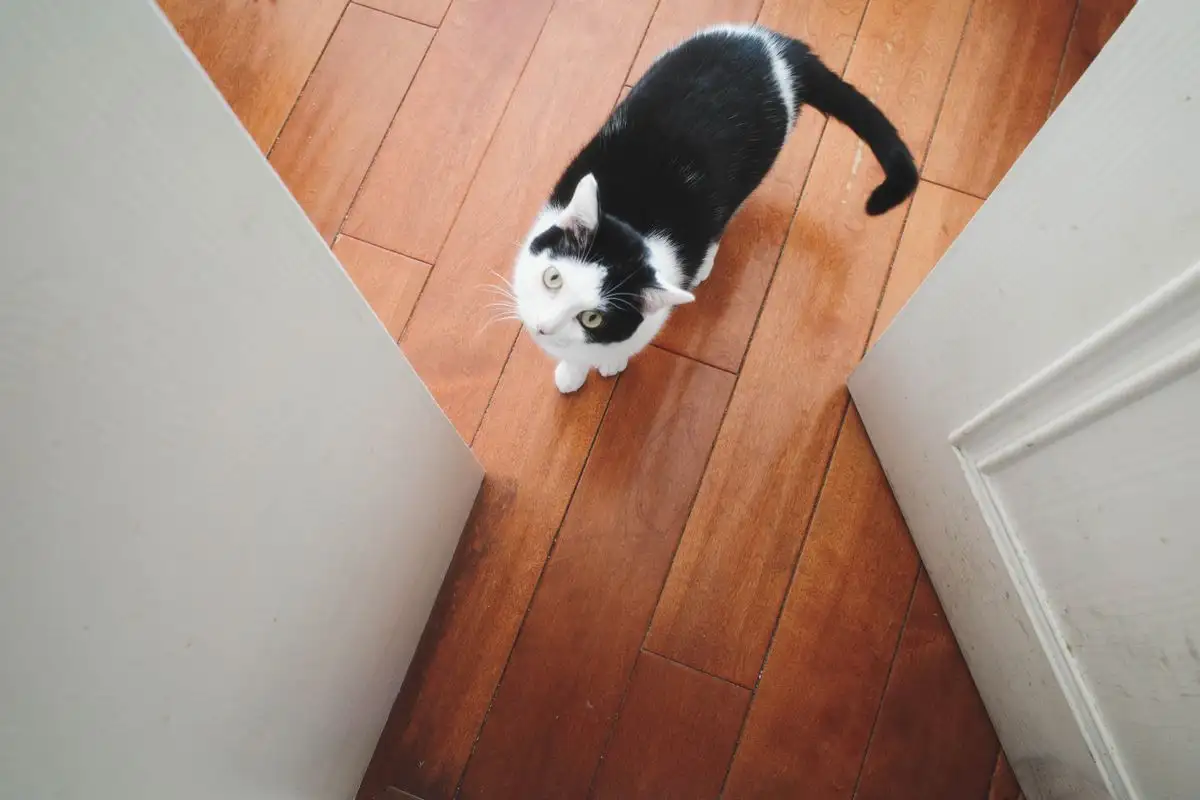
I set that room up before the carrier comes through the door. First night, I put the box in, close the door behind me, and sit down in the hallway with my back against the wall like someone waiting outside a dentist's office. What I'm listening for is a sound: four or five quick scrapes, a pause, then the shift of weight as a cat rearranges litter and settles. If I hear it that first night, I know the room is doing its job. If I hear it at four in the morning instead, that is still a yes.
Why the small room carries the whole method
Drop a cat into a full house and you hand them a hundred decisions before they have made one. Where is the food. Where is the exit. What is under that bed. Who else lives here. A cat under stress does not problem-solve; they find a hiding spot and hold still. If the hiding spot is two hallways away from the box, the box loses.
One small room collapses that. The box is never more than a few steps from the bed. The cat can see the door, see the walls, learn the whole map in an hour. I put the box in a corner where the cat can watch the doorway while they are in it, but not jammed into a dead-end closet with only one way in and out. A cat who feels cornered while squatting may decide the box is a bad place to be, and that decision sticks.
How long in that room? Until the box is boring. For a confident cat that is often two or three days. For a cat off a transport van, a hoarding case, or a recent spay, I plan on a week and I am not surprised by two. I want three or four clean days in a row, not one good night. Then I wait one more day as insurance. That extra day costs me nothing and saves me a setback.
What "using it consistently" actually looks like
Not the absence of accidents. That is only half of it. I want to see the cat walk to the box on their own, from across the room, without me standing nearby. I want to see them go back to eating afterward like nothing happened. A cat who uses the box only when I am out of the room is close, but not finished. A cat who uses it while I am sitting on the floor reading is finished.
Opening one door at a time
When the streak holds, I prop the door open and go back to my own business. I do not carry the cat out. I do not move the box. The first expansion is just a doorway, and often the cat does not take it for hours. That is fine. Territory they choose is territory they own.
A day or two of that, then the next room, and the next. Two things I watch for. First, whether the cat starts ranging farther and farther before coming back to the box. Second, whether a new accident shows up in the new space. An accident out there is not defiance. It is information: the world got bigger than the box can cover, or the cat found a spot that felt better than the box for a reason I can fix. I shrink the territory back to the last version that worked, add a second box in the newly opened area, and start again from there. I never push forward through an accident. I step back and re-earn it.
When I extend the house, I add boxes ahead of the cat rather than behind them, so there is always one within easy reach of wherever they are hanging out. The old rule of one box per cat plus one exists for a reason, especially in a multi-level home.
Kittens run on a different clock
A kitten is not a small cat with the same math. Their bladder is tiny and their day is a loop of eat, play, sleep, wake, eliminate, repeat. That means a kitten may need to go several times in an afternoon, and may need the box within seconds of waking up from a nap. If the box is across the house, they will not make it, and it will not be their fault.
For a kitten, the box itself has to fit the kitten. An adult box is generally sized so the cat can turn around comfortably, roughly a body and a half long. A kitten that size can disappear into a box built for a grown cat, and a high wall is a genuine barrier when you are four inches tall. I start kittens in something shallow with a low lip, just an inch or two of wall, small enough that they can step in without climbing. As they grow, the box grows with them. Too big too early is its own kind of failure.
I keep kitten litter shallow, an inch or so, because deep litter is a wall to a small body. And I clean far more often than I would for an adult cat, because a kitten who steps into a used box may just pick the rug instead.
When it goes wrong at two in the morning
Accidents happen, and what I do in the first thirty seconds matters more than anything else in this article. I do not scold. I do not pick the cat up and put their nose near it. I do not startle them. Not once, not gently, not "just to make the point."
What I actually do: I move the cat out of the room calmly if they are still there, then deal with the mess. Solids go into the box. A small amount of the soiled litter goes into the box too, so the box smells like the place where urination happens. Then I clean the spot itself with an enzymatic cleaner and let it sit for the full contact time on the label. Regular household cleaners can satisfy a human nose and leave behind proteins that still read as a bathroom to a cat, which is how you end up with the same corner used three nights running.
Then I stop and read the setup like a checklist. Is the box too tall for this cat to step into comfortably? Is the litter a texture they dislike? Is the box pressed up against a noisy appliance, or next to the food? Is it dirty? Did I change litter brands the same week I moved the box? Almost every accident I have cleaned up traces back to one of those, not to a cat being difficult.
One thing I will not do is treat a persistent problem as a training problem. A cat who was reliable and stops, a cat who cries in the box or strains with little output, a cat suddenly going outside the box after years of perfect use, those are veterinary questions. A male cat straining with no urine is an emergency, not a behavior issue. If the setup is right and the accidents continue past a couple of weeks, I call the vet before I change anything else.
Moving a box, or adding a second one
Moving a box is a slow operation. I shift it a few inches a day over a week or two, never across the room in one go. A cat who finds an empty spot where the box used to be will often just use the spot. If the cat has to move to a different room entirely, I add the new box first, leave the old one in place, and do not remove the old one until the new one has been in regular use for a week or more. Two boxes in the same corner are one box as far as the cat is concerned, so I spread them out when I add one.
I also never stack changes. New litter and a new box location in the same week is a coin flip I do not need to take.
Why startling a cat near the box backfires for good
A cat does not connect your reaction to the act of eliminating. They connect it to the place, or to you, or to the act of being watched. So a clap, a spray, a loud noise, a grab, teaches one of two lessons: the box is dangerous, or going to the bathroom in front of a human is dangerous. The first produces a cat who avoids the box entirely and picks a closet. The second produces a cat who waits until you are asleep. Both are worse than the accident you were trying to stop, and a single frightening event can be enough to install the association for months.
There is no version of this where punishment speeds things up. The method is environmental management plus reward. I praise quietly when I hear the scrape. I keep the room calm and predictable. That is the entire toolkit.
The honest timeline
Most cats are using the box reliably within two to five days in a properly set up room. Shy cats, cats from chaotic backgrounds, and cats recovering from surgery or a respiratory infection can take a week or two, occasionally longer, and still be completely normal. There is a difference between a cat who takes a month to relax in the house and a cat who takes a month to use the box. The first is common. The second means something in the setup or the cat's health needs a second look.
The tradeoff is real: this method costs you a room for a week or two and a fair amount of sitting around listening. What you get back is a cat who never learned that the box is a place where things go wrong.
When the whole house changes
If you are the one moving, run the same play. Set the cat up in one room in the new place, exactly like day one, even if they have been perfect for five years. Keep the same litter. Keep the box in the same relative position, meaning if it sat in the corner by the door in the old bathroom, it goes in the corner by the door in the new one. Unpack that room before the cat arrives so there is no parade of strangers and boxes moving through it. Cats navigate by landmarks, and the box's position relative to the door is a landmark.
A few days later, you will be making coffee and hear the scrape from the next room, and you will not even get up. That is the room finishing its job.