A cat bath is a decision, not a routine step, and for the vast majority of healthy cats the answer is no. Water is genuinely the right tool in a narrow set of cases — heavy soiling, contact with something the cat cannot safely groom off itself, and a bath a veterinarian has directed — while everything else that sends people toward the sink is usually better handled with a brush, a damp cloth, or a waterless product. The skill worth having is not one rigid method; it is the ability to sort out which case you are in before the cat is wet.
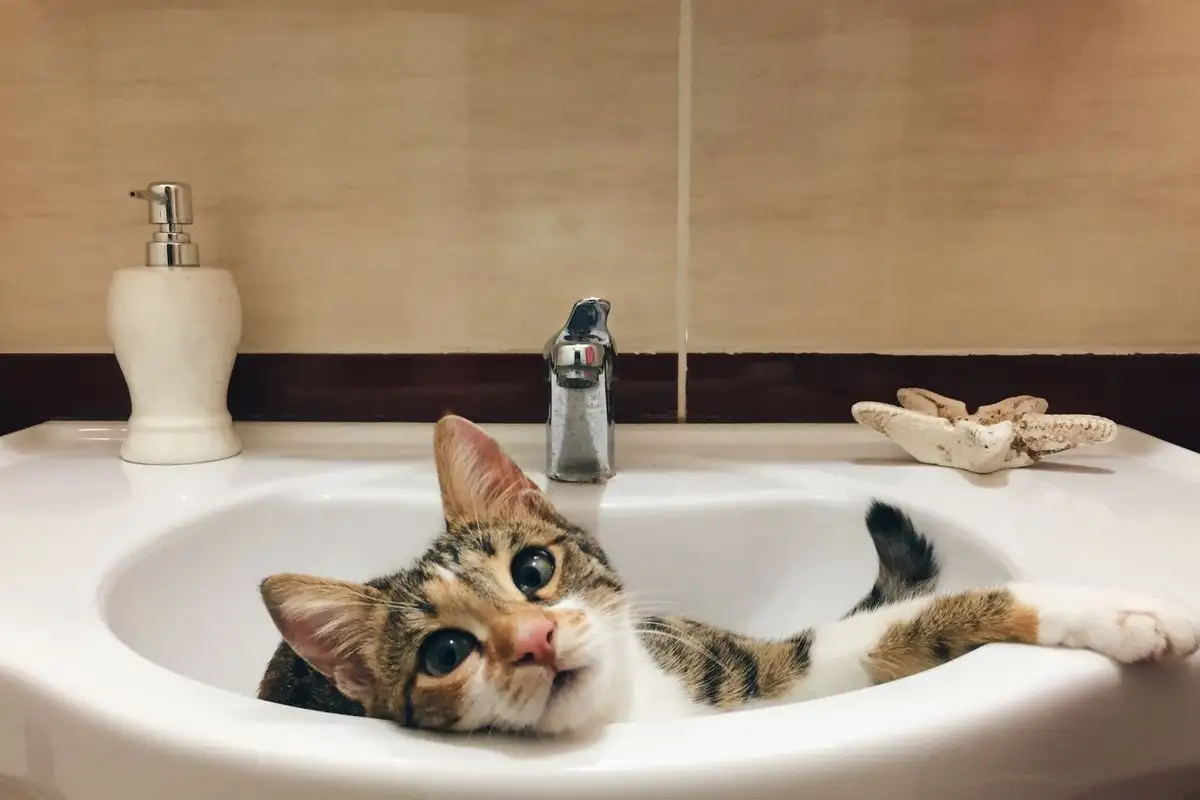
Here is where I do that sorting. Kitchen sink, not the bathtub, because the sink is at chest height and I can keep one hand on the cat the whole time. Towel already unfolded on the counter to my right. Cup resting in the basin. Door shut. Faucet running over the inside of my wrist while I adjust it, because my fingers stopped being a reliable thermometer about a minute ago.
The cat is on the floor at this point, and this is the part people skip. I watch her. Ears, tail, the way she is sitting. If the ears are already flat and the tail is doing that low flick because she heard the water, that tells me how the next ten minutes are going to go and whether I need a second pair of hands. You would be standing beside me holding the towel, and what I want you to notice is that none of this is about the shampoo yet. It is about whether we are doing this at all.
The first question is never about water
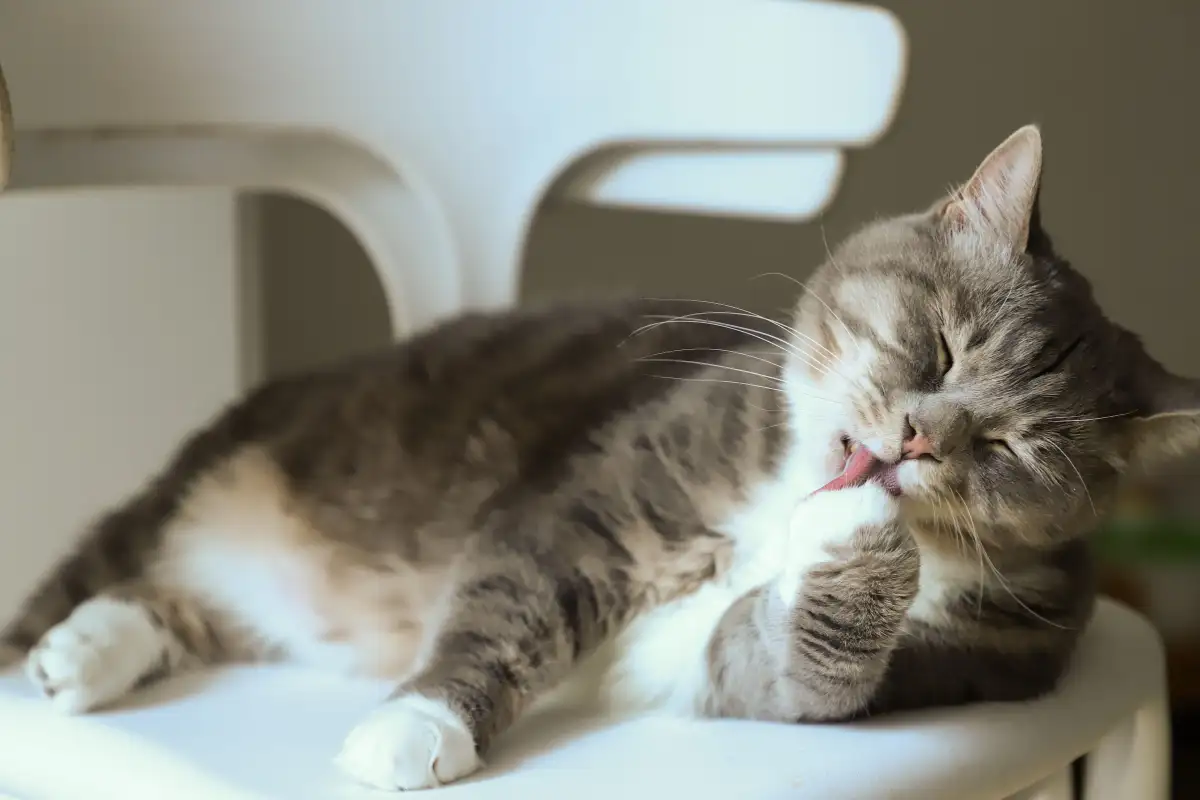
Healthy cats groom themselves constantly. A cat will spend a serious chunk of its waking hours on its own coat, which means the skin and fur are mostly self-maintaining, and a bath is an interruption of that system rather than a support for it. So the first thing out of my mouth is not "how do I wash her." It is "is there anything here her tongue can't fix."
Three questions, in this order:
- What is actually on her? Dust, loose litter, dried food, plain water — she handles those. Something oily, greasy, sticky, or covering a large area is water territory.
- Can she reach it, and is it safe for her to swallow? If the second half is "I don't know," stop and make a phone call before you run a bath. If a cat has walked through something you can't identify, or you think it might be toxic, that is a veterinarian or animal poison control question first. A bath is not the thing you do while you are still deciding.
- Is she well enough to be bathed? A cat who is sick, recovering, very young, or very old does not hold heat well, and a bath is a heat event.
When water really is the answer
Three cases, and I don't argue with myself about them.
Heavy soiling. A cat who got into something in the garage, rolled in something, or is coated across a large area. The measure isn't "is she dirty," it's "is this more than a cat can address." She can clean a paw. She cannot clean her own back.
Contact with something she cannot groom off. This is the case where the bath is time-sensitive for a physical reason — the stuff is on the coat and it is going to stay there. Note the order, though. Identify first, wash second. If you don't know what the substance is, that call comes before the water.
A bath a veterinarian has directed. This one is not a judgment call and I am not going to talk you out of it. Follow their instructions on how often and what to use, and do not substitute your own read of the situation for theirs. There are medical reasons a specific bathing schedule matters, and "she seems fine to me" is not a competing opinion.
Where water is the wrong tool
Most of what I get asked about lands in this pile.
Dust and dander. A real brushing — a rubber curry brush for a short coat, a fine metal comb for a long one — plus a damp washcloth run with the grain, takes care of a surprising amount. So does a waterless product made for cats, worked into the coat and brushed back out.
A spot. Something on one paw or one shoulder. Warm water, a damp cloth, no soap, dab and lift instead of scrub. Scrubbing drives it down into the skin.
A cat who just smells like a cat, or whose coat looks a little flat and greasy. The first move is brushing, not bathing. A coat that is kept loose redistributes its own oils, and that greasy look usually improves with grooming alone.
And then the one that is not a bathing question at all. If there is an odor that comes back within a day, bald patches, scabbing, constant scratching, or a coat that stays greasy no matter what you do, washing will not fix it. That is a veterinarian appointment. I have watched people shampoo a cat four times in a month over something a vet sorted out in one visit, and every one of those baths was stress with nothing on the other side of it.
If it is water, the room matters more than anything you put in it
This is the part I would underline twice.
A cat's normal body temperature runs higher than a person's — around 101 degrees Fahrenheit, not 98.6. That is why lukewarm is not a suggestion, it is the target. Water that feels pleasantly warm to you can read as cool to her, and water that feels hot to you is definitely too hot for her. Test it on the inside of your wrist, then test it again a minute later, because your hands stop being trustworthy once they have been in the sink.
Warm the room before you start. Close the door. No open window, no ceiling fan, no draft moving across a wet cat. Towel out on the counter, not folded in a cabinet. Shampoo already open. A wet cat sheds heat fast, and every second you spend hunting for something is a second she spends dripping.
On the shampoo itself: the only thing that goes on a cat's coat is a shampoo formulated for cats. Not human shampoo, not dog shampoo, not dish soap, not "just a drop." The reasoning is mechanical rather than fussy. A cat ingests what is on her coat while she grooms, so whatever is in the residue ends up in her mouth, and products built for people are built for skin and hair that don't get licked for hours afterward. That is also why rinsing thoroughly matters. Leftover residue is why a cat looks greasy two days after a bath, and then spends the following day grooming it off.
Three stages, and the last one is the one people rush
A bath has three separate parts: preparation, washing and rinsing, and drying. They are separate because they fail separately.
Preparation
Brush her out before she ever touches water. Fur that is already off the cat is fur that isn't going down the drain. Trim claws if they're sharp — not because she's aggressive, but because a scrambling cat grips your forearm. Get everything within reach. Decide now whether you need a second person, because a cat who panics on a slippery surface is far easier with one person holding and one person washing.
Washing and rinsing
A few inches of lukewarm water in the sink or tub, not a full basin. Set her in feet-first and keep a hand on her the whole time — a hand on the chest or the scruff is the difference between a cat who is being held and a cat who is loose. Keep the water at or below the neck and away from the head. A wet head is what makes a cat bolt, and the face doesn't need the water anyway. Use a cup or a sprayer on the lowest setting; a hard stream is startling and it splashes.
Work a small amount of cat shampoo into a lather with your fingertips, moving with the coat, staying clear of the eyes, ears, and muzzle. Then rinse. Then rinse again. The second rinse is the one that counts. The first one always feels like enough and usually isn't. Drain the basin, refill with clean lukewarm water, and pour it over her until what runs off is clear and no longer slippery.
Drying
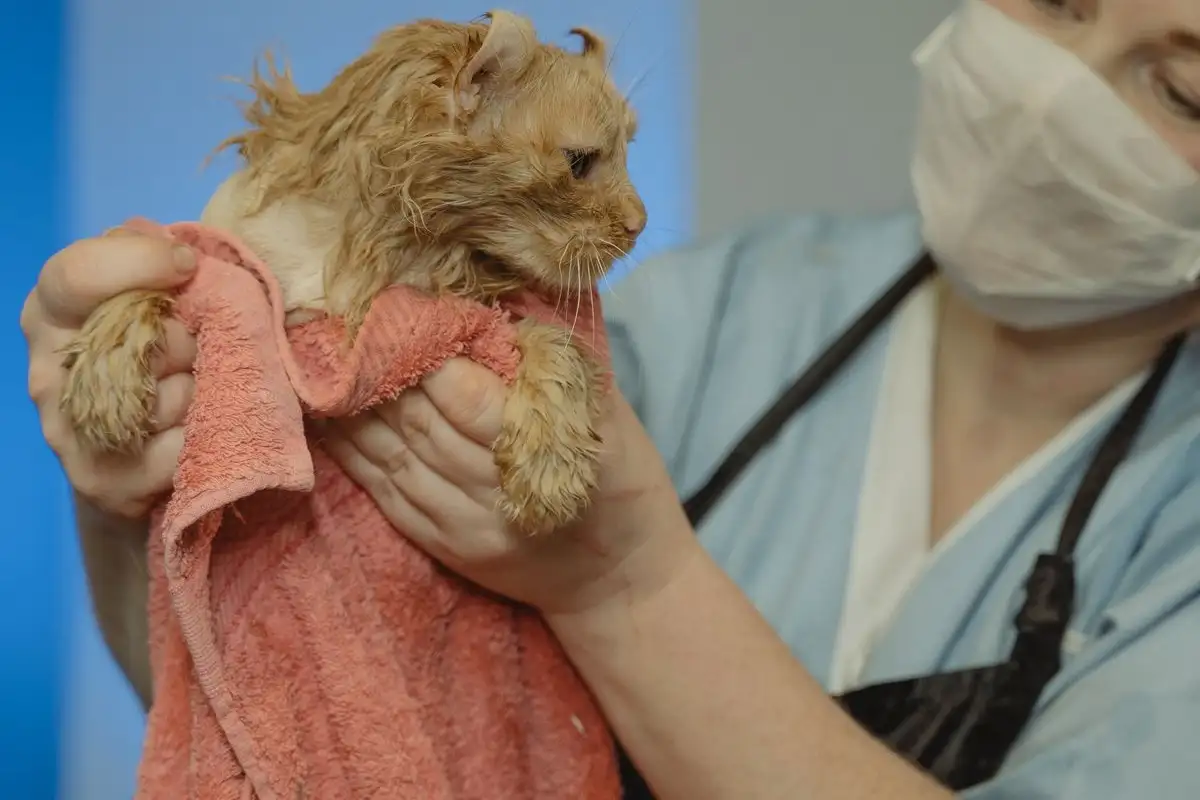
This is the stage where baths go wrong. Towel her with a dry towel, then use a second dry towel, because the first one hits saturation fast and a soaked towel just moves water around the coat. Press and squeeze along the body rather than rubbing hard — hard rubbing tangles the coat and irritates the skin.
Then keep her warm. A warm room, a dry towel, a lap, or a heating pad on low under a blanket if she'll settle on it. If she tolerates a hair dryer — plenty of cats don't, and the noise is usually the reason — use the lowest heat setting and keep it moving, well away from the skin. "Mostly dry" is not dry. A damp cat in a cool house stays damp and stays cold, and that can run for hours while she sits under a bed refusing to come out. That is the most common way a bath turns into a bad night.
The exit ramp
Stop the bath if she is thrashing hard enough that you can't hold her safely, if she is making sounds that are distress rather than complaint — you will know the difference once you have heard both — if she is panting, or if she goes quiet and limp in a way that doesn't read as calm. Don't push through it. If she isn't herself in the hours afterward, that is a vet call, not something to wait out.
A cat who got half a bath and a towel is a cat who can be bathed again. A cat who was held down through a full one is a cat who will fight the next five, and you will have taught her that the sink is the worst place in the house. There is also a practical edge here: a struggling wet cat is a bite and scratch risk, and that is its own medical problem.
Same rule for anything on the skin you don't recognize. No diagnosing at home, no treating it with a shampoo. That goes to a veterinarian.
The whole decision in one pass
Something is on the cat. Can she reach it and clean it herself? If yes, brush her and leave it alone. If it's a spot, damp cloth, no soap. If she's coated over a large area, or it's something she can't safely swallow, or your vet has said to bathe her — water, lukewarm, cat shampoo, warm room, three stages, and don't stop at the drying.
And if the coat or skin problem keeps coming back, it was never a bathing question in the first place.