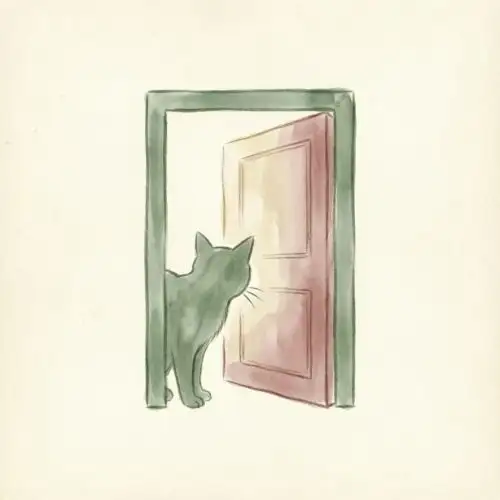
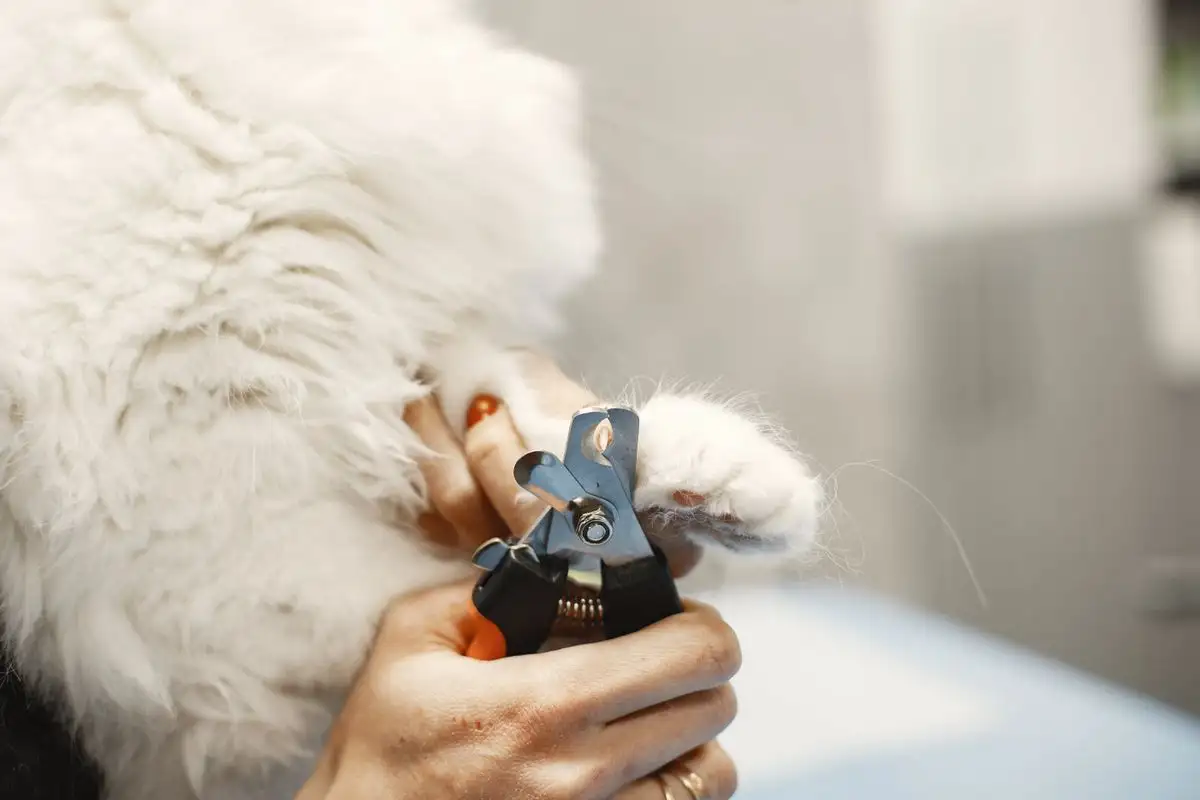
Nail trims for a reluctant cat are a training project, not a handling task. The cat who flinches, hisses, or vanishes at the sight of clippers is not being stubborn, and a firmer grip will not fix it; what fixes it is a plan built in increments so small they barely register as progress, each one paired with a treat and each session ended before the cat decides it is over. That arc runs in weeks. Most people quit on day three, and that is the entire reason it keeps failing.
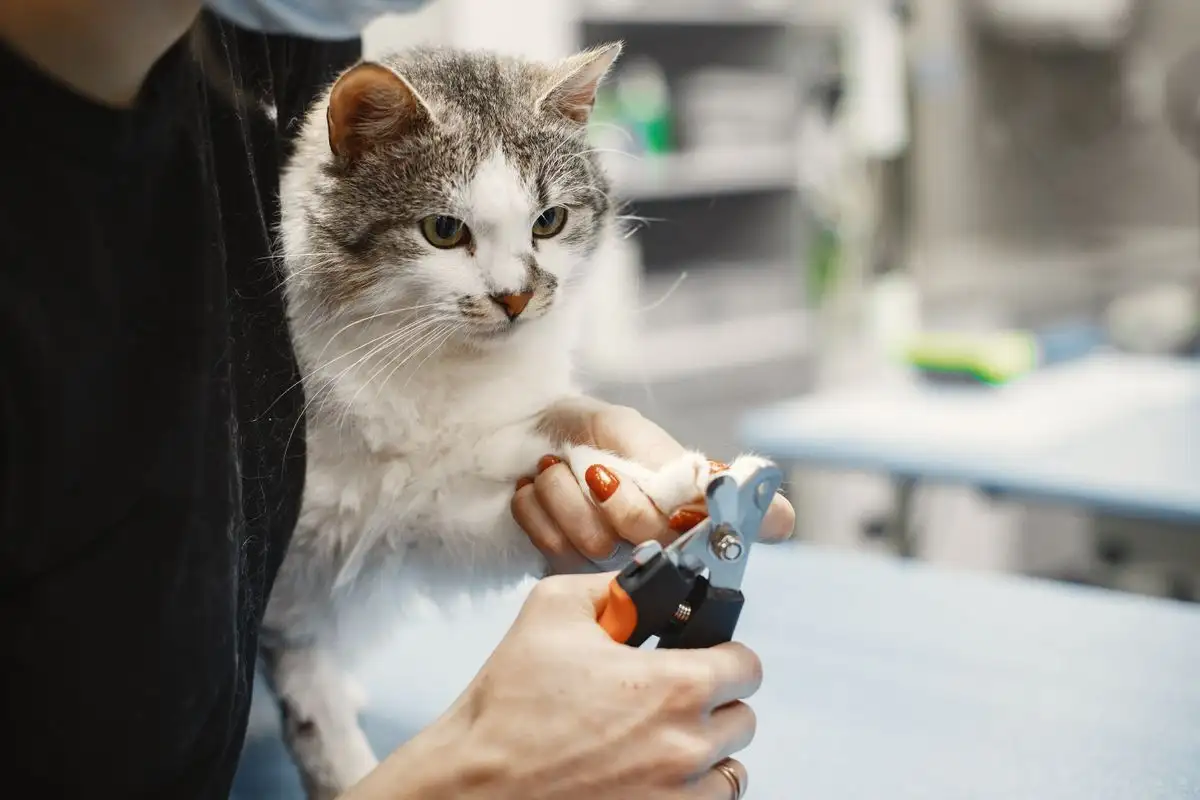
I want you on the bathroom floor instead of crouched over a cat who is already cornered. Door shut, because a cat who bolts under the bed is a cat you will be fishing out from behind the box spring, and that erases a week. Tile cold through your jeans. Your cat is on the bath mat, tail wrapped around his feet, still, for now. The clippers sit on the edge of the tub, four feet away, in plain sight. You do not reach for them. You barely look at them. You sit for two minutes, drop a treat on the mat, and leave.
That is a session. Not a warm-up, not a failure. The session.
Do it twice a day for a week. Somewhere around the fourth or fifth day the clippers stop being an event. The cat stops tracking them with his eyes as you walk in. He yawns mid-visit. That is the sound of a trigger dying, and it costs you nothing but sitting still.
Why Sitting There With the Clippers Does the Work
Starting here is not a soft approach to a hard problem. It is the cheapest fix on the entire list.
If the clippers only ever appear shortly before something the cat hates, they become a reliable predictor of exactly that. Cats are extremely good at this kind of pattern-matching, and they hold onto it longer than you would expect. Leave the clippers on the coffee table on a Tuesday for no reason at all, and the prediction breaks. That is the whole mechanism. No training, no treat, no contact. Just a tool that stops meaning anything.
I do that step before I touch a single paw, because if you skip it, everything downstream gets harder. You end up trying to teach a calm paw-hold to a cat who has already decided the room is a setup.
The ladder: one rung at a time
Once the room is boring, the touching starts, and it goes one rung per session with a treat and a release after every single one.
- Rest your hand on the floor next to the paw. Nothing else. Treat.
- Lay two fingers on the top of the paw for one second. Treat. Hand off.
- Cup the paw in your palm without squeezing. Treat.
- Lift the paw an inch and let it settle back down. Treat.
- Press the pad so one claw slides out. Treat immediately. This gets its own rung because it is the part cats actually object to; extending the claw is a strange sensation and the pad is the most sensitive real estate on the foot.
- Touch the closed clippers to that extended claw. No cut. Treat.
- Take the tip of one claw. One nail. Done for that session.
You do not move up a rung because a week has passed. You move up because the current rung has gone boring. The cat stops pulling back, stops watching your hand, starts watching your pocket instead. That is the signal.
And if the paw comes away twice in one session, you skipped a rung. The one you skipped is the one you will be paying for.
A Wrecked Session Costs More Than a Pause
Here is the arithmetic that changes how people run this.
Pausing costs you a day. Pushing costs you two weeks. When you hold a cat through a trim he did not agree to, you do not just lose that session. You write a new line into what the bathroom floor means: clippers, then restraint, then a struggle. Now you are not training from neutral. You are training against a memory, and memory is stickier than a habit ever is.
I would rather end at two nails and a calm cat than at ten nails and a cat who will not come out from under the bed tomorrow. That trade is not a compromise. It is the better deal every time, even when it does not feel like it on the day.
So the honest timescale: for a cat who currently bolts at the sight of the tool, the first actual cut is realistically weeks away, not days. Front paws first. The nails are thicker and the sensation is more predictable. Back paws are a separate project, usually a later one, and plenty of cats never fully settle for those. That is fine. Fronts are what wreck the couch.
Your Hands Matter More Than the Clippers
Cats read pressure and posture better than they read anything else in the room. A firm hold, even a careful firm hold, tells a cat it is being restrained, and a restrained cat stops cooperating and starts calculating.
What works is slow, low, quiet. Sit on the floor rather than standing over the cat. Keep your shoulders down and your hands loose. A cat can feel the difference between a hand that is ready to let go and a hand that is not, and only one of those hands gets invited back.
Then watch for the first tell and stop there. An ear rotating back. A tail tip ticking. Skin twitching along the flank. A slow blink that does not come. You do not wait for the hiss. The hiss means you already missed two earlier exits, and the cat has now learned that you do not take them.
One nail is a finished session
The instinct is to finish. You are already holding a paw, the clippers are already out, there are nine more nails. That instinct is exactly what keeps people stuck for months.
One nail, then treat, then release while the cat is still deciding whether he minds. Do that twice a day and you have a maintenance trim inside a week and a half. Do all ten in one go and you have a cat who will not tolerate a paw touch for a month.
Short sessions are not a concession to your cat's attention span. They are the mechanism. A few minutes twice a day beats one long weekend attempt every single time, because what you are building is a habit, and habits come from repeating a small successful event, not from one heroic one.
A few other things that matter more than people expect: use the same clipper every time, whichever style you have settled on, because swapping tools changes the picture the cat has learned. Do not schedule this for a day when the vacuum ran or the house had people in it. Tolerance is not a fixed quantity, and stacking stressors on top of a training session is burning your own progress. And if your cat has arthritis, or has started objecting to paw handling he used to allow, that is a different problem with a different answer, and it belongs with your veterinarian rather than in a training plan.
When the Cat Can't Be Handled At All
Some cats are not candidates for this at home right now, and that is not a character flaw in either of you. If a paw touch produces genuine panic, the full-body flinch, the hissing, the claws out, the hiding for hours afterward, then the right move is to have the nails trimmed during a scheduled veterinary visit, by the veterinarian or a veterinary technician. Whether anything beyond that is appropriate for a cat at that level of distress is a conversation for your veterinarian, not for a training plan.
That route is not a failure. Short nails are the goal. This training is one path to it, and the appointment is another. If you take the appointment route, you can still run the paw work at home separately, with no trimming attached to it at all, at whatever pace the cat sets.
The thing I would want you to actually take from all of this is that it never becomes a chore you have to win. It becomes a two-minute ritual on the bathroom floor that both of you stopped thinking about. That is the whole goal, and it is worth the weeks it takes to get there.