Trim frequency is something you read off the claws and off the cat, not off a calendar. The practical test is to watch the cat standing on something hard and flat: if the tip of a claw reaches past the pad it sits above, the cat is due. Clicking across a bare floor and claws snagging in blankets are the same message arriving by a different route. For a typical indoor cat living on carpet and soft furniture, those signs usually appear somewhere around two to three weeks after the last trim — and in a house with more than one cat, they almost never appear on the same day for both.
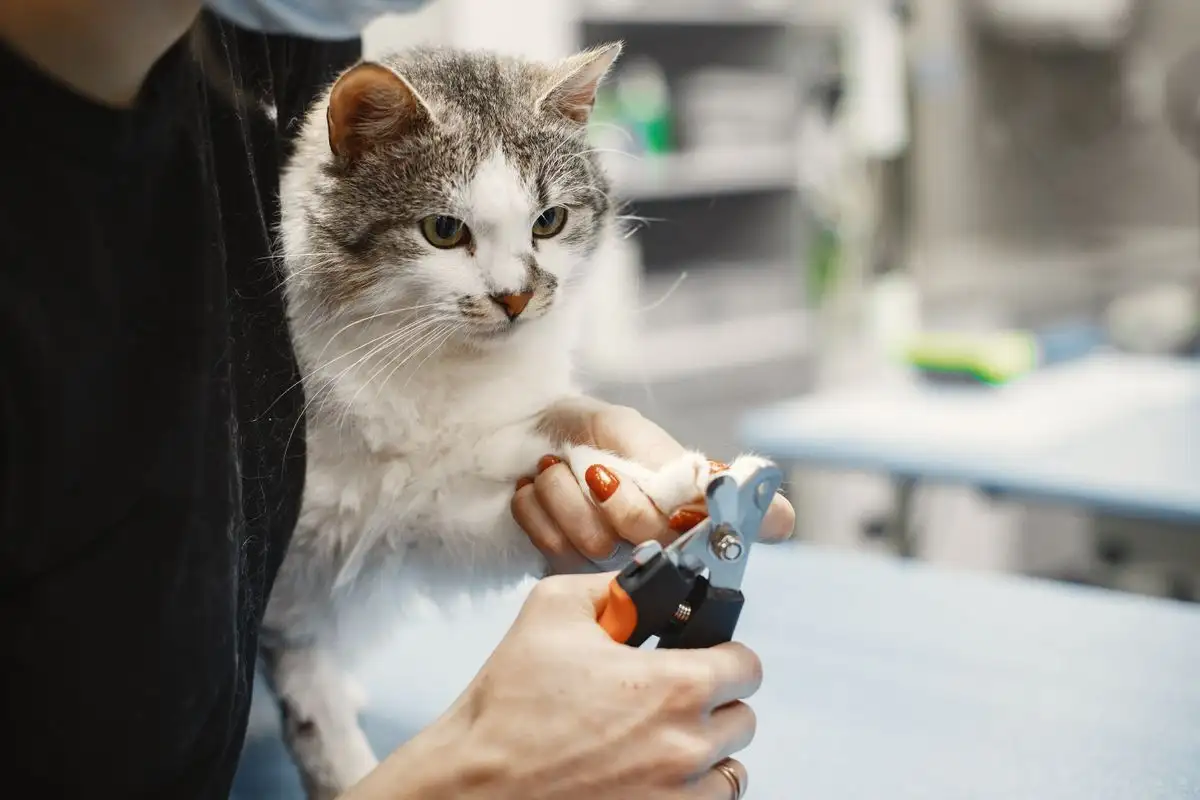
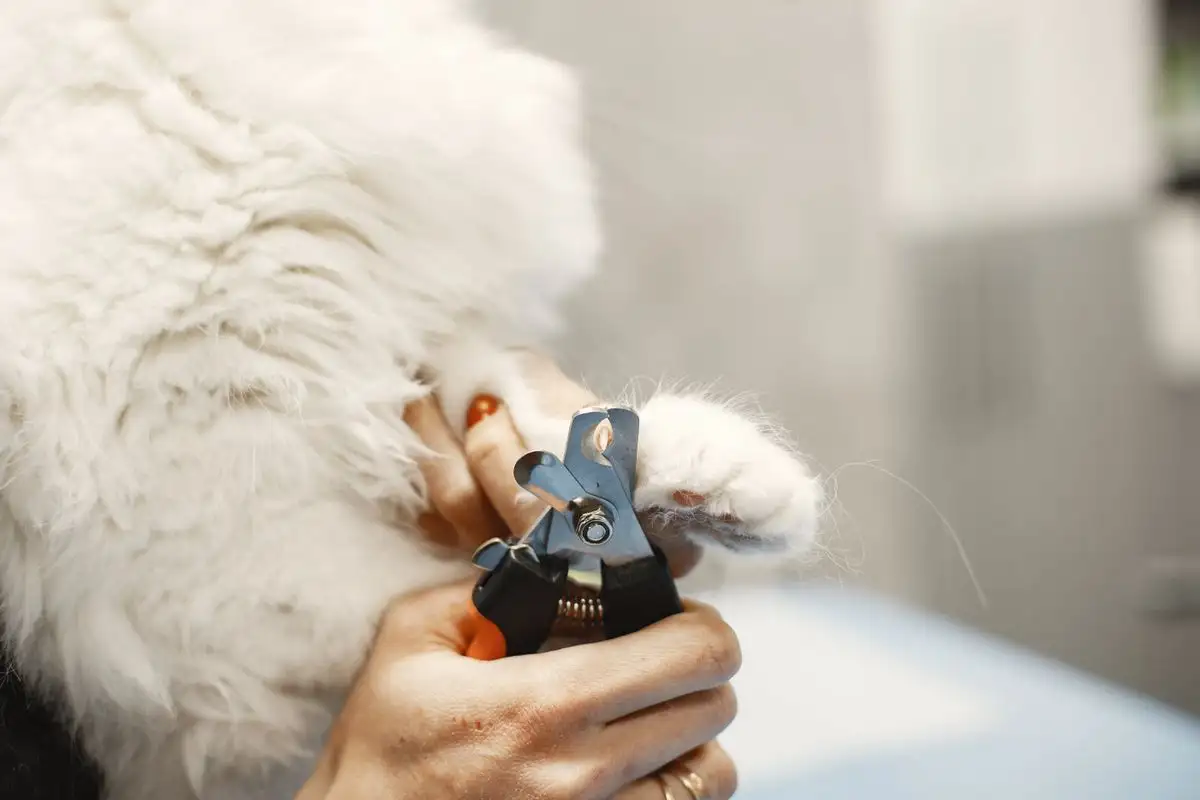
I do the check on the bathroom tile, on my knees, with the cat's front paw in my hand and my thumb rolled onto the big center pad. It's the only floor in this house that isn't rug or something soft, which matters more than it sounds. A cat standing on carpet can hide a claw tip for a week. On tile, I can see it. On tile, I hear it before I even look.
The claw I'm looking for is the one that curves down and out past the pad, the one that meets the floor before the pad does. Press the pad gently and the claw extends; let go and it retracts. What I want to know is whether the tip clears the pad when the paw is relaxed and the cat is bearing its own weight. If I have to squint or angle the paw toward the light to find that tip, we're fine this week. If it's obviously out there, casting its own little shadow on the grout, we're late.
The three signals that actually mean overdue
Clicking is the one most people catch first, and it's a good one because you hear it before you're looking for it. The cat crosses the kitchen at six in the morning and it sounds like someone tapping a coin on the floor. That's a claw contacting hard flooring instead of the pad taking the weight.
Snagging is the second, and it's the one that costs people their sweaters. A nail that's too long catches on woven fabric, on a blanket, on the couch cushion. If your cat is suddenly stuck for half a second getting off the bed, that's a length problem, not a clumsiness problem.
Third is the visual, the one I trust most because it doesn't depend on the cat cooperating. Standing on a hard surface, does the tip pass the pad. I check all four paws, not just the fronts. The back claws are the ones people forget, and they get long quietly — you don't see them as often, and the cat isn't using them on your lap.
Why two cats in one house run on different clocks
Nail growth is individual. I've had cats whose claws were ready at twelve days and cats who went a comfortable month before anything showed. There's no single number that covers both, and pretending there is just means one cat gets clipped too often and the other walks around on hooks.
Outdoor access stretches the interval, it doesn't stop the growth
A cat that climbs bark and crosses concrete wears the tips down in a way a cat on a rug never will, so the gap between trims gets longer. It does not close. Growth doesn't pause because the cat goes outside; you get margin, and margin is exactly the thing that gets mistaken for "doesn't need it." I still put that cat on the tile every week, because the check costs me twenty seconds and the surprise costs me an afternoon.
Age moves the number too
An older cat who sleeps more and walks less is putting less wear on the claws. The same nails that more or less maintained themselves at three years old start needing help at twelve. Weight, gait, how much the cat tears around the hallway at night — all of it shifts the interval, and it shifts slowly enough that you won't notice unless you're looking at the claws rather than the calendar.
In my house that produces two different schedules running at once, and I stopped fighting it. One cat is due at about the two-week mark. Another can go nearly four and still be fine. If I trimmed them both on the first of the month because it looked neat on a calendar, one would spend two weeks walking on long nails and the other would get clipped for no reason at all.
What scratchers do, and what they don't
This is where a lot of the confusion lives. Scratching is not a shortening behavior. When a cat digs into cardboard or sisal, the outer sheath of the claw sheds off in flakes — you'll find those papery husks on the floor around the post — but the claw underneath is the same length it was. Scratching maintains the condition of the claw. It doesn't take length off.
Which means a cat can be a devoted scratcher and still be overdue. A good scratcher keeps the claw sharp, and a sharp long claw is the one that finds your upholstery.
The weekly check and the pencil mark
The thing that changed how I handle all of this was making the check a habit instead of a discovery. Once a week — Sunday, in my case, because Sundays are slow — I flip each cat over on the tile for half a minute and look. It's not a full session. It's a look. Twenty seconds per cat and I know who's close.
And I write it down. There's a pencil line on the inside of a cabinet door with dates and initials, and yes, it looks ridiculous, but it means I'm never guessing whether the tabby was done last week or the week before. Recording the date turns a vague feeling into a number, and after three or four entries that number starts telling you what that particular cat's interval actually is. Not what a website says. What that cat does.
The calendar isn't the rule. It's the prompt. Two weeks is a fair starting assumption for an indoor cat and it's the number I'd give someone who has never thought about this before — but the moment you start reading the claws, the calendar drops back to being a reminder to go look, and the cat tells you the rest.
One last thing, because it's the part I'd rather say out loud than leave to a guess: if a claw is curling under and touching the pad, or you can't see where the quick ends and you aren't confident, stop. A half-trimmed cat is fine for a day. I've left one that way and asked my vet to look rather than take a tip off in the wrong place, and I'd do it again.