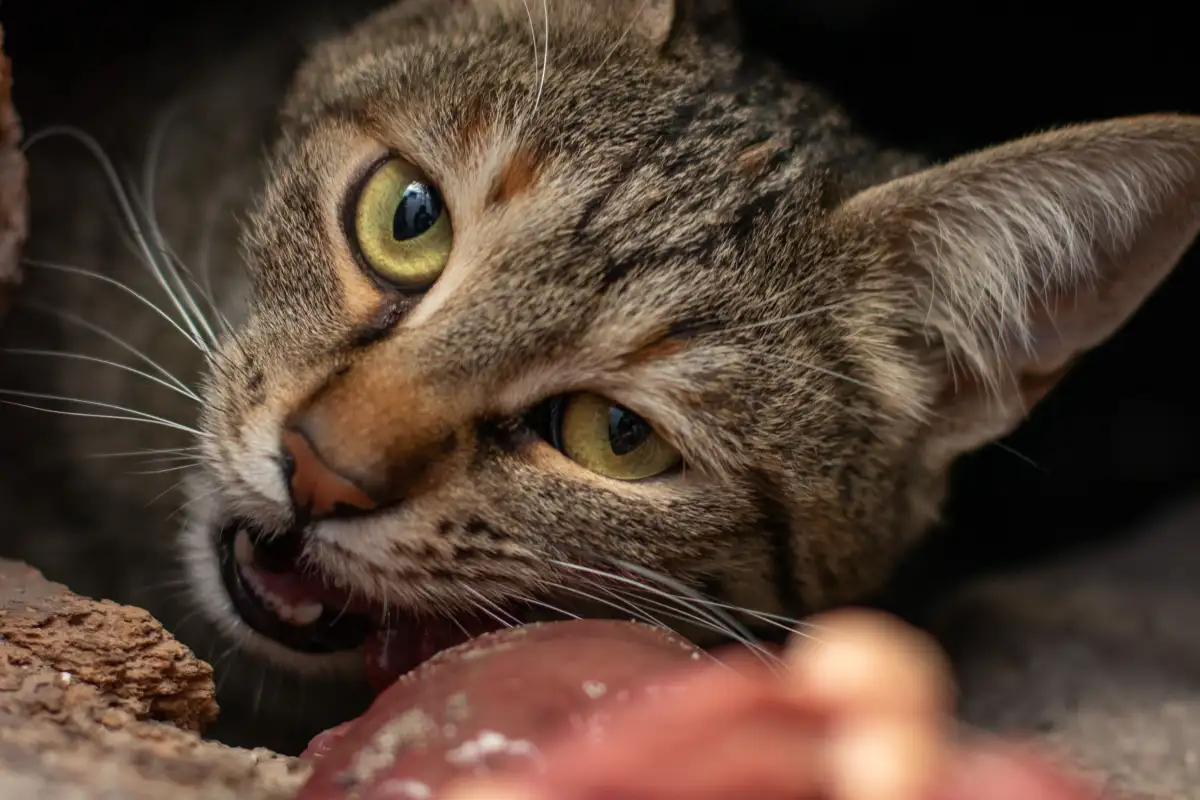
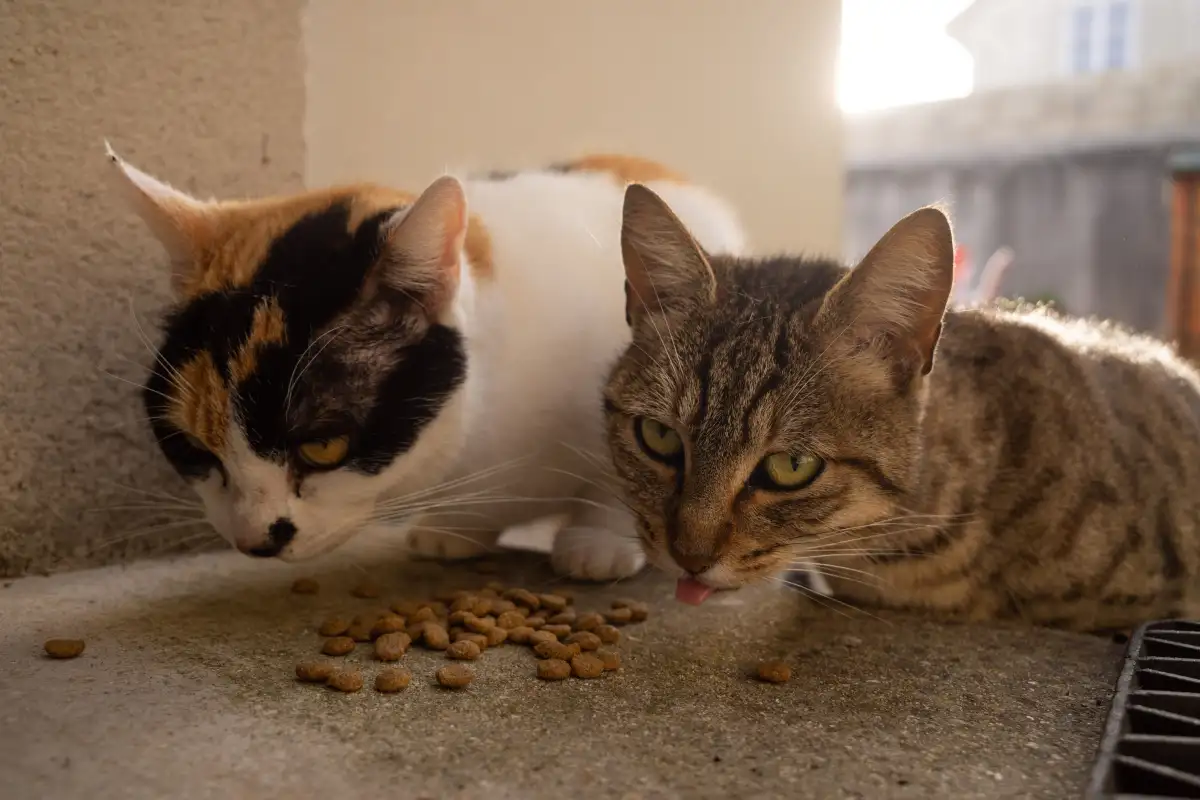
Yes. But it means much less than the phrase sounds like, and the entire skill of reading a cat food label is knowing precisely how much weight the words carry and how much they don't.
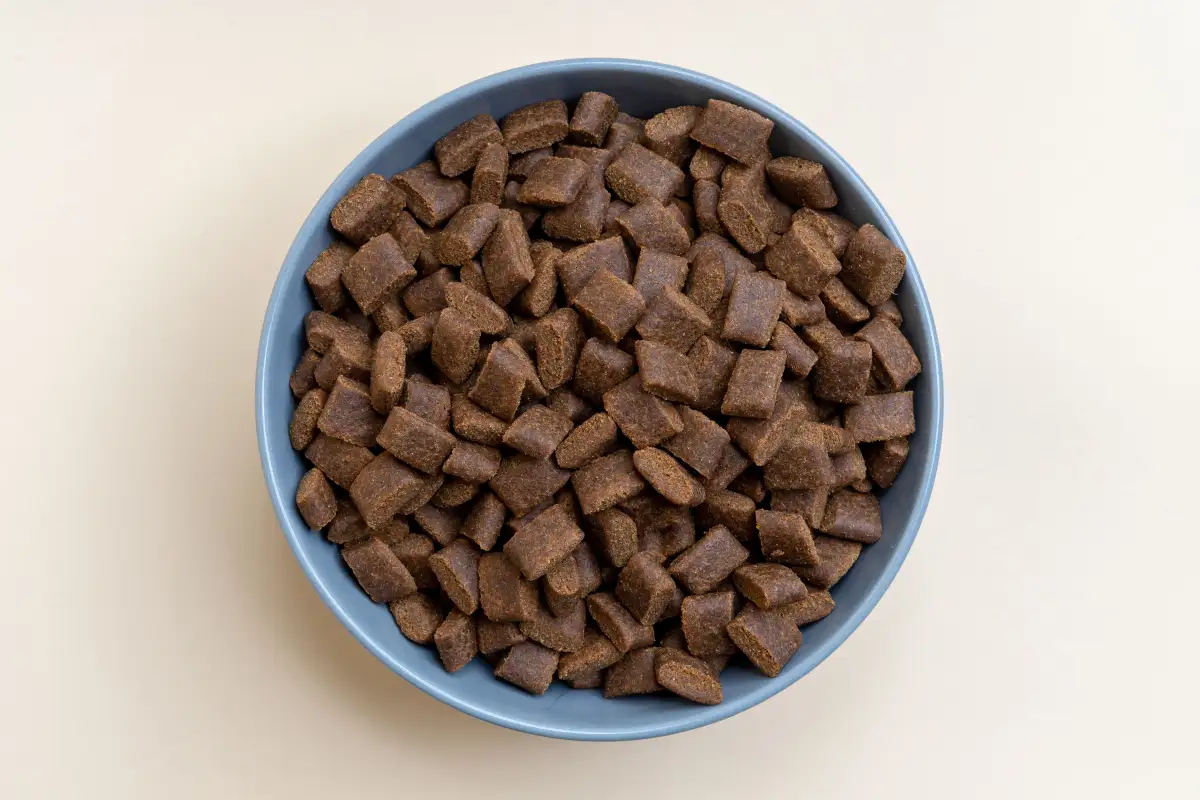
"Complete and balanced" is a legal claim with a narrow scope. It means the food meets the AAFCO nutrient profile for a stated life stage, and that the manufacturer is asserting this through one of the specific routes the labeling rules permit. It is a statement about nutritional adequacy — whether the formula is capable, on paper, of meeting a cat's known nutrient requirements. It says nothing about ingredient quality, sourcing, digestibility, calorie density, or whether your cat will actually thrive on it.
I figured this out in a pet store aisle with a bag in each hand, both of them saying complete and balanced in the same size font, both of them saying premium, and both of them thirty dollars apart. I stood there long enough that an employee asked if I needed help. What I needed was for someone to tell me which words on those bags were real.
That was years ago. Since then I've fostered enough cats — kittens off the street, seniors with kidney values that needed watching, a couple of cats who arrived with a half-empty bag of what they'd been eating and nothing else — to have done this exercise a few dozen times. What follows is the version of label literacy I wish someone had handed me in that aisle. It comes down to a handful of rules, and none of them require you to trust a brand or a marketing department. They only require you to turn the bag over.
Start with the panel that's a floor, not a measurement
The guaranteed analysis is the little grid near the bottom of the package. It lists crude protein minimum, crude fat minimum, crude fiber maximum, moisture maximum — and for canned food, that's usually the whole thing.
Two things about it get lost.
First, "crude" is not a knock. It refers to the laboratory method. Crude protein is estimated from the food's nitrogen content multiplied by a standard factor. Crude fat is measured by solvent extraction. Crude fiber is whatever residue is left after the sample has been boiled in acid and then in alkali. These are old, cheap, standardized tests, which is exactly why they're the ones required.
Second, and this is the part that changes how you read the panel: those are minimums and maximums, not measurements. A food guaranteed at 34% minimum crude protein might contain 34%. It might contain 45%. Nobody is telling you which. Crude fiber is guaranteed as a maximum only, so a food printed at "max 3%" could be sitting at 0.8% or at 2.9%. The panel describes the boundary of a legal claim, not the composition of what's in the can.
The one sentence on the package that carries real weight
Somewhere on the bag — usually low, usually small, sometimes tucked under the contact information — there's a sentence that names a life stage. That sentence is the AAFCO nutritional adequacy statement, and it's the most informative piece of text on the entire package.
It comes in a few forms, and the differences matter.
One version says the product is formulated to meet the AAFCO Cat Food Nutrient Profiles for a named life stage. That means someone ran the recipe through a nutrient database, compared the totals against the published profile, and signed off. It's a paper exercise, and a legitimate one.
Another version says that animal feeding tests using AAFCO procedures substantiate that the product provides complete and balanced nutrition for the named life stage. That means actual cats ate it under a defined protocol and met certain endpoints. Both statements are legal. They are not the same strength of evidence.
There's also a family-member claim, where a product asserts adequacy by virtue of being nutritionally similar to another product in the same line that was itself tested or formulated. Worth knowing that route exists, because it explains how a formula can carry an adequacy statement without ever having been through a trial on its own.
Two things to check in that sentence every time. Does it name a life stage — growth, adult maintenance, or all life stages? A complete and balanced claim with no life stage attached is not a compliant statement, and I've seen that sloppiness on real packaging. And does the sentence say, anywhere inside it, that the product is intended for intermittent or supplemental feeding only? That phrase means it is not complete and balanced, no matter what the front of the bag implies.
One more thing, because it trips up almost everyone: AAFCO does not approve, certify, or endorse cat food. AAFCO is an association of state and federal feed control officials that publishes model regulations. States adopt them, and enforcement runs through state feed control. When a label says a food meets AAFCO nutrient profiles, it is describing the manufacturer's own claim, written in the vocabulary AAFCO standardized. There is no AAFCO seal. There is no AAFCO inspector standing in the plant.
Do the math before you compare two numbers
You cannot compare the protein percentage on a can to the protein percentage on a bag. It isn't a close call. It's a category error.
Everything on that panel is stated "as fed," meaning it describes the food with all of its water still in it. Canned cat food is often around 78% moisture. Dry food is often around 10%. Almost all of the can's weight is water that contributes nothing to protein, fat, or fiber — it just dilutes the percentage and makes the number look small.
The conversion is simple arithmetic. Subtract moisture from 100 to get dry matter. Divide the nutrient percentage by the dry matter fraction. A canned food at 78% moisture is 22% dry matter, so a guaranteed 10% minimum crude protein works out to roughly 45% on a dry matter basis. A dry food at 10% moisture is 90% dry matter, so a guaranteed 34% minimum works out to about 38%. The can, which looked like it had a third of the protein, has more.
There's a second normalization that's arguably better, especially when the two foods would be fed in different amounts: calories. The label carries a metabolizable energy statement somewhere — kilocalories per kilogram, and usually kilocalories per cup or per can. Convert each food to grams of protein per 100 kilocalories and you have a comparison that reflects what your cat actually eats in a day. Calorie density varies a lot between formulas, and a food that looks moderate on a dry matter basis can look quite different on an energy basis if it's high in fat.
The catch is that the energy statement is almost never on the front of the package. It lives in the fine print, sometimes near the guaranteed analysis, sometimes in a block of company information on the back panel. You have to go looking for it, and most people never do.
Where the ingredient list misleads without lying
Ingredients appear in descending order by weight — before processing. That "before processing" is doing a lot of quiet work.
Fresh chicken is roughly 70% water. When chicken appears first on a list, that weight includes water that will cook off in the extruder. A named meal listed third — chicken meal, say — is already rendered and dry, so a pound of it contributes far more actual protein to the finished kibble than a pound of fresh chicken does. First on the list does not automatically mean first in the bag.
Then there's splitting. Watch what happens when a single source gets broken into fractions: ground corn, corn gluten meal, corn bran, corn germ meal. Each one is a separate line. Each one weighs less than the chicken. Add them back together and the corn complex may well outweigh everything above it. This isn't illegal — every fraction is a genuinely distinct ingredient with its own nutritional role. But the ordering is designed to be read one line at a time, and reading it that way will mislead you.
The other lever is specificity. The naming rules work in tiers, by weight, with water used for processing excluded:
- A product named for a single ingredient alone — think "Chicken Cat Food" — has to contain at least 95% of that ingredient.
- Add a word like dinner, entrée, or formula and the threshold drops to 25%.
- Put "with" in front of the ingredient and the threshold is 3%.
- Use the word "flavor" and there is no percentage requirement at all, only that the flavor be detectable by a recognized method.
So "with chicken," "chicken dinner," and a chicken-named product are not three casual ways of saying the same thing. They're three different legal tiers, and packaging design is allowed to make them all look interchangeable.
Below the named proteins sit the umbrella terms. "Meat," "poultry," "animal digest," "meat by-products" — these are defined categories that can draw from multiple species and, in the case of digest, from rendered or chemically hydrolyzed tissue. That's not automatically a bad thing; by-products include organ meats that are genuinely nutrient-dense. But they are less specific than a named protein, and the label is under no obligation to tell you which species showed up in this particular batch.
The words that mean nothing
Holistic. Premium. Gourmet. Super premium. Human-grade. None of these has a regulated definition in pet food labeling. They are marketing, and they are legal to print on any product that meets the baseline requirements for being sold as cat food.
"Human-grade" is the one people trust hardest, and it's the one to be most careful with. There is no definition for it in the model regulations. When a manufacturer uses it, they are generally describing sourcing or handling practices on their end — not a property of the finished food that a regulator has verified.
A few words are defined, which is how you know the system could regulate the others if it wanted to. "Natural" has an AAFCO definition with conditions attached. "Light" or "lite" carries a calorie-reduction requirement. "Organic" runs through USDA certification. Those exceptions are the proof of the principle: where regulators decided a word should mean something, they made it mean something. The rest of the front of the bag is decoration.
What none of this can tell you
Everything above is about whether a food is adequate. That's a floor. It's the label's job to keep a formulation from being deficient in taurine, arginine, arachidonic acid, or any of the other nutrients cats can't synthesize enough of on their own, and the adequacy statement is the manufacturer's assertion that they've done that work.
Adequacy is not the same as fit. Two foods can both be complete and balanced for adult maintenance and behave completely differently in your house. One cat will eat anything and produce perfect stools. Another will eat the same food and produce something you can smell from the hallway, or will lose weight on it, or will walk away from the bowl after three days. That isn't a label failure. That's an individual animal, and individual animals don't read panels.
The instrument for the second question isn't on the package. It's the cat, the litter box, and a body condition check every couple of weeks — ribs you can feel without pressing, a waist you can see from above. The label tells you the food won't starve a cat of anything essential. The cat tells you the rest.