Dry food alone rarely meets a cat's water needs because the food itself carries so little moisture — on the order of 10 percent water by weight, against roughly 75 to 80 percent in canned food — and a cat's thirst drive is weak enough that most cats won't drink enough from a bowl to make up the difference. Total daily water intake, food moisture included, is what shapes how concentrated a cat's urine becomes. Change the format at the same calorie load and that total moves by several ounces a day. That is the whole argument, and it has nothing to do with the ingredient panel.
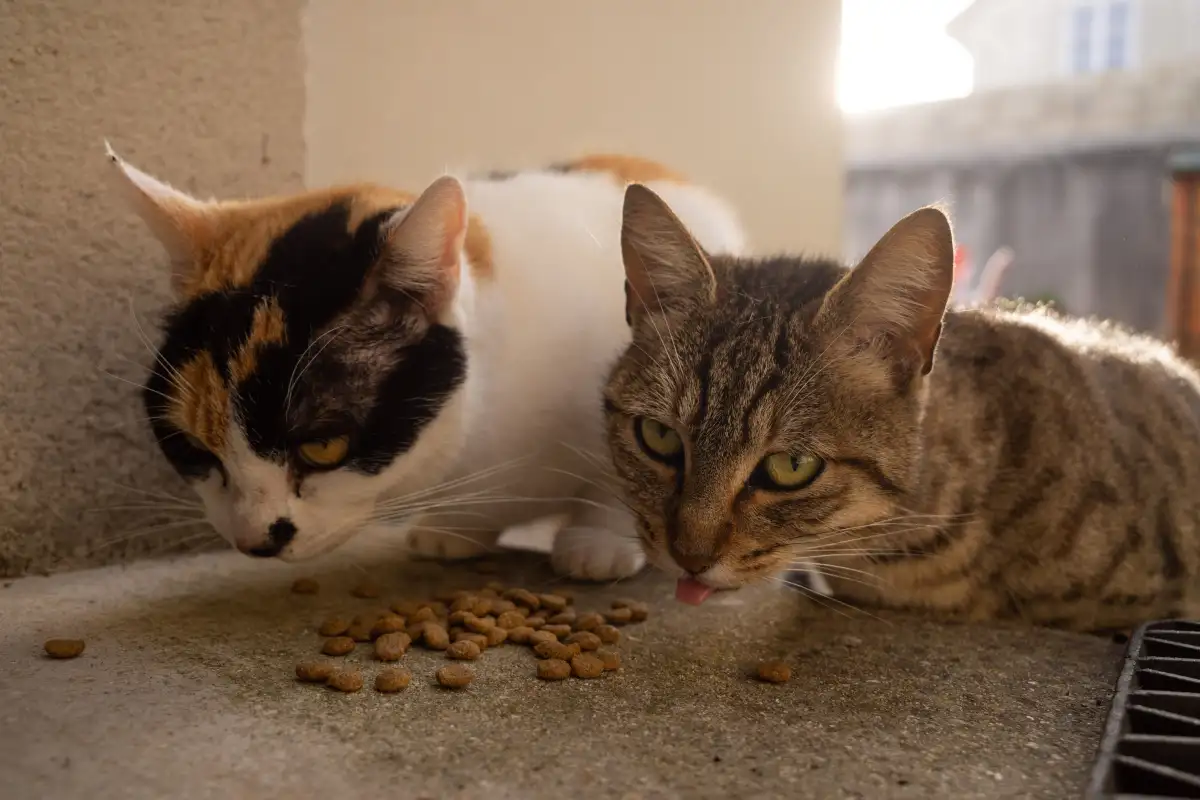
I run that arithmetic most mornings at 6:40, before anyone else is up, standing at the counter with a can in one hand and a measuring cup in the other, deciding who gets what. There's the old girl in the front room, the one whose litter box I check before I check my phone, and there are the two fosters in the spare bathroom who came in together and eat like the bowl might be repossessed mid-meal.
What I'm calculating isn't protein percentage.
The moisture is settled before the cat reaches the bowl
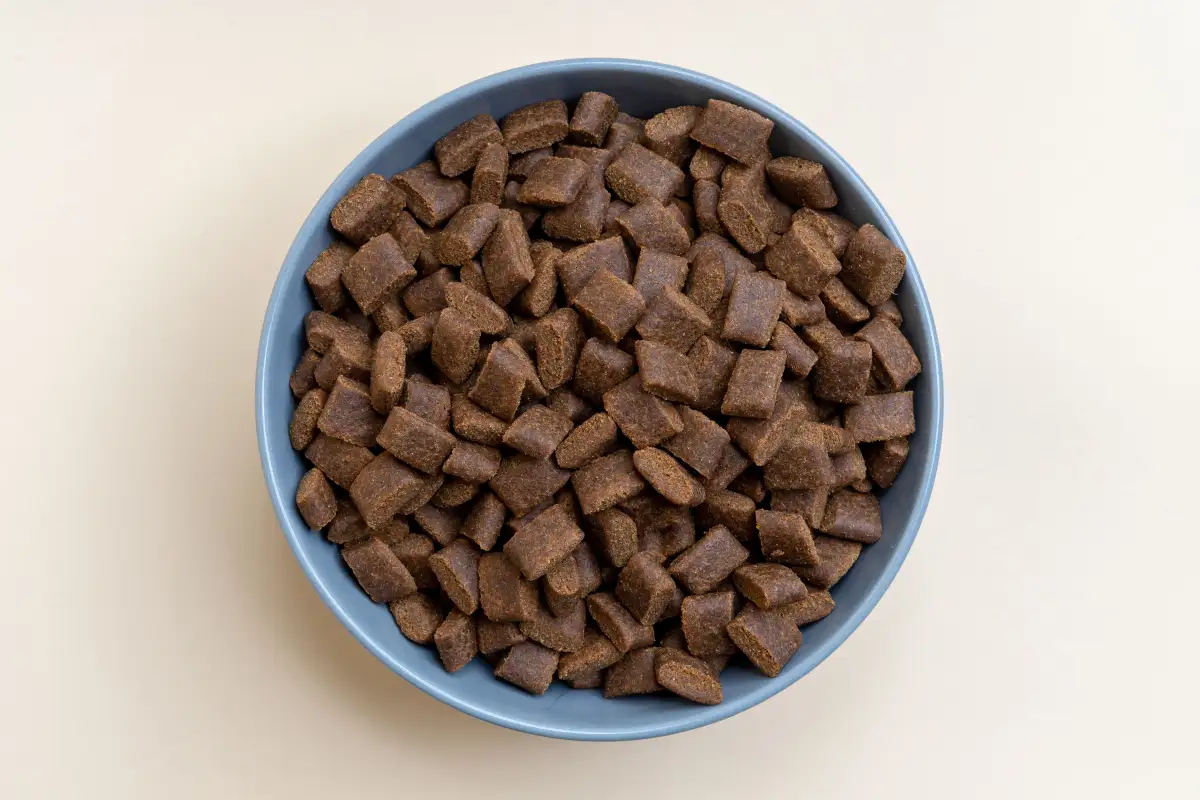
Run it roughly. A ten-pound cat eating a half cup to two-thirds of a cup of dry food a day is taking in maybe two to two and a half ounces of kibble by weight. At around 10 percent moisture, that's about a quarter of an ounce of water. A couple of teaspoons.
Feed that same cat the same calories as canned food — somewhere in the neighborhood of five to six ounces of it — and at 75 to 80 percent moisture you're delivering close to four and a half ounces of water. Not a couple of teaspoons. Closer to half a cup.
The gap between those two numbers is what the cat would have to drink out of a bowl every single day just to break even. Some cats do. Plenty don't. This is where the "my cat drinks plenty of water" reassurance usually falls apart, and it falls apart quietly, because nobody has actually measured it.
I'm not working to lab precision here and I don't need to be. The two formats land so far apart that the rounding error doesn't change anything. That's the useful part of the math: it tells you which way the lever moves before you spend a dollar.
Why the water bowl lies to you
Here's the thing I had to unlearn. A bowl does not report volume. It reports the height of a puddle.
I keep a wide, shallow ceramic bowl for the old girl, because a narrow bowl is a negotiation with her whiskers and she usually wins. That bowl is about seven inches across. An ounce of water spread over seven inches of surface is a film you would not notice. If she drinks an ounce and a half over the course of a day, the level in that bowl has dropped by a fraction of a millimeter, and I would swear to you nothing happened.
Put the same ounce and a half into a narrow four-inch bowl and the drop is visible.
So the cat who "drinks a lot" and the cat who "barely touches it" may be drinking similar amounts, and the difference is the dish and my eyesight. Before I changed anything, I put a strip of masking tape up the side of the bowl and marked the starting level each morning with a Sharpie. Two weeks of that told me more than any label ever did.
The things that affect drinking independent of food are almost boring, and they still matter. Fresh water daily, because a bowl that has been sitting out grows a film and cats notice. More than one water station, because a cat who has to walk past the dog or the litter box to drink will often just not bother. Placement away from the food bowl, which a lot of cats seem to prefer. Stainless or ceramic rather than something that holds a smell.
None of that closes a moisture gap of several ounces. All of it is free, and all of it counts at the margin.
The instrument you already own
The litter box is where all of this becomes visible, and it's the part nobody tells you to read.
I scoop before I feed. Clump size, clump count, how much falls apart on the scoop. Dilute urine tends to make larger, softer clumps that flatten out at the edges. Concentrated urine makes smaller, denser ones that hold their shape and sometimes come up like a stone. I am not diagnosing anything from a litter box — that's a veterinarian's job, not mine, and a change in output is a phone call, not a food-swap experiment. But as a baseline tracked over weeks, it's the only readout most of us ever get on how hydrated a cat actually is.
I learned to check it before I check the food bowl. The food bowl tells you what you served. The box tells you how it went.
Why cats don't just drink more
The usual explanation is that cats descend from small-prey hunters in dry country, and their water came with dinner rather than from a pond. Whether or not that's the whole story, the behavior in front of me is consistent: prey is mostly water, meals were small and frequent, and there was never much pressure to develop a strong thirst response.
What that means practically is that a cat on dry food is being asked to do something its body doesn't push it hard to do. The cat isn't being stubborn. It's just running the programming it came with. If water isn't in the food, a lot of cats will run a mild deficit and never once look like they're suffering for it — which is exactly why the deficit is easy to miss for years.
Closing the gap without rebuilding the whole routine
Feeding only wet food is not on the table in a lot of houses, and pretending otherwise is where most advice gets useless. I foster. There are stretches where I have four cats in three rooms on three feeding schedules, and the dry bowl is the thing that keeps the house functional — it can sit out for hours if it has to, and nothing spoils. Canned food can't do that. In a multi-cat home, free-feeding dry is often load-bearing, and it's not a moral failing to admit it.
So the lever isn't switch or don't switch. It's shrink the gap.
A spoonful of wet food alongside or on top of the dry ration is the least disruptive thing I do and probably the highest-yield. Two tablespoons of canned food is roughly an ounce and a half of water, delivered with calories attached. It doesn't require renegotiating the whole schedule, and it doesn't require the cat to accept a new texture across an entire meal.
That last part is the trap. Texture and shape preferences are individual, and they are not negotiable by force. I've had cats lick the gravy off and leave the loaf. Cats who would only eat pâté. Cats who would only eat shreds. One who would eat anything as long as it was slightly warmed. Format changes get mixed in gradually over several days — a quarter of the new next to three-quarters of the old, and hold there until the bowl comes back empty before shifting the ratio again. Go cold turkey on a cat who is already suspicious and you'll get a hunger strike and a step backward.
What I'd actually tell someone starting this week
Pick one thing and measure it. Mark the water bowl, refill it at the same time each day, and note the level for a week. Note the clumps you scoop. Then add a spoonful of wet and hold everything else steady, and watch whether the box changes over the next two weeks. If it doesn't, add another spoonful.
Not because canned food is the answer to every question. Because the question was never really about ingredients. It was about how much water came with dinner, and how much of the shortfall a cat would cover at the bowl. Most won't cover much. The food has to do more of the work.