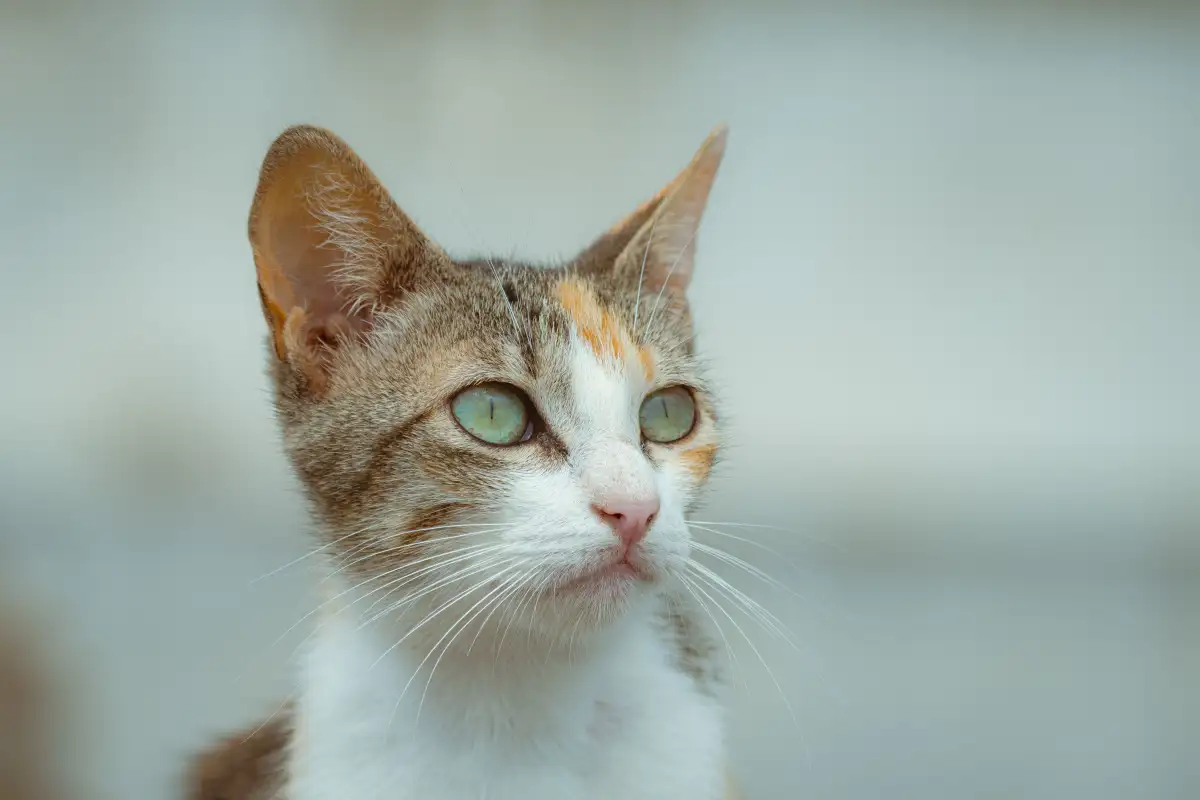
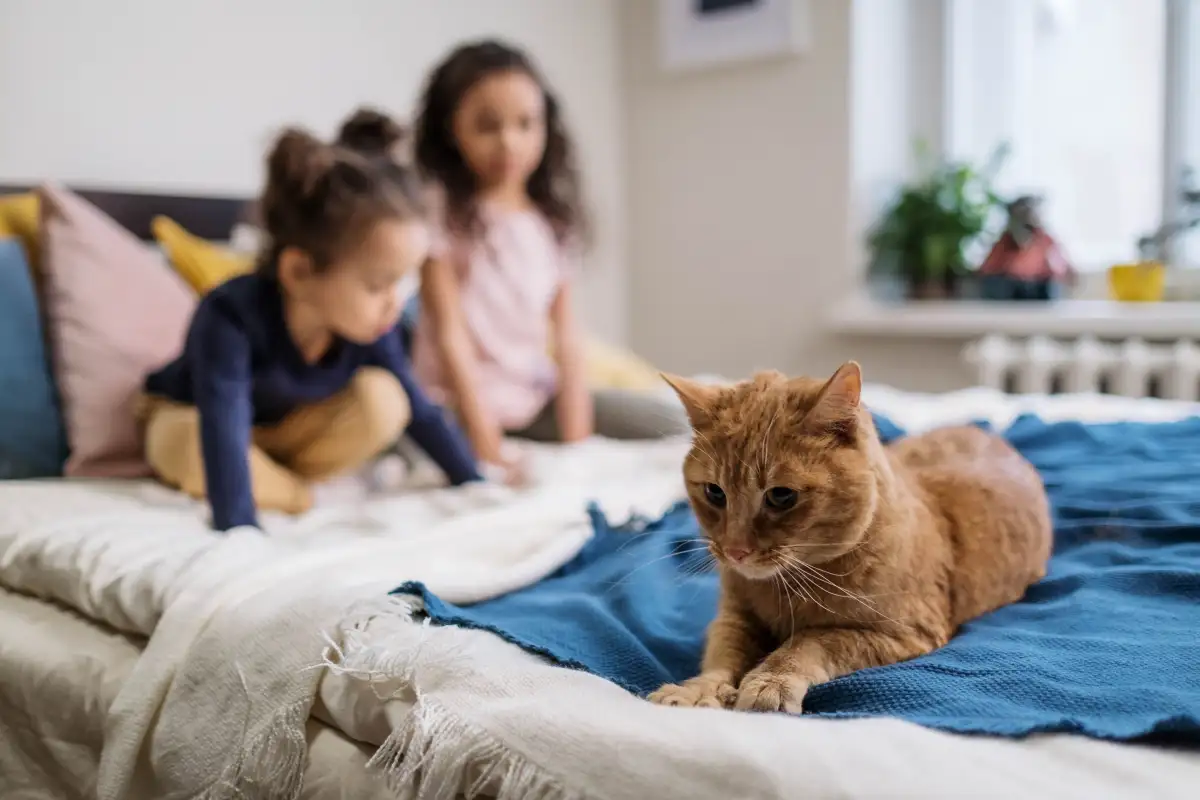
A longhaired cat needs roughly ten to fifteen minutes of grooming most days, a medium coat needs a few minutes three or four times a week, and a short coat usually gets by with one real session a week plus a quick pass over the trouble spots. That is the honest shape of the choice in front of anyone picking a cat. Coat length is not a look you select off a photo; it is a recurring bill paid in minutes, loose hair, and floor cleaning, and the cat pays the late fees when you stop paying it.
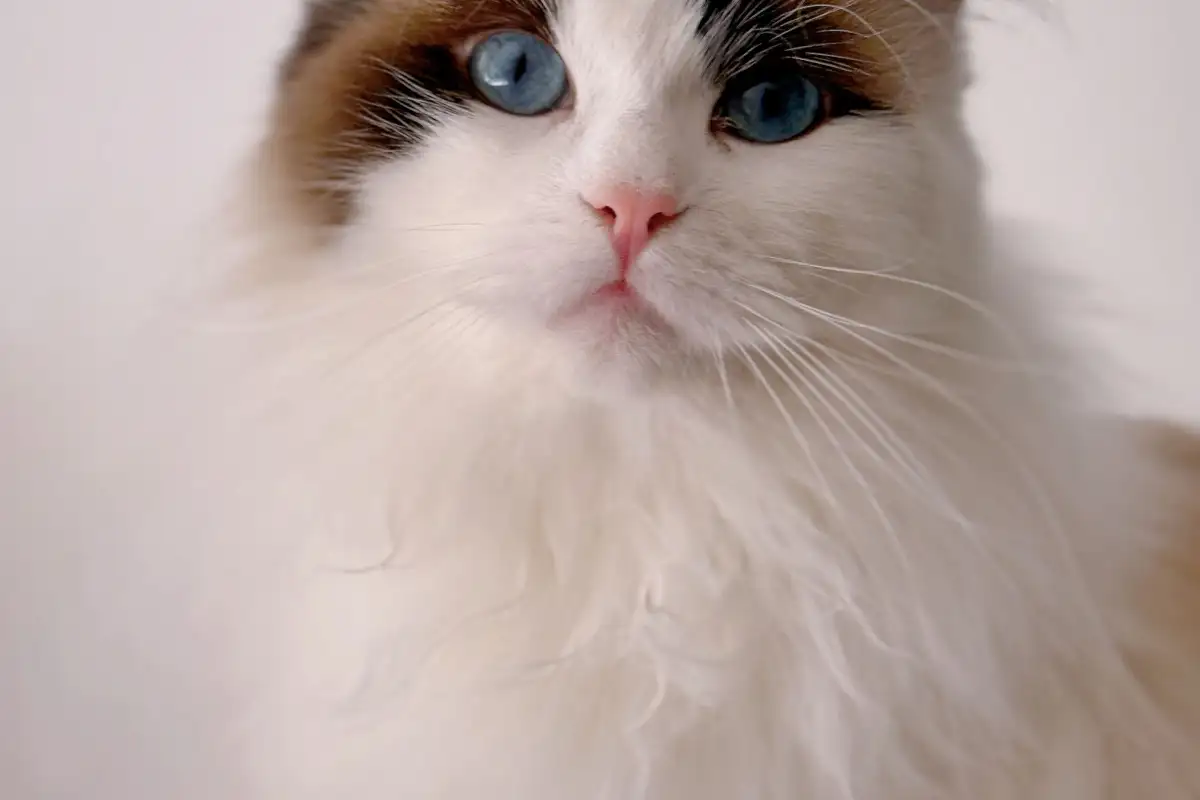
I have lived with all three lengths, and I still catch myself underestimating the long one. There is a version of this morning I have had hundreds of times. Kitchen light on, coffee going cold, one of the longhairs stretched across my thighs on the tile because she will not tolerate it anywhere soft. Ten minutes in and I am still working the same seam of loose undercoat behind her front leg. She is purring. My back hurts. This is the job, and it is not a special occasion. It is Tuesday.
The minutes, honestly
The ranges veterinary grooming guidance tends to give line up with what the clock tells me at home.
| Coat | Hands-on time | What skipping two days costs you |
|---|---|---|
| Short | 5 to 10 minutes, once a week | Almost nothing. The hair is on your sofa, not on the cat. |
| Medium | 2 to 5 minutes, three or four times a week | A few small tangles in the armpits and behind the ears that come apart easily. |
| Long | 10 to 15 minutes, most days | A felted patch that changes how the cat moves and how she feels about being handled. |
What nobody tells you is that the long coat is not ten times the work of the short coat. It is ten times the work done in one stretch, every day, forever. A short-haired cat can miss a week and nothing bad happens. A long-haired cat can miss two days and you will hear about it later.
I learned to think of it as a debt with interest. Every day you skip, the interest compounds in the exact places the cat cannot reach.
Where mats actually start
Mats are not a longhaired-cat problem in general. They are a specific-location problem, and the locations are predictable: the armpits, behind the front legs, the belly, the base of the tail, behind the ears, and anywhere a collar or harness sits against the coat.
Here is the mechanism, and it is worth understanding because it explains why you cannot just catch up on the weekend. The undercoat sheds continuously. On a longhaired cat, that shed hair does not fall away, because the longer guard hairs trap it. Two hairs catch each other. Then four. Then the little clump rolls against itself and felts into a solid patch, and once it is solid it starts to tighten, because hair that has matted does not stretch with the skin when the cat moves.
That is the part people miss. A mat is not a cosmetic problem sitting on top of the fur. It pulls. It tightens against the skin, and the skin underneath does not get air moving over it, and the cat stops wanting to be touched in that spot, which means the spot gets worse, which means the cat stops grooming there, which means the mat grows. It is a loop, and the cat is the one inside it.
That is the welfare issue in plain terms. A mat that has tightened against the skin is not something to solve on the floor at home. It is a conversation with your vet, and it is much easier to prevent than to unwind.
I have watched a cat go from jumping onto the counter to not jumping at all over the course of a month, and the only thing that changed was a patch the size of a thumb under one front leg.
Shedding, and where it lands
The shedding profile of a long coat is genuinely strange, and it cuts both ways.
A short-haired cat sheds constantly and distributes it everywhere. That hair is like glitter. It is in your laptop keyboard, the inside of your coffee mug, the seam of the couch cushion, the lint trap. It is on the outside world, and it is mostly your problem.
A long-haired cat sheds just as much, sometimes more, but a large fraction of it never leaves the animal. It stays trapped in the coat until you take it out. Your floors are cleaner than they have any right to be. Your cat is carrying around a second cat's worth of dead hair, and if you do not remove it mechanically, she is going to swallow it.
Season matters more than coat length in some ways. Most cats blow coat hard in spring and again more mildly in fall, and indoor cats under artificial light and stable temperatures often shed at a low level year-round instead of following the calendar. If you have ever wondered why your cat sheds in December, that is usually it.
The two-minute check
This is the part I would hand to anyone with a long coat, and it costs nothing. Twice a day, while the cat is already on you, run both flat hands along the body with the grain, then back against it. That is it. You are feeling for five things:
- A spot where the coat does not separate cleanly, roughly the size of a pea or bigger.
- Grit, plant debris, or anything stuck that is not hair.
- Warmth or a scab where the rest of the skin is cool and unbroken.
- A knot you can feel before you can see it.
- A flinch. If your hand passes over a place the cat usually tolerates and she twitches, remember that spot and look at it again tomorrow.
The flinch is the one people ignore, and it is the most informative thing your hands will ever tell you. Cats are good at hiding discomfort and bad at hiding it when you are pressing on it.
If the check turns up something that looks like skin trouble rather than hair trouble, that is not a grooming question. That is a vet question, and it should stay one.
Hairballs are a shedding problem, not a stomach problem
Long coats get the hairball reputation because the hair they swallow came off their own body. Every cat grooms itself and ingests some hair. A long-haired cat ingests more per grooming session because there is more loose hair sitting in the coat to pick up, and because the tongue is a one-way conveyor belt.
Regular grooming removes that hair before it gets swallowed. That is the whole relationship between coat length and hairballs, and it is straightforward: the hair you take off the cat is hair the cat does not eat.
I notice it in real time. On a week when I keep up with the long coats daily, I find far less of anything on the rug. On a week when I let it slide, I find it at six in the morning with a bare foot.
The allergy thing
No cat is truly hypoallergenic, and coat length does not predict how you will react. The protein most people are reacting to is produced in saliva and skin glands, and it spreads through the environment on dander and on shed hair. A hairless cat still makes it. A long-haired cat still makes it.
What varies is the load in your air and how sensitive you personally are, and that is not something you can read off a breed description or a coat length. If allergies are part of your household, coat length is the wrong variable to be shopping on. Spend time in a room with the individual cat, more than once, before you decide anything.
What actually decides whether you can keep up
The variable that determines your life with a cat is not coat length. It is tolerance.
A long-haired cat who accepts being handled is work, but it is fifteen minutes of boring work a day. A long-haired cat who does not accept it is a different animal entirely. Every session becomes a negotiation over the belly and the armpits, which are exactly the places mats form, which are exactly the places you cannot skip.
That tolerance is built long before the mat appears. It is built in short, dull, pointless sessions when the cat is young or newly adopted: thirty seconds, hands only, one side of the body, treat, done. No wrestling. No chasing. You are not grooming during those sessions. You are teaching the cat that hands moving over her body are normal and that nothing bad comes after.
Do that for a few months and the daily fifteen minutes is just a chore. Skip it and the coat description on the adoption page becomes a promise you cannot keep.
One more thing worth checking before you commit: kitten coats lie. A fluffy kitten may lose most of that fluff when the adult coat comes in, usually somewhere between six and twelve months, and a short-looking kitten can turn into a serious coat. If you are choosing, ask what the parents' coats look like as adults, not what the kitten looks like now.
So ask the unglamorous question. Not which coat you like. Which coat you will be willing to sit on the floor with at eleven at night, after a bad day, with a cat purring on your knees and a pile of loose hair gathering on the tile beside you. Pick the one you will still be paying for a year from now.