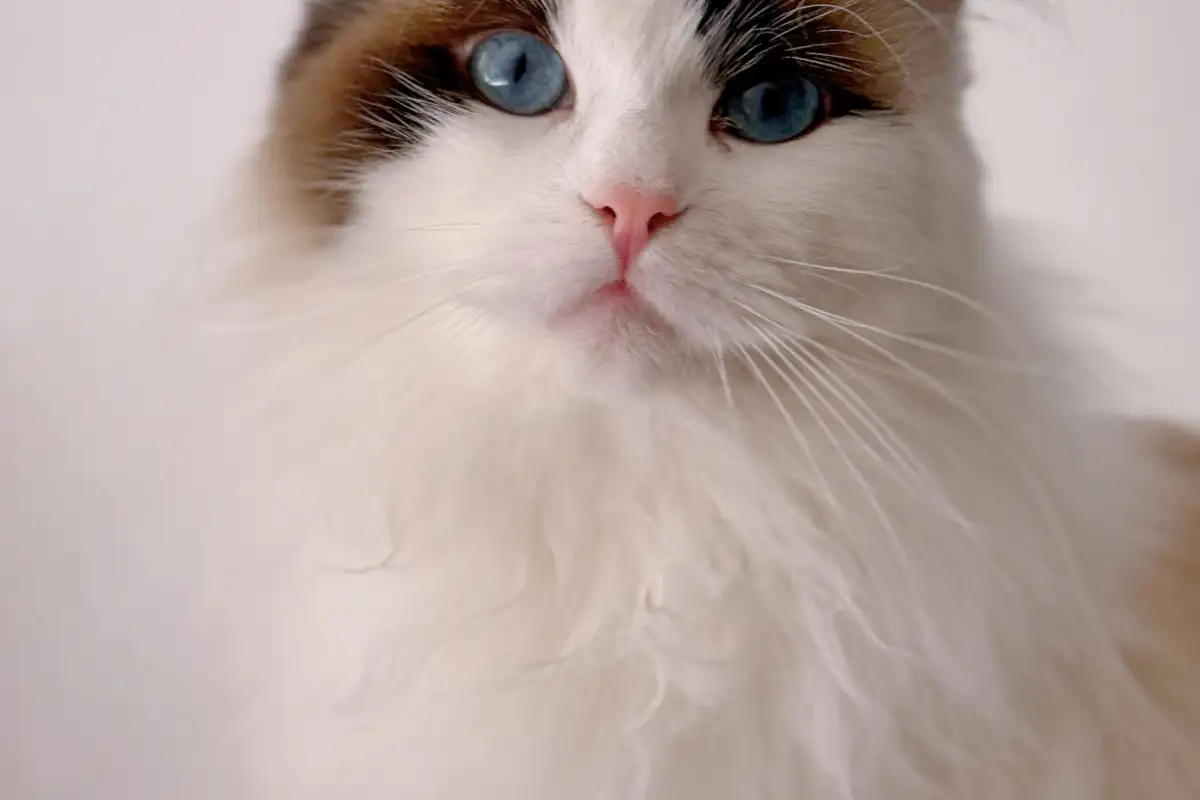
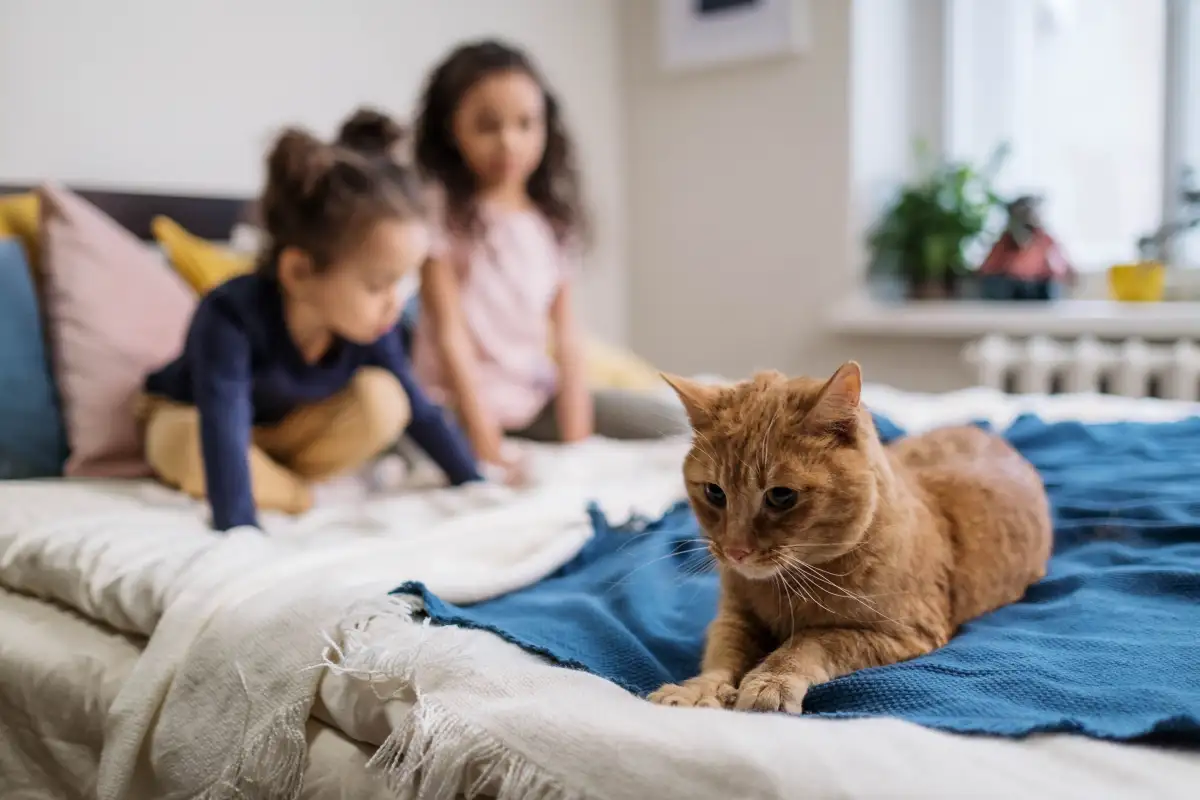
The right first cat is the one whose uncertainties you can actually live with, and life stage answers that question far more precisely than any ranking of ages does. A kitten is a shaping project with a blind ending. An adolescent is that same project mid-stream and louder. A young adult or mature cat is a temperament you can look at before you sign anything. A senior is the most predictable animal in the room, paired with a monitoring schedule. An adult cat is not the consolation prize in that list. For a household with a job, a lease, and a sleep schedule, it is often the more honest choice.
I want you to stand in a room with me for a minute. It is a Saturday, the kind of gray drizzle that makes a strip-mall parking lot shine. Inside, folding tables are pushed against one wall, a bag of litter is propping open a door, and the fluorescent light buzzes at a pitch you stop hearing after ten minutes. Somewhere behind you a carrier thumps as something inside it turns around. The air smells like cedar shavings and the pine cleaner they mop with afterward.
There are two cats in front of us.
One is a six-month-old tuxedo on the bottom shelf of a wire cage, and it has been in motion since we walked in. Pouncing on a feather that nobody is holding. Reaching a paw through the bars at nothing. When you crouch, it comes at you sideways, ears half back, all elbows, and puts its teeth gently on your knuckle.
The other is a tabby with gray around her mouth, maybe eight or nine, curled on the top platform of a cat tree in the corner. She has not moved since we came in. When you crouch near her, she opens her eyes, looks at you the way you'd look at a bus that isn't yours, and closes them again.
Now watch what happens in your chest.
The kitten picked you. The tabby rejected you. That is the story your brain writes in about four seconds, and it is wrong in almost every particular. What you actually saw was one animal in the highest-arousal state of its life in a strange room, and another animal behaving exactly as she will behave on your couch on a Tuesday in November. One of those is a preview. The other is a trailer for a movie that hasn't been cast yet.
You are not meeting the cat, you are meeting the cat's week
Here is the question I've learned to ask instead of "is she affectionate?" I ask what time she starts asking for breakfast. I ask where she sleeps when the house is quiet versus when people are over. I ask what she does when the front door opens, and whether she comes out for visitors or waits until the room clears.
Those answers exist for an adult cat. Someone has watched her do it, usually in a foster home, usually for weeks. They do not exist for a kitten, because the kitten has not done anything yet. Not because anyone is hiding information. Because there is nothing to report.
That is the whole reframe, and I'd rather say it plainly than dress it up: age is a predictability decision. You are not choosing between a good cat and a lesser cat. You are choosing how much of the animal's adult temperament you get to see before you commit, and how much of your own labor goes into the part you can't see.
Kittens: a shaping project with a blind ending
A young kitten is not a small adult cat. For the first several months, the job is closer to childcare than companionship. Small meals on a schedule that looks more like a baby's than an adult cat's. Litter box checks twice a day, because a kitten who stops using it is information, not defiance. A house audited from floor level: charging cables, hair ties, drape cords, the gap behind the refrigerator, the houseplant nobody thought about.
And sleep. Not the cat's, yours. A kitten has a burst of frantic energy at an hour you will not enjoy, and there is no negotiating with it. You can drain some of it with structured play before bed, but you are fitting your evening around a small animal's nervous system for a while.
The socialization window matters, and I don't want to wave it away. Roughly two to seven weeks of age, depending on whose version you read, is when a kitten's tolerance for handling, sounds, and other species gets set to a large degree. A kitten that was handled daily in that window tends to be easier to touch, easier to vet, easier to move through the world. But a window is not a contract. It sets a floor, not a ceiling. Two kittens from the same litter, handled identically, can grow into one cat who greets every guest and one who lives under the bed for the first year of any new apartment. Genetics and individual variation are in there too, and neither of them comes with a label.
This is the part people underrate: when you take a kitten, you are not receiving a personality. You are running a shaping project with an animal whose adult self is a genuine unknown.
Adolescents: the stage that gets misread
Somewhere around six months the kitten becomes a teenager, and this is the stage I've watched the most people bounce off of. The body gets long and angular. The energy doesn't drop, it redistributes into climbing, testing, and a new interest in the top of the refrigerator. The adorable pounce becomes a full-weight ambush of your ankle at 6:40 in the morning. Everything that was cute at twelve weeks is now being done by a much more capable animal with opinions.
What makes adolescents so easy to misjudge is that they look like adults in photographs. A person walks into a room expecting a settled cat and gets a teenager, and they read the gap as the cat being "bad" or "wild." It isn't either. It's a stage, and it passes, usually somewhere between a year and eighteen months, though nobody hands you the receipt with a date on it.
Adolescence is also, quietly, the best-value stage for a lot of households. The temperament is starting to show. The body is done with the fragile parts. If you want a cat you can play hard with, teach tricks to, harness-train, or take on trips, this is often where the ceiling is highest — you get stamina and a brain that can still be taught, without the fragility of a very young kitten.
Young adults and mature cats: what "known" actually means
By the time a cat is around one to three years old, the personality is largely on the table. By three to nine, it's set enough that you can plan around it. Not perfectly — a cat described as velcro in a quiet foster home may be a different animal in an apartment with a dog, a toddler, and a doorbell that rings six times a day. Context does real work here. What you're buying with an adult isn't a guarantee; you're buying a sample size greater than zero.
That's a real difference. I've known people who spent the first year with a kitten waiting for a personality to appear, and people who met an adult cat, watched her ignore a visitor, and knew within twenty minutes that she was going to be exactly the cat they wanted. The second version isn't a shortcut. It's just better information.
Seniors: the quietest company and the most monitoring
A cat past roughly ten or eleven is, in my own history with them, the easiest animal to live with and the one that asks the most attentiveness from you. The energy is low. The schedule is a schedule. A senior who has been in a home tends to have already formed her opinions about laps, bedtime, and whether the vacuum is a threat, and she will not develop new ones on your watch. For a quiet household — someone who works from home, someone with a small stable routine, someone who wants company without chaos — this is an excellent match and it doesn't need defending.
The tradeoff is honest and I won't soften it: monitoring compresses. Weight, water intake, litter box habits, and whatever checkup rhythm your vet has already established become a regular item rather than an annual one. If that kind of attention reads to you as a chore you'd resent, that's a real answer about fit, not a moral failing.
Sorting yourself instead of the cats
Forget ranking the ages. Rank your own tolerances. I'd take these four questions and answer them honestly, in writing, before anything else:
- How many hours a day is someone actually awake in the house? A kitten needs meals, cleanup, and structured play in bursts through the day. An adult does not.
- How do you behave in month seven, when the cute thing is now a teenager chewing a cable at 5 a.m.? If the honest answer is that you'll be furious, don't take that stage.
- Do you want a project, or do you want a companion? Both are legitimate. Some people genuinely want to raise a kitten and shape it, and they should. The mistake is wanting predictability and buying unpredictability, or the other way around.
- Does a monitoring habit in year one of the relationship feel like care or like burden? That answer sorts seniors for you faster than any description of a cat will.
One more thing worth saying plainly: two kittens is sometimes less work than one, because they drain each other. That's a real tradeoff to weigh against the cost and space — not a rule, and not a thing to do if you wanted one cat.
If your answers point to an adult, you'll walk into rooms and meet cats who don't perform for you. Stillness is not rejection. A cat who watches you from a shelf for ten minutes and then gives you one slow blink has told you more about your next decade than a kitten who bites your shoelace ever could.
And if your answers point to a kitten, take the kitten. Just take it knowing you're signing up for a shaping project whose ending is genuinely unknown. The one thing I'd ask you not to do is stand in that room with the drizzle outside and the buzzing light and the feather nobody is holding, and quietly downgrade the tabby on the top shelf to second choice because she didn't audition.