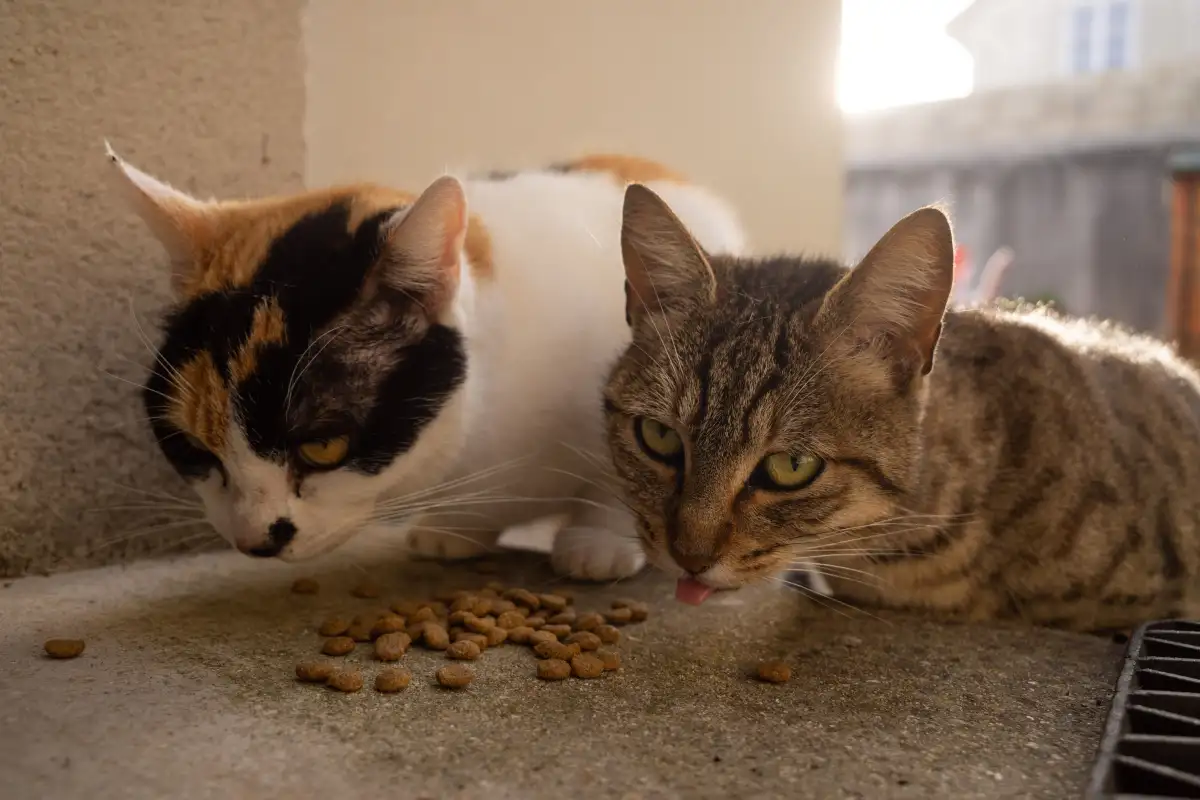
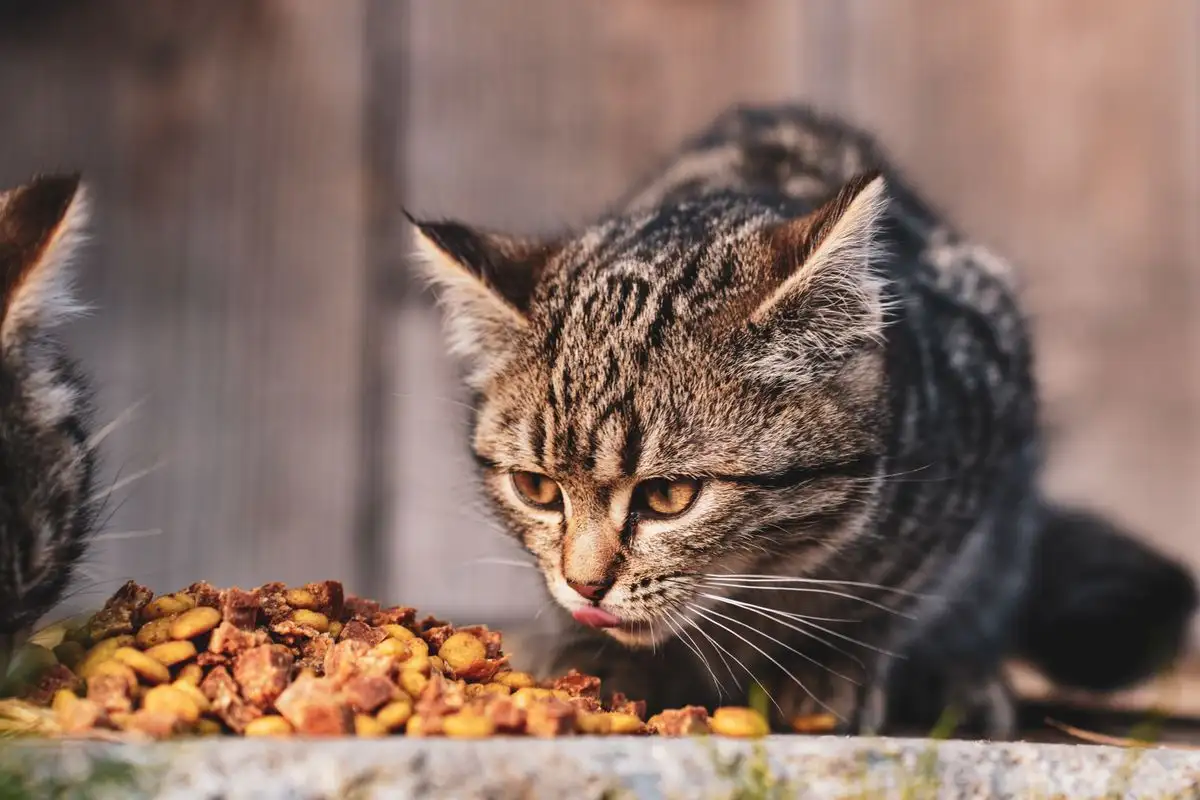
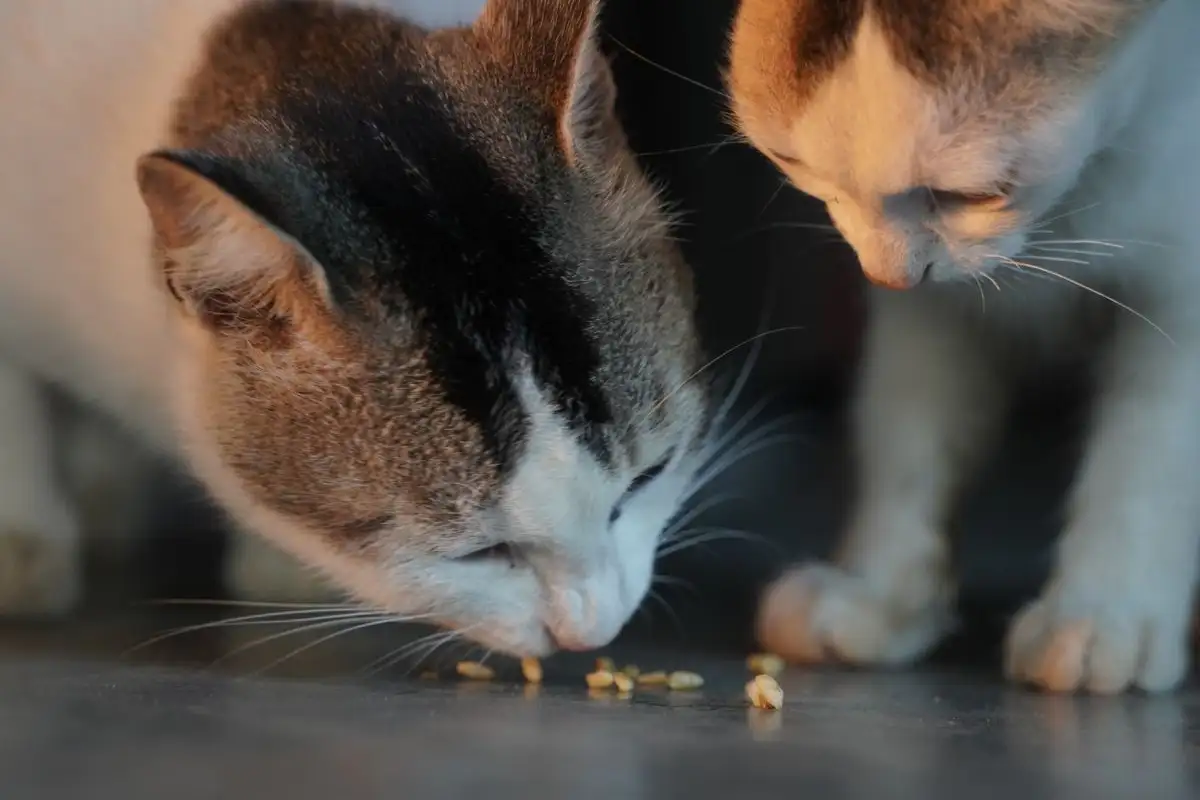
Five common feeding claims need five narrow corrections, not a blanket dismissal: grain-free food is not automatically low-carbohydrate, milk is not a harmless treat for most adult cats, a vegetarian diet conflicts with a cat's need for preformed taurine, arachidonic acid, and vitamin A, free-feeding does not make most indoor cats reliable self-regulators, and dry kibble does not meaningfully clean teeth. The practical test for any of these claims is whether the diet holds up against the AAFCO nutrient profile for the cat's life stage.
You are in my kitchen, holding a bag of grain-free kibble while I scrape a can into a bowl. The bag crinkles every time you shift your grip. The cat circles your ankles, then sits on my foot. On the counter is a carton of milk you brought because the cat meowed at the fridge. I ask you to read the ingredient list to me. You read chicken, chicken meal, potatoes, peas, tapioca, and stop. That is the first crack in the story.
Most people repeating these claims are not careless. They have a true fragment. The grain-free bag really is grain-free. Milk really is a traditional thing to offer a cat. Free-feeding really is convenient. The correction is narrower than you are wrong about everything. That is the habit I want you to take out of my kitchen: find the narrow correction, not a reason to sneer at the person holding the bag.
The bag says grain-free, not low-carb
I take the bag from you and turn it so the guaranteed analysis faces the light. Grain-free means no grain ingredients, usually no wheat, corn, rice, barley, or oats. It does not mean the carbohydrate content dropped. Many grain-free formulas swap grains for potatoes, peas, tapioca, or other starches. Those are carbohydrate sources. The carbohydrate did not vanish. It changed address.
To know whether a food is low-carb, you have to look at the calories and the estimated carbohydrate content, and you have to know what low-carb means for the cat in front of you. There is no regulated definition of low-carb on a cat food bag the way there is a nutrient profile for complete and balanced. Grain-free is a formulation and marketing term. If your cat does well on a grain-free food, that is fine. The problem is sliding from grain-free to low-carb without checking. A grain allergy is a specific diagnosis, not a reason to assume every grain-free bag is lower in carbs.
The milk carton is not a treat; it is a lactose test
You reach for the carton. I put my hand over the top. Most adult cats are lactose intolerant. They lose the lactase needed to break down lactose after weaning. Milk and cream can cause diarrhea, gas, and an upset stomach. The cat may still lap it. Lapping is not proof of tolerance. The consequence often shows up hours later, on the rug or in the litter box, and by then nobody connects it to the saucer.
Here is where people get defensive, and I understand why. Offering milk feels like affection. It is a familiar image. But a treat is something that does not make the animal sick. Water is the default drink. If you want to give something special, a small amount of the food the cat already eats is safer than dairy. Some cats can handle a little milk. That does not make milk a general cat treat. The correction is narrow: do not build a habit on a species-wide intolerance because one cat once seemed fine.
A vegetarian bowl fails on three nutrients before it fails on philosophy
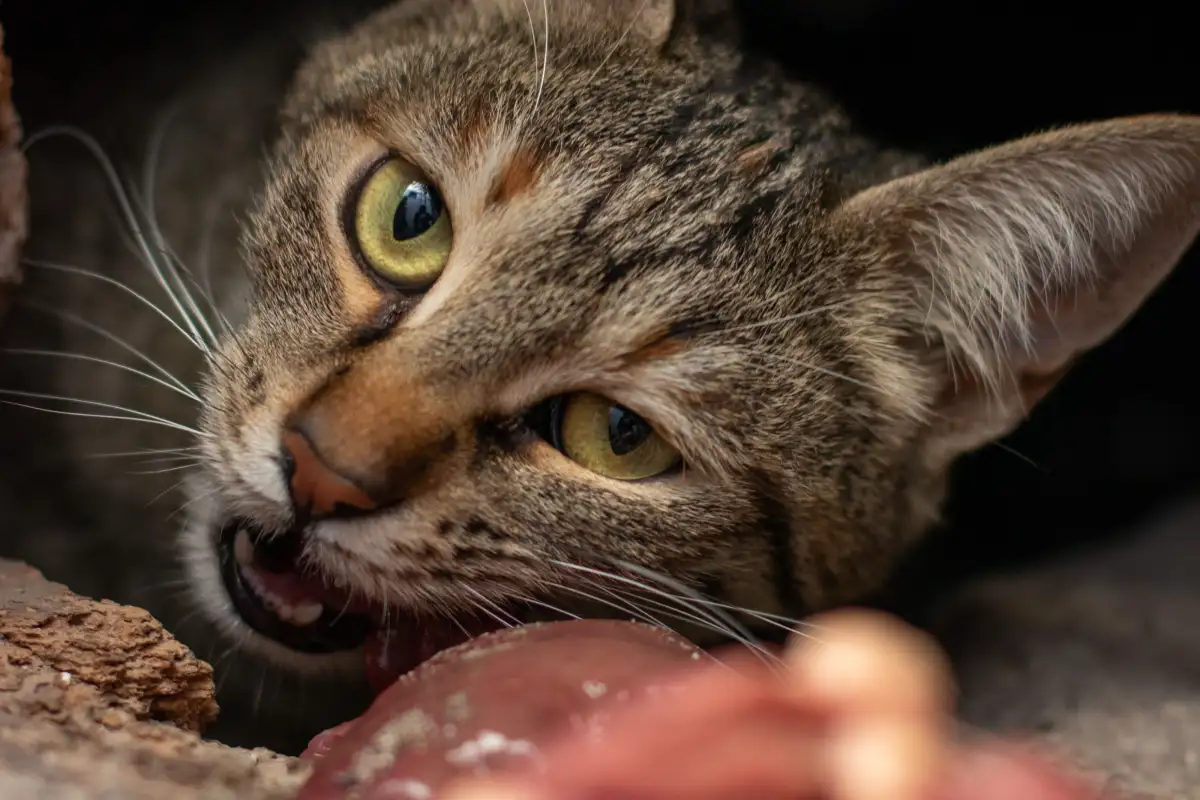
Later, you tell me about a forum post: someone's cat is thriving on a vegetarian diet. I do not doubt the cat is alive and looks okay today. I doubt the diet is complete. Cats need preformed taurine, arachidonic acid, and vitamin A. Those are not optional extras. Taurine is an amino acid found in animal tissue; a cat cannot make enough of it. Arachidonic acid is a fatty acid that cats cannot synthesize adequately from plant oils. Vitamin A is needed in a preformed form; cats cannot efficiently convert beta-carotene from plants. A diet missing those can look fine for a while and then fail in the heart, the eyes, the skin, or elsewhere.
Can a commercial vegetarian cat food be formulated with synthetic taurine and other nutrients to meet AAFCO? In principle, a maker can add nutrients. But that is a formulation and testing question, not a philosophy question. A homemade vegetarian bowl of rice, lentils, and vegetables is not complete. The claim that cats can be vegetarian conflicts with the cat's biology at the nutrient level. If someone wants to feed a vegetarian diet, the only responsible version is one formulated by someone with feline nutrition training and checked against AAFCO. Even then, I would want a vet involved. That is a limitation, not a loophole.
Free-feeding is not self-regulation; it is a buffet with a cat in charge
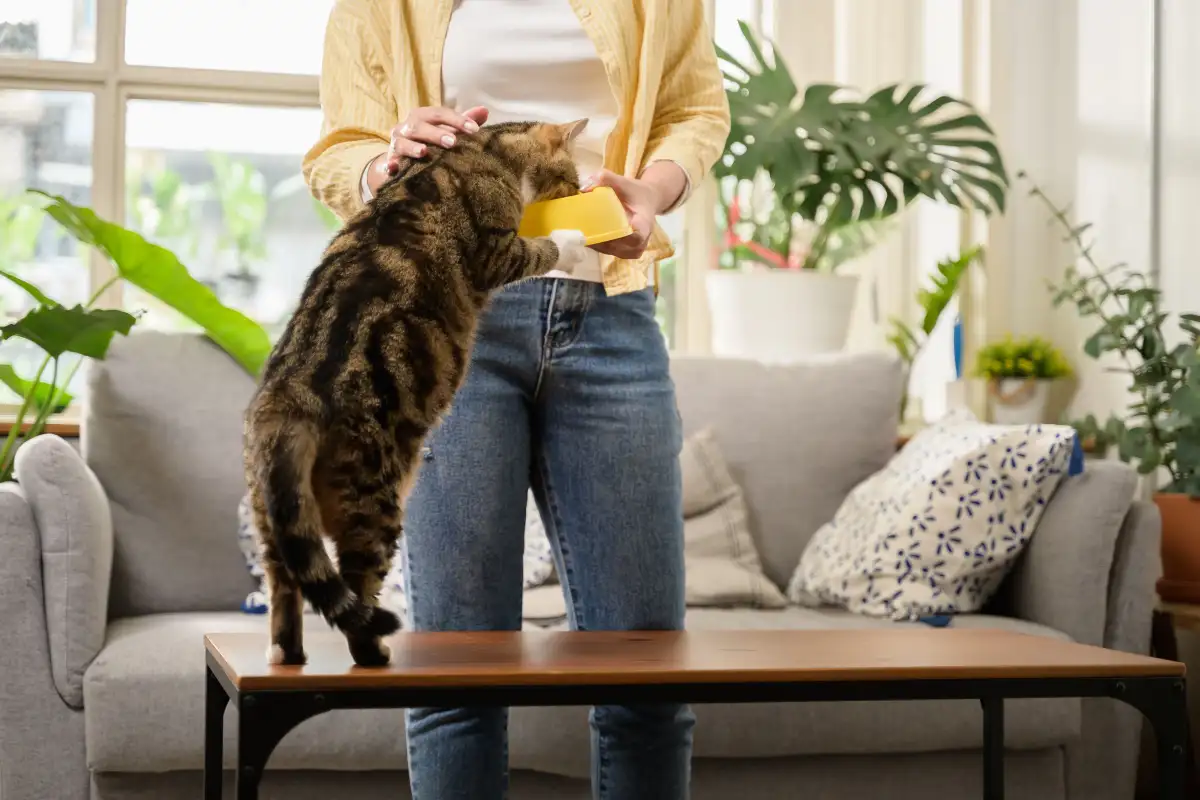
At my house, the food bowl is not a bottomless pit. I learned that the ordinary way: I filled a large bowl, the cat ate whenever he passed it, and the body condition score crept up. Indoor cats with food left out often eat past their actual energy needs. They are not little calorie accountants. Some cats do fine with free-feeding, especially young, highly active cats, or cats who need multiple small meals for medical reasons. But cats self-regulate is not a feeding plan. It is a hope.
I use a measuring cup. I split the daily amount into meals. I check the cat's ribs and waist with my hands, not just my eyes. If the cat cries, I do not assume hunger; I check the amount, the time, and whether the crying is about food or about me being in the kitchen. That sounds cold. It is not. It is the difference between treating food as affection and treating it as nutrition.
The crunch you hear is not a toothbrush
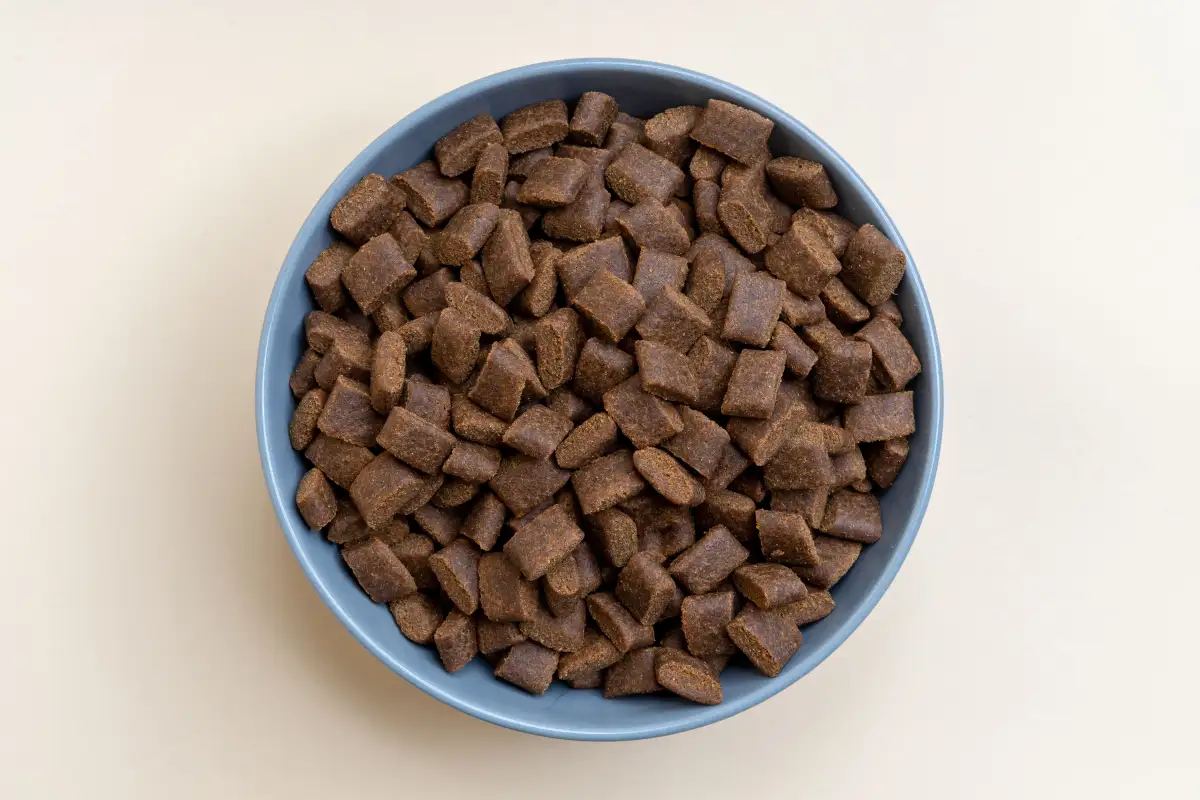
You drop a piece of kibble on the tile. The cat crunches it once and swallows. You say, At least it cleans his teeth. I wish. Dry kibble does not meaningfully clean teeth because most cats swallow it whole with little chewing. The mechanical action is brief and uneven. It does not reach the gumline the way brushing does. It does not remove the plaque that causes gingivitis. It is not a substitute for dental care.
Kibble is not evil. It is convenient, it can be part of a complete diet, and some cats do better with it. But convenience is not dentistry. If you want to protect teeth, you brush with cat-safe toothpaste, you get dental checks, and you follow a vet's plan if there is dental disease. A dental diet may have a role, but that is a specific product with a specific claim, not a general property of all dry food. I am not going to tell you a bag of kibble is a toothbrush because it makes a noise.
Why these myths survive, and the one test I keep coming back to
These myths survive because personal experience is vivid and nutrition science is not. A cat laps milk and does not have diarrhea that day, so the story becomes milk is fine. The diarrhea two days later is not connected. A cat eats grain-free and loses weight, so the story becomes grain-free is low-carb. The cat might have lost weight because the food is less calorie-dense, or because the owner measured it for the first time, or because the cat had dental pain and ate less. The story is memorable. The mechanism is not.
When I need to test a feeding claim, I do not start with a forum or a bag. I start with the AAFCO nutrient profile for the cat's life stage. AAFCO is not a brand, a guarantee of quality, or a vet. It is a nutrient standard. The label should say the food is complete and balanced for the life stage, either by formulation or by feeding trial. If a claim cannot survive that standard, it is not a feeding plan. If it can, I still look at the cat: body condition, stool, coat, energy, water intake. The bag is a claim. The cat is the evidence.
That is the habit I want you to take out of my kitchen. Do not throw out the whole idea because one part is wrong. Find the narrow correction. Grain-free may be right for your cat; it still is not low-carb by default. Milk may be a fond image; it still is not a treat for most adult cats. A vegetarian diet may be an ethical choice for a person; it still is not a complete cat food without serious formulation. Free-feeding may work in your house; it still is not self-regulation. Kibble may be convenient; it still is not dental care. Test the claim, not the person.