No mixed-breed cat comes with a shedding rating, so the answer has to come off the cat itself: part the fur along the spine, lay a flat palm on the shoulders and stroke back toward the tail, then look at your hand and at a dark square of cloth. A domestic shorthair with one close-lying coat often leaves almost nothing behind. A cat carrying a dense undercoat can leave a gray shadow on black fleece in a single pass. "Mixed breed" tells you nothing about shedding. The individual coat tells you nearly everything.
I keep a strip of black fleece folded in my bag next to a fine-toothed flea comb that has lost three teeth. That strip has been on more cats than most people's lint rollers. It comes out at folding tables in parking lots, in the back room of a clinic during a foster handoff, on a kitchen floor at eleven at night when a friend is one deposit away from a cat she has never touched.
Here is the ninety seconds I spend.
The coat check, in the order I do it
Start with the flat palm. Not a grab, not a scratch behind the ears — lay your hand on the shoulders and pull it slowly down the spine to the base of the tail, then look at your palm in the light. You are looking for two different things: individual hairs standing up on your skin, or a soft felted clump. Single hairs mean a cat that releases coat continuously. A clump means undercoat that is ready to come out.
Then the cloth. Rub the fleece against the grain along the flank and the hindquarters, once, and hold it up. On a light-shedding cat you will see a faint dusting. On a double-coated cat you get a streak you can write in.
Then part the fur. Push the hair forward along the spine with two fingers and look at the skin. If you see skin quickly and the hair lies flat and thin, that is a single coat. If your fingers meet resistance and there is a woolly layer under the longer guard hairs, that is an undercoat, and it is going to end up somewhere in your house.
Check the base of the tail and behind the ears. Those are the two spots where dense coat shows up first and where matting starts. A thick, bottlebrush tail base on a shorthair is a strong hint that there is more coat there than the silhouette suggests.
And look in the carrier. The towel at the bottom is the most honest sample in the room, because it has been sitting under that cat for an hour while nobody was performing a test.
What the hand test is actually measuring
Not how much hair the cat has. How much of it is loose right now, and whether it comes off in single strands or in sheets. Those are different problems. A single-coated cat leaving stray hairs all year is a nuisance you can live with. A double-coated cat holding a winter undercoat in April is a ten-day event that will coat your curtains.
"Sheds less" and "sheds less visibly" are not the same claim
This is the part that gets lost when people talk about low-shedding cats. A cat with one close-lying coat and no real undercoat often drops very little on any given day, and what it does drop is short and fine and settles into upholstery where you stop noticing it. A double-coated cat can be almost pristine for eight months and then blow coat twice a year in a way that fills a brush in four strokes.
Add those up over twelve months and the totals are closer than the daily experience suggests. What most people mean when they say their cat doesn't shed is "I never see clumps." That is a real and reasonable thing to want. It is just not the same as a cat that produces less hair overall, and it changes what you should expect from a mixed breed you are meeting for the first time.
I have also learned to distrust the reading I get on the day. A cat at an intake table is stressed, which pushes more coat out than the cat would lose in your living room. A cat met in February is holding its winter coat and looks plush and low-shedding. The same cat in May is a different animal.
So I ask. Not "does she shed a lot" — everyone answers that question wrong, because everyone's baseline is different. I ask what the foster's lint brush looked like in May, and whether the cat left hair on the car seat on the drive over. Concrete history beats a stranger's adjective.
The season and the thermostat
Shedding in a mixed-breed cat runs on light and temperature, not on the calendar page. Cats in climate-controlled homes under steady artificial light often shed more evenly across the year instead of in two hard pushes, which reads as "sheds constantly" to some people and "never blows coat" to others. Forced-air heat dries the coat and skin and loosens more hair through the winter than you would expect. Moving a cat out of a cool intake room and into a seventy-two-degree apartment can visibly change what comes off it within a month.
Age moves the line, too
The coat you see on a ten-week-old kitten is not the coat that cat will wear at two years. Kittens in a shelter often sit in a scruffy transitional coat that looks short and flat. Then the adult coat comes in, the undercoat fills, and a cat that looked low-shedding grows into a full winter coat that surprises everybody. If someone is choosing a mixed-breed cat specifically because it looked light-coated as a baby, that is the expectation most likely to break.
Where the Rex and hairless traits fit
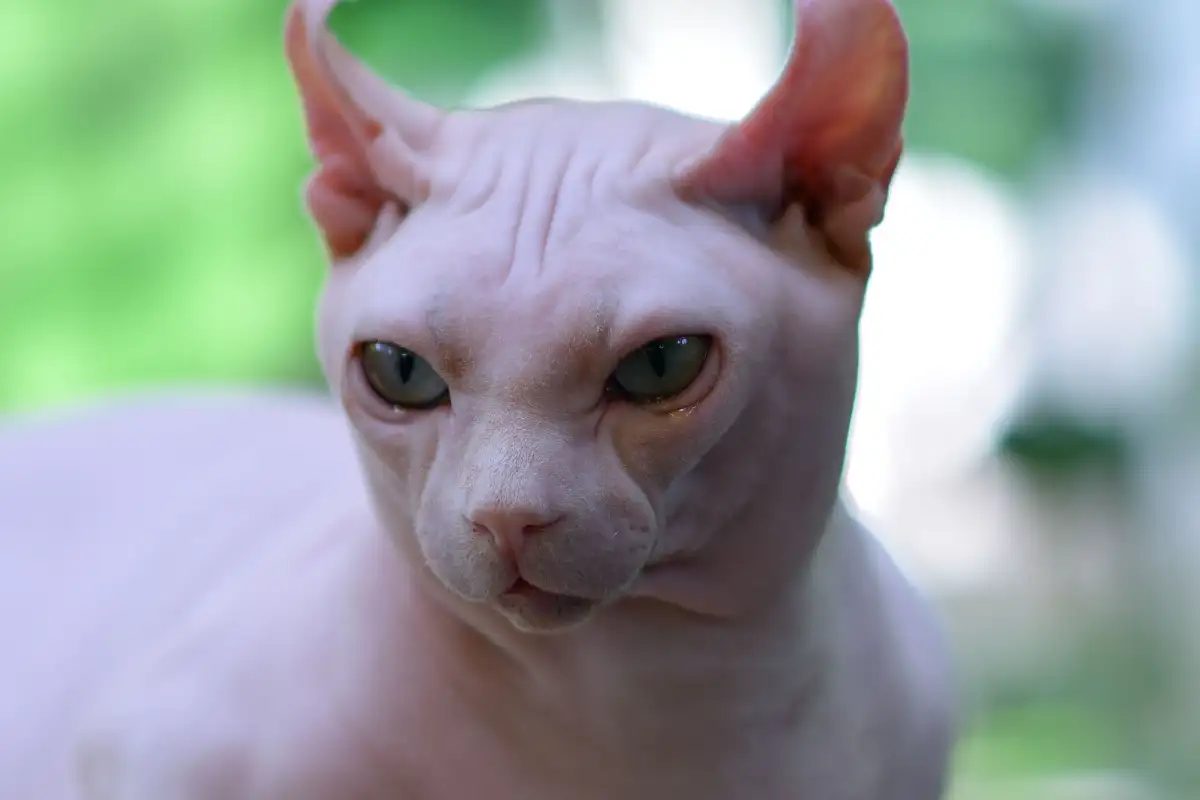
They exist, and they work. Devon Rex, Cornish Rex, and Sphynx coats come from specific mutations, and cats carrying those traits genuinely shed very little. The catch is that these are defined mutation lines, not a general property of mixed breeding. A Rex trait turning up in a random domestic litter is possible and unpredictable, and you cannot look at a shorthair kitten and decide it carries one. Even hairless cats leave oil marks on bedding and produce a fine down that has to be wiped off furniture. So if low shedding is the whole reason for choosing a cat, a mixed breed is the wrong place to shop for a guarantee — a known line is, and even then you are trusting a label more than your own hand.
What actually reduces hair in the house
Grooming, and it works on cats that are not remotely low-shedding. Five minutes a week with a rubber curry mitt on a double-coated cat pulls out the loose undercoat before it becomes airborne, and the difference in what lands on a couch is not subtle. On a single-coated cat the same effort does very little, and a fine metal comb on that coat mostly scratches skin — a soft rubber mitt is the right tool there.
Diet and skin condition matter more than most people credit. A dull, scurfy, brittle coat with heavy dander is a coat that is breaking and dropping. Protein level, hydration, and parasite control all show up in the hair before they show up anywhere else. If the coat looks bad rather than just abundant, that is a conversation for a veterinarian rather than a grooming problem, and sudden bald patches or symmetrical thinning on the flanks especially so.
One more thing worth separating: shedding volume is not the same as allergen load. The protein people react to rides on skin secretions and saliva and travels on hair and dander, so a cat that leaves little hair behind is not automatically an easier cat for an allergic household. "Hypoallergenic" means nothing on a mixed breed, and no honest assessment of a coat can promise it.
The cloth goes back in my bag. What it picked up is the only forecast I trust, and even that comes with an asterisk the size of a season.