If a lower-shedding shorthair is what you're after, the four breeds that come up again and again for good reason are the Siamese, the Burmese, the Russian Blue, and the Oriental Shorthair. All four carry a short, fine, single coat — a top layer of hair with little or no thick down beneath it — and that structure is what puts less loose hair on a couch cushion or a coat sleeve than the plush double coats most people picture when they picture a cat. Lower is the operative word. Every one of these cats still sheds daily, still needs a brush run over it a couple of times a week, and can still leave a hairball on the rug. What changes is the volume and where the hair ends up, not whether it exists.
The first time the difference really landed for me, I was on the floor of a spare room with a cat across my knee and a black fleece jacket hanging on the chair behind me. The cat was a Russian Blue mix, gray with that silver tipping on the ends of the hairs, and I did what I always do without thinking about it: I laid my hand flat and pushed the coat backward, from her hips up toward her shoulders. The fur parted in a clean stripe. Underneath, where the window light got in, I could see skin and a thin haze of fine undercoat — not the felted mattress of fluff that sits under a British Shorthair or a Maine Coon. She half-turned, annoyed, and resettled. I pressed my palm against the black fleece and then held it up. Six hairs. Maybe seven.
That night I did the same thing to my own cat, a domestic shorthair I'd pulled out of a county shelter years earlier. Same coat length, roughly. My hand came away with a small tuft between the fingers, and the fleece got a gray haze across the shoulder that took three passes with a lint roller. Same short hair. Completely different density. That is the piece most breed lists leave out, and it's the piece that should decide how you shop for a couch.
What a single coat is actually doing
A cat coat is three things stacked: how long the hairs are, how fine they are, and how much undercoat sits beneath them. Length is the one people fixate on. Density is the one that fills the vacuum canister.
A double coat has a dense downy layer under the guard hairs. Those cats dump that undercoat twice a year, in spring and fall, in tufts you find stuck to baseboards and in drifts under the bed, then shed comparatively little in between. A single coat skips most of that underlayer. The cat releases a small amount of hair continuously instead of a large amount twice a year. That's the trade: no blowout season, but a low, steady trickle that never fully stops.
Here's what nobody tells you about the trickle. Fine, short hairs behave differently on fabric than long coarse ones. A long hair sits on top of a woven cushion where you can see it and pick it up. A fine short hair works its way into the weave and disappears until you're sitting on it. So a low-shedding coat can put less hair in the room and still be more annoying on a woven sofa than the hair from a fluffier cat. I keep a lint roller by the door the way other people keep an umbrella. The vacuum runs less. The roller runs more.
How the four differ in practice
Siamese
Short, fine, lies flat against the body, almost no undercoat. They shed lightly through most of the year with a bump in spring. They also groom themselves hard, more than most breeds, which means more hair going down the throat and a higher chance of hairballs. If you're seeing a bald patch or thinning in stripes rather than normal shedding, that's a different conversation and it belongs to a veterinarian.
Burmese
Similar story with a coat that feels almost satin — very short, very close, and one of the lightest shedders I've had my hands on. Same self-grooming habit, same hairball risk. The seasonal uptick is real but mild.
Russian Blue
Denser than the other three, but the hairs are fine and the coat stands slightly away from the body rather than lying flat. In my experience they release less loose hair than almost anything else that size. They also have a reputation for producing less dander, and it's a reputation with something behind it. It is not an allergy cure. Cat allergens are a protein in saliva and skin secretions that gets spread around when the cat grooms, and a low-shedding Russian Blue still grooms. If someone in the house is allergic, this is a cat that might be more tolerable, not a cat that's safe. Anyone who tells you otherwise is selling something.
Oriental Shorthair
Built like a Siamese, with one of the shortest, tightest pelts in the domestic cat world and minimal undercoat. In practice they're among the least shed-y cats I've handled. They're also less common in the U.S. than the other three, so they don't turn up as often — worth knowing before you set your heart on one.
Judge the individual cat, not the label
A mixed-breed shorthair can shed just as lightly as any of the four above. I've met plain gray tabbies with coats so sparse you could see skin at the base, and I've met purebreds that left hair on my sleeve. Breed predicts the odds. The individual cat is the actual answer.
So test the cat. It takes ninety seconds.
Lay your hand flat on the flank and push the coat backward against the grain. Look at what's underneath. If you see skin and a thin, see-through layer, that's a light coat. If the fur springs back into a dense pad you can't see through, that cat will shed.
Then look at your palm. Count loosely — a few hairs, a pinch, or a tuft. Then press that palm to a dark sleeve or a dark cushion and see what transfers.
Ask what blanket the cat sleeps on. Whoever has been fostering or caring for that cat knows exactly which bed is furriest, and they'll tell you if you ask directly.
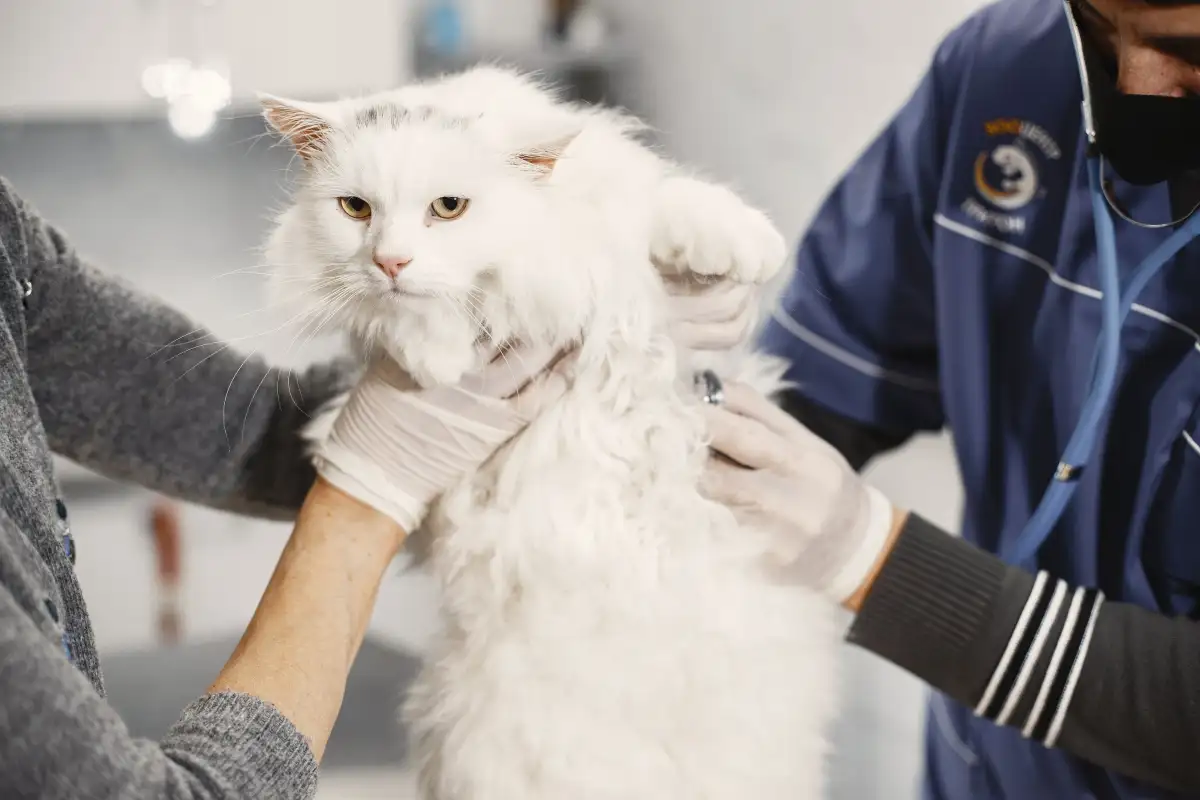
One caveat: a cat in a shelter or a vet's office is stressed, and stress pushes hair out. A cat that looks like a heavy shedder at a first meeting may settle into something much lighter two weeks after coming home. Weigh that in, don't ignore it.
The routine that actually keeps the house clean
Five minutes with a rubber curry brush or a fine-toothed steel comb, two or three times a week. That's most of it. In spring, bump it to every other day for a few weeks while the coat turns over. Brush the cat on a hard floor or outside rather than over carpet, because you want the hair in a pile you can sweep, not woven into pile fiber.
Put a washable throw wherever the cat sleeps most. One throw in the wash beats fighting a sofa cushion. A damp rubber glove or a squeegee pulls embedded hair off upholstery better than a vacuum attachment does. Skip frequent baths — they dry out skin and can make the coat worse, not better.
And hairballs: occasional is normal for any cat that grooms. Frequent hairballs, or a cat that vomits repeatedly, stops eating, or seems uncomfortable, is a vet visit, not a grooming problem.
When the coat changes
Shedding is not a fixed setting. It goes up with stress, with poor nutrition, and with skin problems, and a coat that suddenly turns thin, greasy, flaky, or dramatically heavier is telling you something. That's not a breed question and it's not something to solve with a different brush. Get the cat looked at.
The honest version of this whole topic is short. These four shorthairs shed less, and less is a real, measurable relief if you've been living with a double-coated cat. It is not zero, and a house with a cat in it is a house with hair in it. The trick is picking a cat whose hair lands in amounts you can manage with five minutes and a roller — and then being honest with yourself that five minutes is still part of the deal.