A cat's posture before a swipe is a prediction, not a mood, and the reading happens through mechanics rather than emotion words: where the weight sits, where the head is aimed, how much of the spine is coiled, and whether the ears and tail are locked or loose. A cat that has loaded its back end, tucked its head, and turned its face toward your hands has already picked its next move. The job in that half second is not to name a feeling. It is to notice that the decision is made, and to give the cat enough room to unmake it.
I watch the back end before I look at the face, and I've done it that way long enough that the order is automatic now. The face is the most interesting part of a cat and the least predictive. Ears swivel, pupils open, whiskers fan — all of that is reporting on the moment. The rear feet are where the decision has already been made.
Start With the Weight, Not the Face
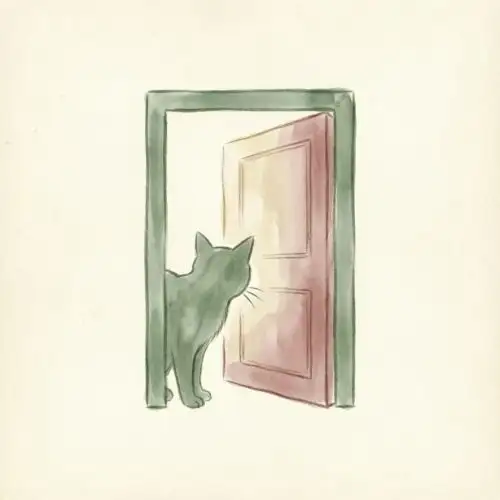
When a cat is about to move, the weight moves first. Front paws light, rear paws loaded, is a cat that has already chosen a direction, and it is almost never forward. That is the crouch: spine low, weight shifted back over the hocks, head tucked in toward the chest. It looks like a coiled spring in a cartoon. In a hallway with a folded towel on the floor and the door behind you, it looks like a cat that has found its exit and will hold the line while it decides whether to take it.
I glance at which way the shoulders are angled. That's the route. Under the couch, behind the laundry basket, through the gap you left when you came in. Once I know the route, I get out of it, and the crouch usually stops being interesting to the cat.
The Mid-Motion Freeze Is the One That Gets Misread
Everybody recognizes the crouch. Fewer people recognize the freeze, and the freeze is where hands get hit.
The cat stops with one paw lifted off the floor, mid-step, and goes still — not relaxed-still, held-still. The room goes quiet in a particular way. The tail tip may be ticking. The ears are turned and tracking. The body is balanced between two directions it hasn't chosen yet. That is a high-arousal moment, and it is the worst possible instant to reach in and reassure anyone with a hand.
I've watched it happen across a living room more than once: the cat freezes, the person says something soft, and four fingers extend toward the nose. The hand gets hit in that moment — usually not because the cat is mean, but because it arrived inside a pause the cat hadn't finished. The boring move is the right one. Withdraw the hand, stop your body, and let the cat complete the motion it was in the middle of. Freezes break on their own in a second or two. Reaching in restarts them.
The Sideways Arch Is Fear in a Bigger Silhouette
Spine arched, fur standing up along the back and tail, body turned broadside so the cat looks twice its actual width. Ears rotated back and flat. Tail up and bristled like a bottle brush.
This gets called aggression constantly. It's a threat display, and it's usually fear-based rather than predatory. The cat is making itself bigger because it feels cornered and would rather have distance than a fight. Read it as a request stated at maximum volume.
Distance is the whole negotiation. Back up, open a door, stop the approach, and the display deflates in stages — tail first, then the fur along the spine, then the ear angle. If it doesn't deflate, that's information too, and the answer is more distance and more time, not a closer look.
The Belly Roll Has Two Versions and They Look Alike
A cat on its back with the belly up is not automatically offering a belly rub, and this is the posture I see described wrong most often.
Defensive version: flat on its back or tipped onto one hip, head turned toward you or tracking your hand, front claws gathered in near the chest, rear feet cocked and ready to push. That is a defensive position — four sets of claws between you and everything soft, and the configuration is built to grab and rake if something lands on it. It is a cat that has deliberately chosen the position with the most weapons in it.
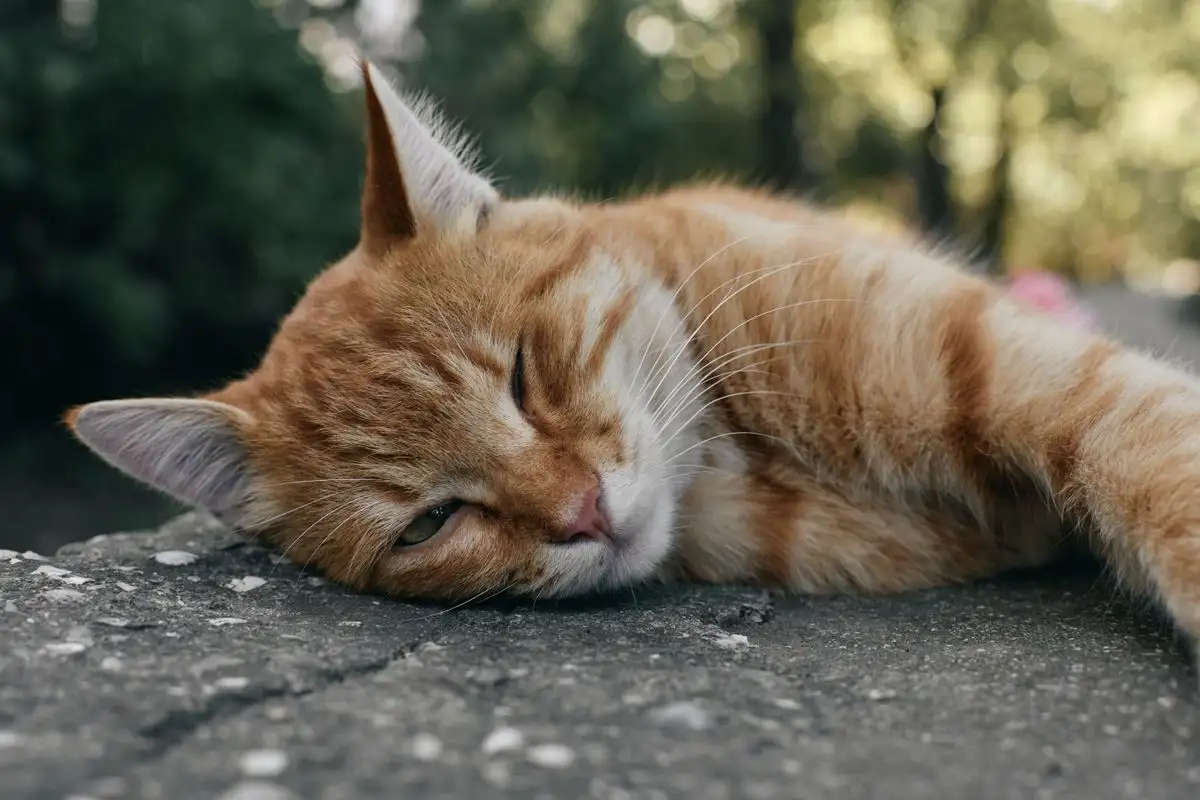
Friendly version: lying more on one side than flat on the back, limbs loose and heavy, ears forward or at rest, eyes half-lidded, sometimes a slow blink, often a stretch at the end. Then touching the belly is fine, as long as the cat stays loose.
The separator is the ears and the head. A head that tracks your hand is a cat keeping you inside a defensive frame. Ears at rest and a head that isn't following you is a cat with nothing to defend against.
Baseline First: What Relaxed Actually Looks Like
You can't read a warning without a baseline to read it against. Mine is side-lying with loose limbs, ears at rest and facing forward, tail still or moving only at the tip, breathing slow, occasional slow blink aimed at nothing in particular. That's the posture that actually accompanies relaxed contact.
I check that baseline on a new foster before I form any opinion about the cat's personality. It's also why two cats can look identical in a photo and behave nothing alike in a room. One is at baseline. The other is holding still. A still cat and a relaxed cat are not the same photograph, and if you only see the photo, you can't tell them apart.
The Compressed Posture That Isn't About You
There's one shape I note separately and don't read as communication at all: head lowered, body compressed down over the front paws, tail wrapped tight around the flank, eyes half-closed, no interest in what's happening in the room. A loaf that has sunk.
That isn't a warning about a swipe. It's a flag. In my house it means the cat is having a bad day for reasons that have nothing to do with me, and because posture does sit differently in a cat that isn't feeling right, it's the shape I write down and bring up at the next vet visit rather than the shape I try to interpret on my own. Posture reading tells you what a cat is about to do. It doesn't tell you why the body feels the way it feels, and I've stopped pretending it does.
Cues That Point the Other Way
The same body that warns also invites, and the invitation cues are just as specific:
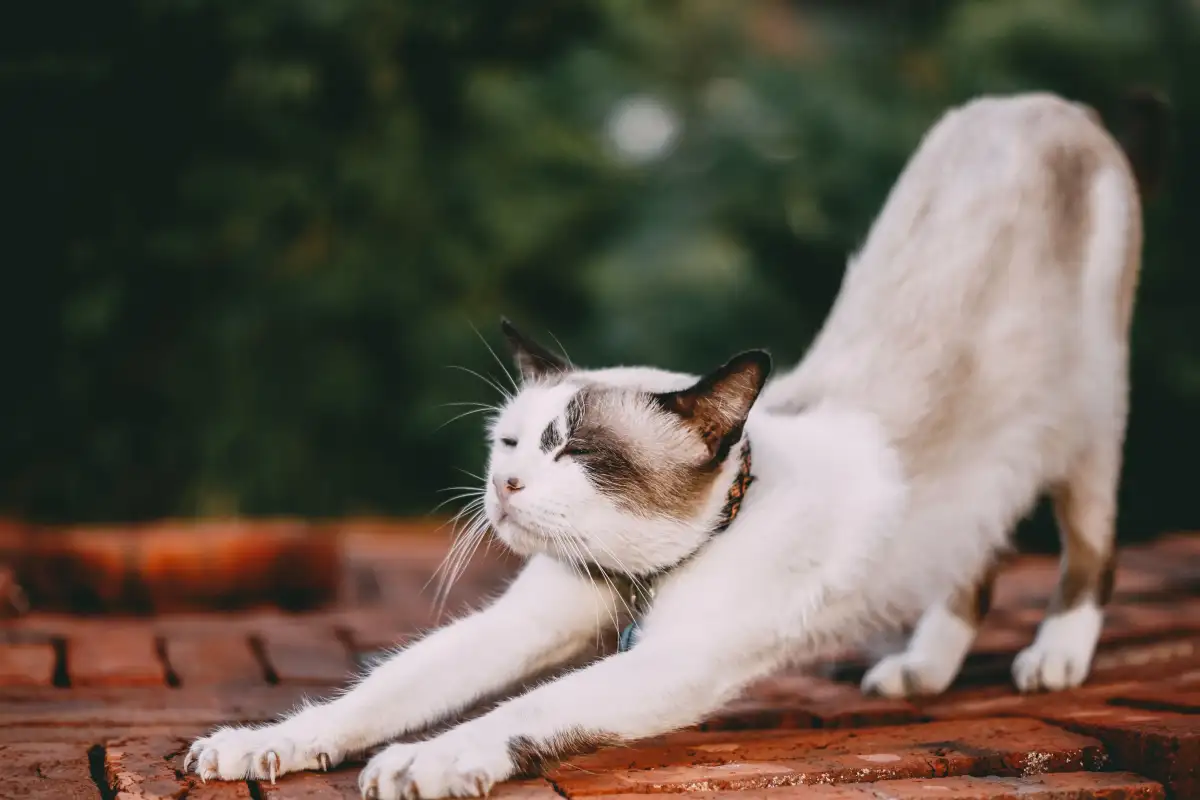
- a downward-dog stretch, front legs out, rear up, followed by a loose full-body shake
- a loose roll that ends in a stretch instead of a coil
- cheek and flank rubbing against a chair leg or door frame
- a tail held up with a small hook at the tip
- an approach with ears forward and weight coming onto the front feet
That last one is the variable I lean on most. Friendly approaches shift weight forward. Defensive configurations load the back. Once I started tracking that single thing, the labels stopped mattering to me and my timing got a lot better.
Posture Buys You Seconds, Not Certainty
Here's what I'd want someone to take away. Reading a stance gives you a window — usually a second or two — where the cat has decided something but hasn't done it yet. That window is for moving, not for talking. Hands back, weight off your front foot, eyes averted, a clear path out, and most of these postures resolve into nothing.
What it doesn't give you is a guarantee. Cats are individuals. A cat with a sore back may hold itself in a shape that reads like a threat. A cat that can't hear you well may not register your approach until you're close. A cat who learned early that warnings don't work may skip the warning stage entirely. The same crouch means something different in a carrier in a vet waiting room than it does on the rug at home, and context is the thing I weigh heaviest of all.
So I read postures as predictions, not personalities. Not "he's aggressive" — that's a label, and it sticks to the cat forever. Instead: he's loaded on the back end and facing my hands. One of those describes a character. The other describes what's about to happen, and it changes the second I move.