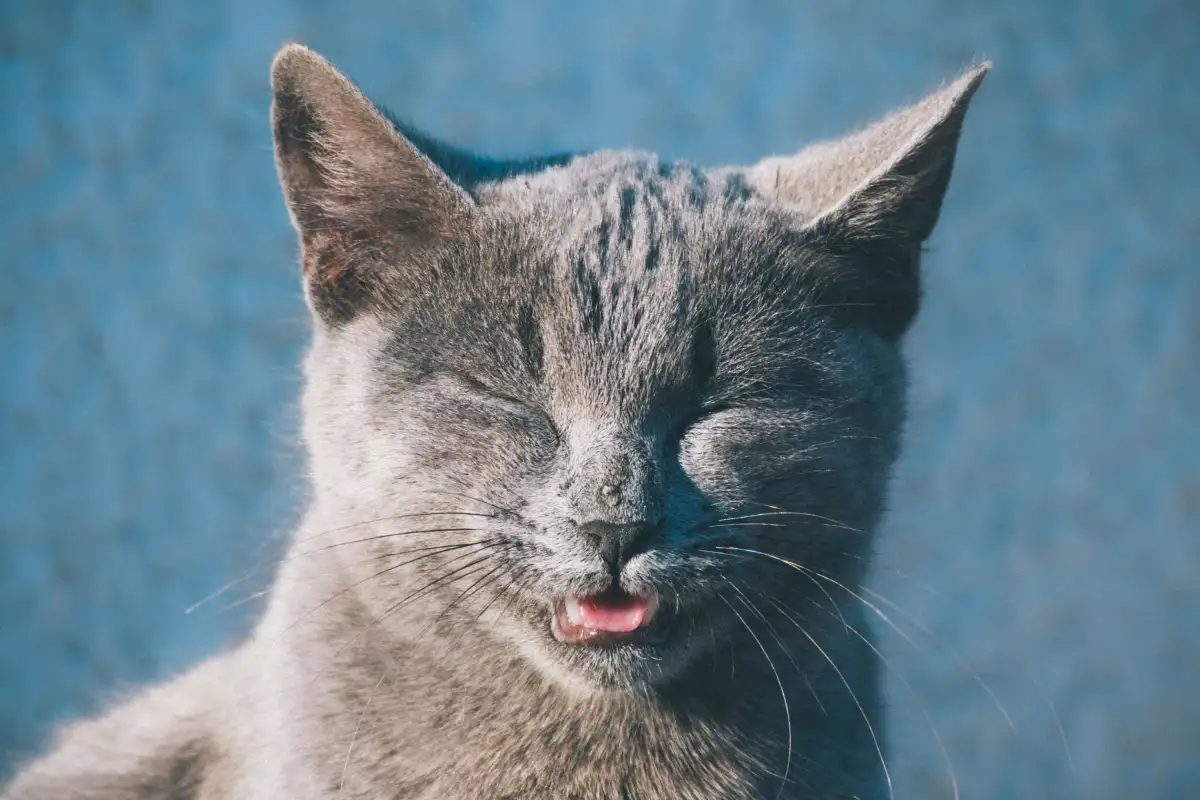
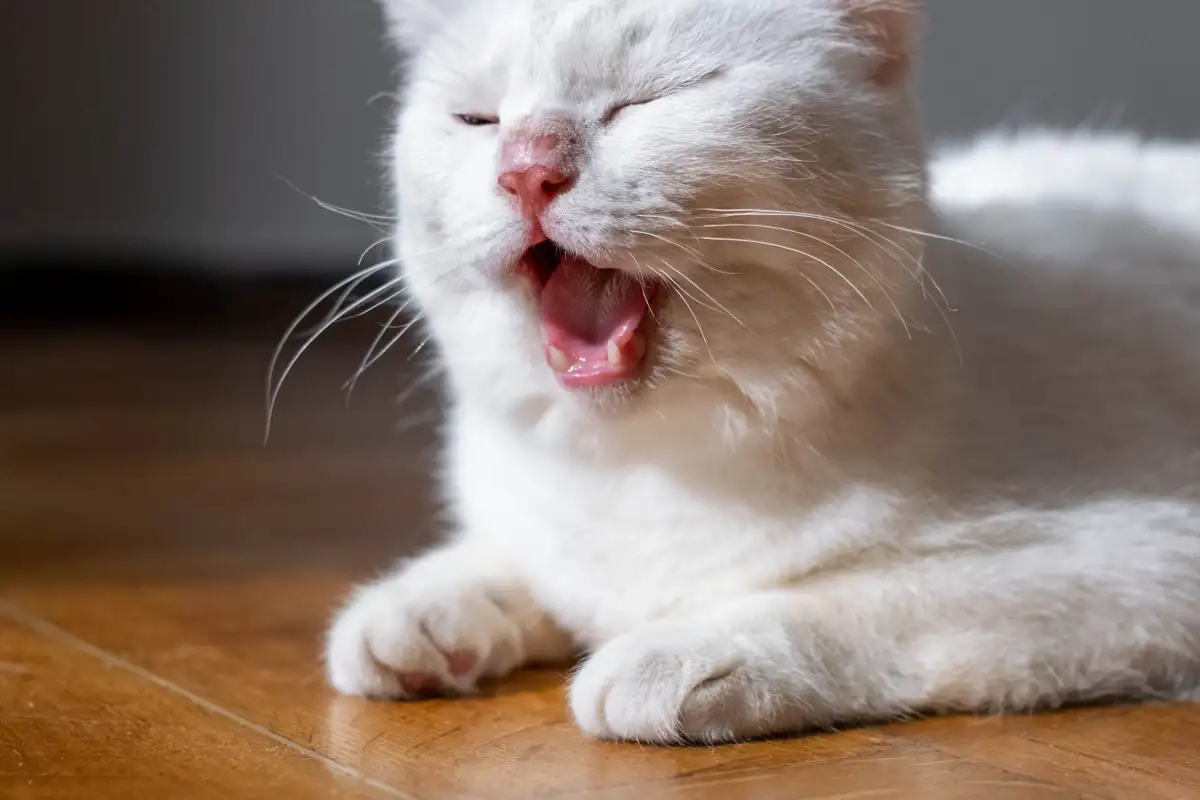
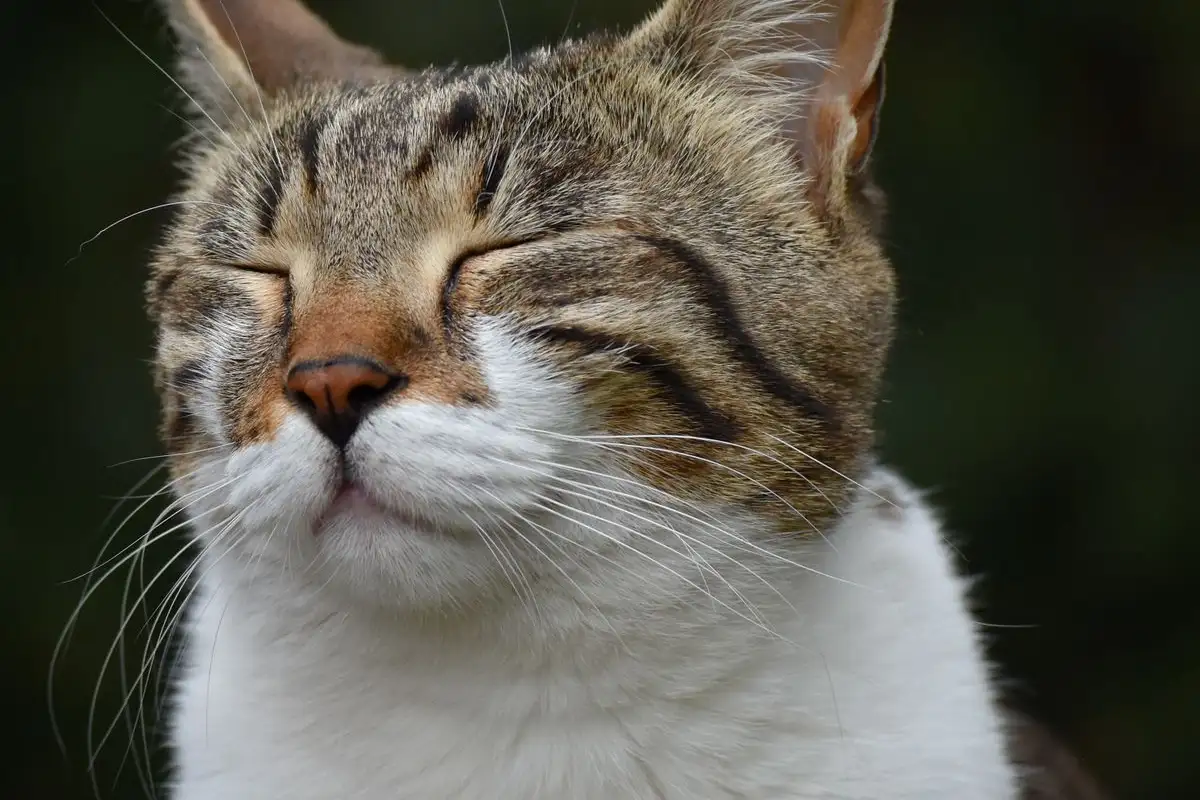
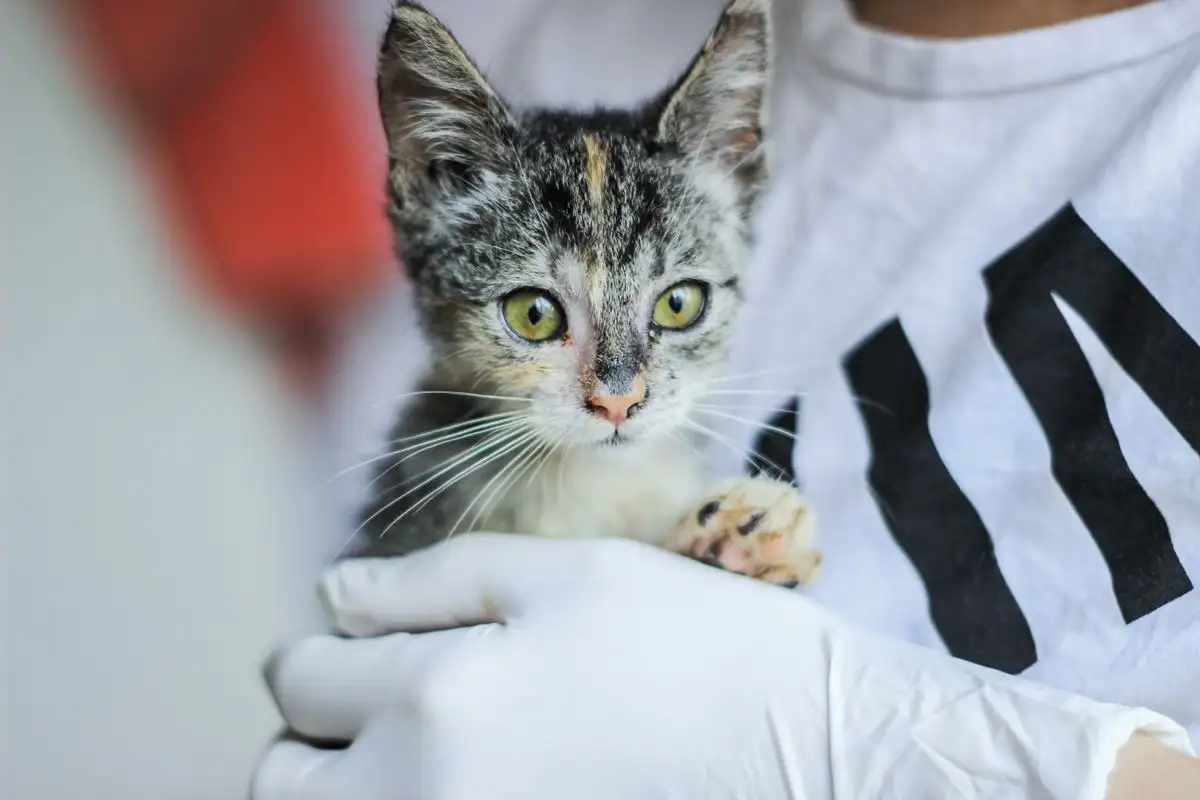
Reverse sneezing is a sudden, loud, inward snort — air being pulled fast through a narrowed throat, not blown out — and it almost always ends on its own within seconds to about a minute. The cat's head and neck stretch forward, the elbows angle out from the chest, and the sound is rhythmic and wet rather than explosive. A true sneeze is an outward burst, usually a single puff, often with a spray. That difference is the whole thing, and it's readable in the first five seconds if you know what you're looking at.
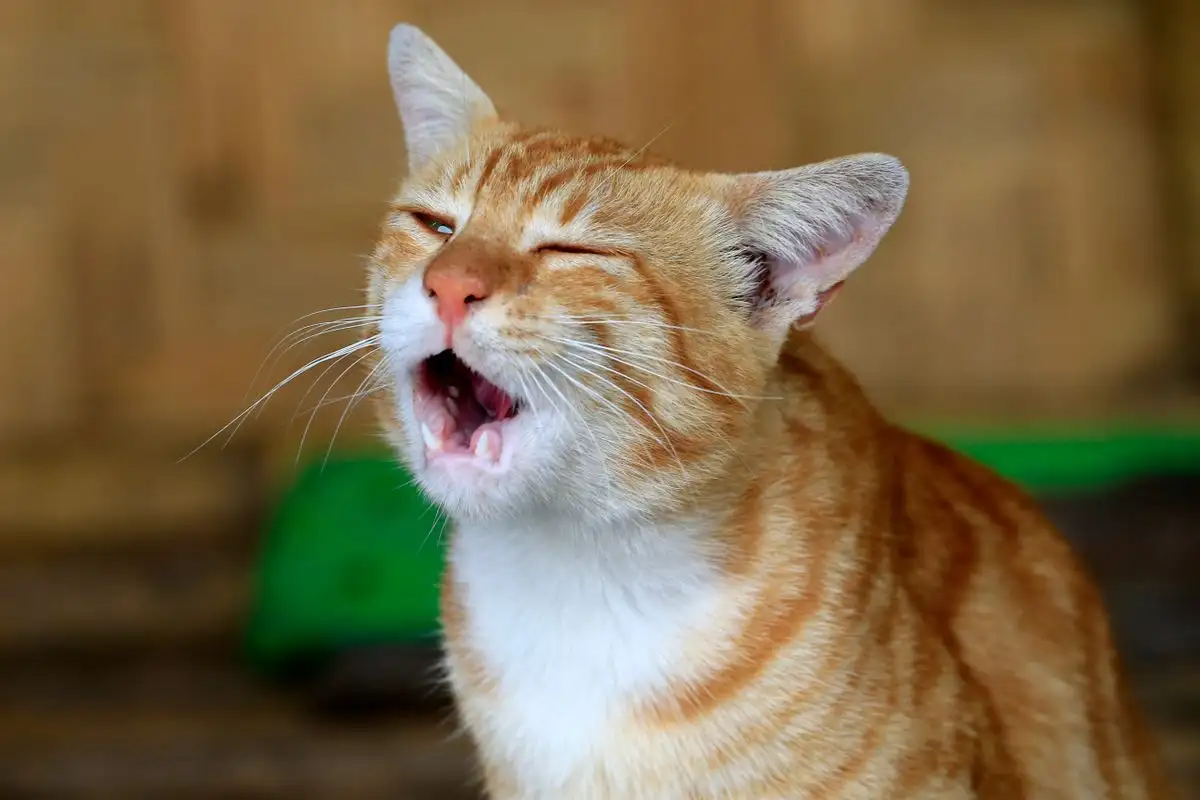
I learned it on a living room floor at two in the morning, folding laundry with a foster cat asleep on the arm of the couch.
The sound came first. Not a sneeze. More like a goose being squeezed, or a hairball that couldn't make up its mind — wet, ragged, in-and-in-and-in, with a little whistle riding on top. I looked up and the cat was standing perfectly still, front legs braced, neck stretched forward and low, elbows pushed out from the body like a bird's wings. Her chest was working hard. Her mouth was slightly open. She was not blowing anything out. She was dragging it in.
My brain ran the list in about four seconds. Hairball. Asthma. Something stuck. Something wrong.
Then it stopped. Not gradually — it stopped the way a hiccup stops. She licked her nose, swallowed twice, gave me a look of mild contempt for staring, and went back to sleep.
Thirty seconds, maybe less.
What I actually check, in order, while it's happening
I don't diagnose anything on my living room floor. What I do is read three things, because those three things are what a vet is going to ask about anyway.
Sound: inward, throaty, rhythmic
A sneeze is an expulsion. It's one sharp outward puff of air, sometimes two, sometimes a spray of droplets. It's over almost before your head turns.
This is the opposite. The air goes in, noisily, again and again, and each pull sounds like it's scraping past something soft. It's throaty, not nasal. People often describe it as a honk or a snort, and the description doesn't matter as long as you notice the direction: air in, not out.
Posture: head forward, elbows out
This is the part that made it click for me. A cat about to sneeze usually squints, wrinkles its nose, maybe backs up a step. A cat in the middle of one of these episodes does something different. The neck extends forward and slightly down. The head stays level, not tilted up. The elbows wing out from the ribcage. All four feet stay planted, and the whole body goes rigid in a braced, standoffish way.
The cat looks like it's holding a position. That's the giveaway.
Duration: seconds, then a swallow
A sneeze is one event. This is a run of them, tightly packed, and the run ends abruptly — often with the cat swallowing, licking its lips, or giving a single soft cough at the tail end, as though clearing something. If it's still going after a full minute, or if the cat is getting worse rather than tapering off, that's outside the usual pattern.
Why it ends without you doing anything
The mechanics are worth knowing, because they explain the sound. Reverse sneezing comes from irritation or spasm in the soft tissue at the back of the throat — the soft palate and the area around it — not from the nasal passages. When that tissue flutters or seizes, the airway narrows. The cat pulls air through the narrow spot, the tissue vibrates, and you get that snorting, snuffling racket on the inhale.
Then the tissue settles. The spasm relaxes, the cat swallows, the airway opens, and the noise stops. Nothing was expelled because nothing was in there to expel. The episode ran its course.
That's the reason a wait usually works and the reason the whole thing looks so much worse than it is.
What not to do while it's happening
The instinct to intervene is strong. I've felt it. Most of what people reach for in that moment doesn't help and can make it worse.
Covering the nostrils is the classic one. It doesn't address a spasm in the throat, and it adds a hand near the face at the exact moment the cat is already stressed. Prying the mouth open is worse — you're adding a fight to a cat that's rigid and not breathing comfortably. Fingers down the throat are a bad idea for reasons that should be obvious.
What I do is boring. I stay calm and I keep the cat upright and level. If she's on the floor, I let her stay on the floor and I crouch nearby without grabbing. If she's on my lap, I keep her chest up and don't tip her head back. I talk low. I keep the room quiet. Then I wait, because waiting is the actual intervention.
When it looks like this but isn't
The pattern gets confused with a few other things, and the confusion matters because the other things behave differently.
Hairballs come from deeper in the body. You'll hear a heaving build-up from the abdomen, the body will dip and pump, and it usually ends with a retch, a swallow, or something produced. The sound is more belly than throat.
Feline asthma looks more like a cough. It's outward, often after activity or after someone lights a candle or sprays cleaner, and the cat tends to crouch low with the neck extended, hacking up nothing. That cough doesn't stop in thirty seconds and it comes back.
A nasal problem — infection, polyp, foreign material — leans toward sneezing: outward, sometimes with discharge, sometimes from one nostril more than the other. That's nasal, not throaty.
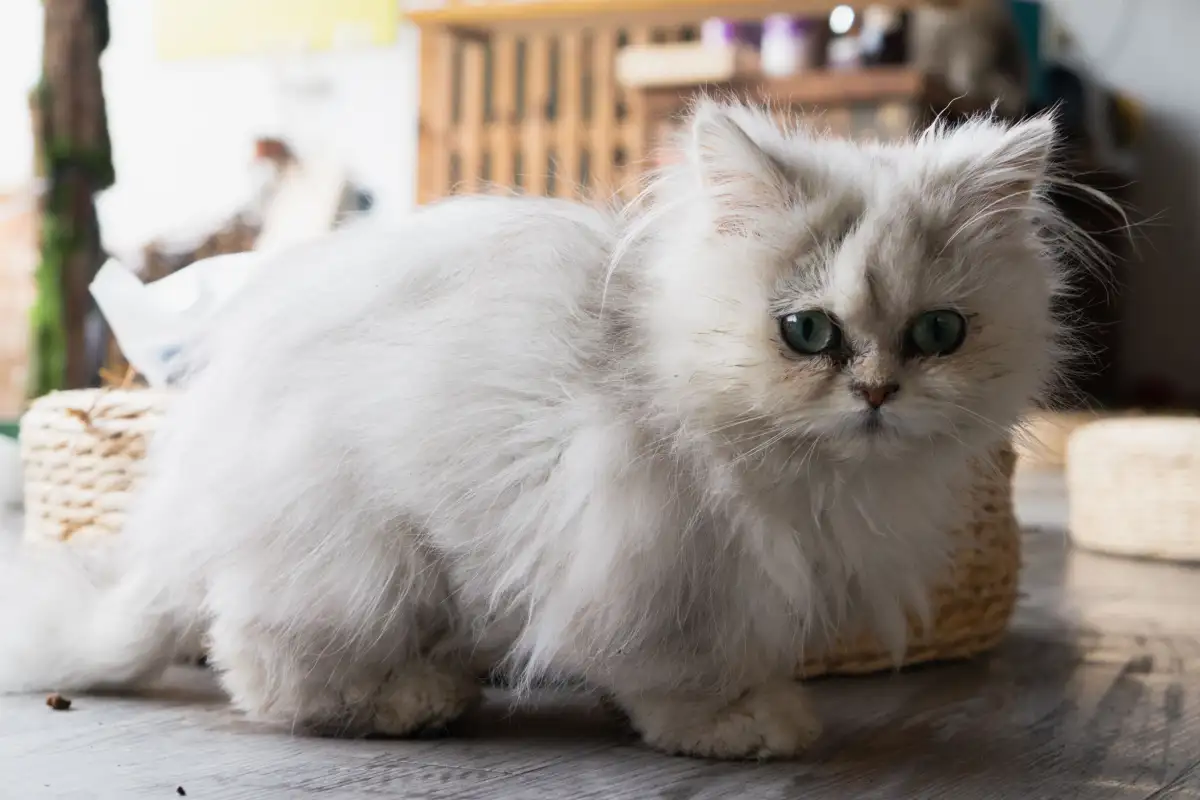
And the more common version of this whole thing is simply more common in cats with flattened faces. Persians, Himalayans, Burmese, and other brachycephalic cats have crowded anatomy at the back of the throat, and they seem to run these episodes more often. But I've watched a plain domestic shorthair do it, and the breed list doesn't tell you anything about your individual cat.
The point where watching stops being the right move
Some episodes need a vet, and the line isn't subtle once you know where it is.
Fainting or collapsing during or right after an episode is the big one. So is any blue or gray tinge to the gums during or after. So is a cat that can't seem to recover normally afterward.
Episodes that are getting more frequent, or longer, or that are now happening several times a day, need evaluation. So does coughing that continues in between episodes rather than only around them. So does a cat that tires out fast on stairs or during play, or one that starts breathing with its mouth open while resting. Nasal discharge, weight loss, and a cat that just seems off between episodes all point at something other than a passing spasm.
None of that is a diagnosis. It's a signal that the pattern you're seeing has stopped matching the pattern that resolves on its own, and that the next set of eyes should be a veterinarian's.
The one thing I wish every owner did
The reason this gets miscommunicated at vet visits is vocabulary. An owner walks in and says "she was sneezing, it was horrible, it went on forever." The vet asks two questions: was the air going in or out, and how long did it last? The owner doesn't know, because in the moment they were panicking, not timing.
So pull out your phone and record it. Ten seconds of video answers more than five minutes of description. The sound alone — that inward scrape against whatever soft tissue is vibrating back there — tells a vet more than any adjective you can come up with.
It also gives you something I didn't have the first time: a record. You can play it back, count the seconds, and see the elbows for yourself instead of trying to remember them.
Next time it happens, you'll hear the direction of the air before you even look up. You'll see the head go forward and the elbows wing out, and you'll know what you're watching. Then you'll do the only thing that helps, which is stay quiet and let the cat finish — the same thing the cat was going to do anyway.