A single cat sneeze tells you almost nothing on its own. What separates a harmless sneeze from a warning sign is the company it keeps: the color and thickness of what comes out, whether the cat is still eating and grooming, how the breathing sounds, and how fast the picture is changing over the next 24 to 48 hours. Sort those four things and the cat lands in one of three places — fine to watch at home, worth a call this week, or in the carrier today.
There's a small flashlight on the charger by my back door that exists for exactly one purpose, and it isn't power outages. I've lost more sleep to a wet sneeze from the next room than to most things that have happened in this house.
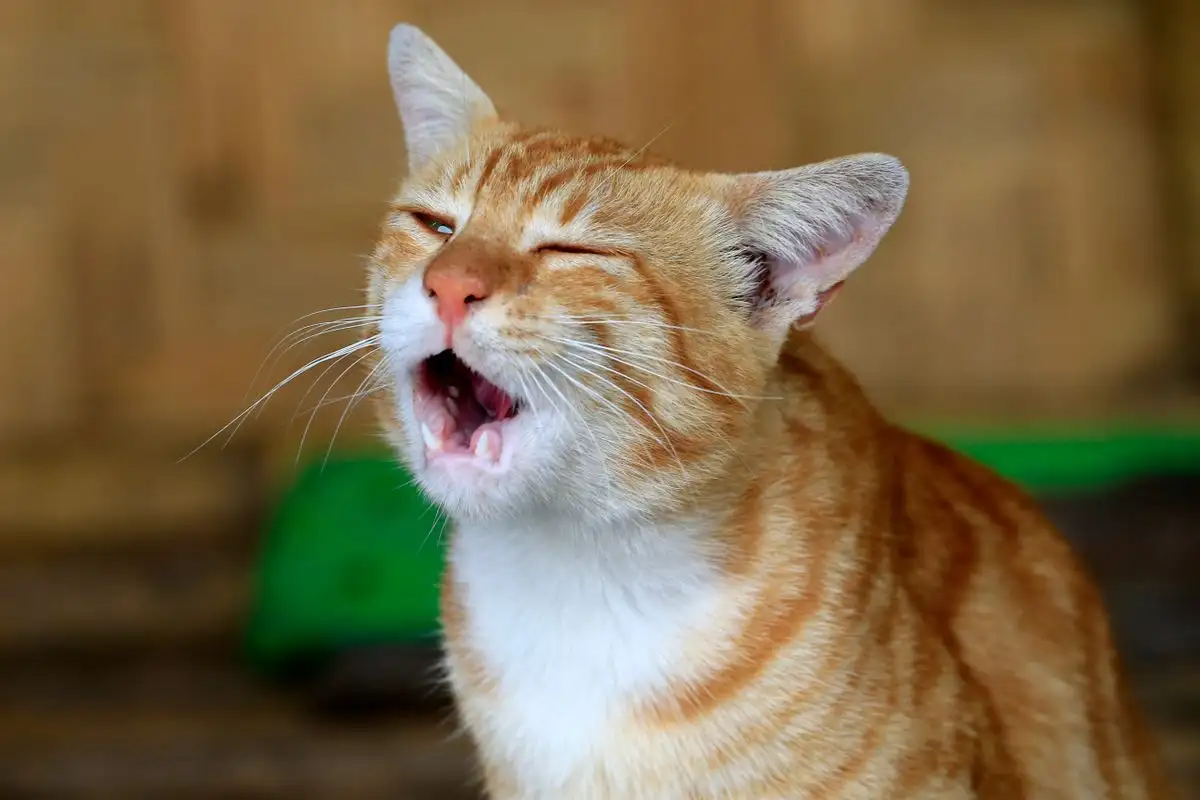
The sound gets me up before the sight does. A sneeze is a reflex — the nasal passages clearing themselves — which means a sneeze is a report that something is in there, not a verdict on what it is. Dry sneezes, a puff and nothing after, tend to be mechanical: dust, a loose hair, the dry air a furnace pushes through a sealed-up house all night. Wet sneezes leave evidence. When I hear three or four in a row, I get off the couch.
The ninety seconds that actually matter
I don't start with the cat's face. I start with a white paper towel, because discharge reads completely differently against white than it does against a tabby's muzzle, and a phone flashlight held at an angle rather than straight on, because direct light washes out the shine that tells you whether something is wet or crusted over.
Then I look, in this order.
What's coming out, and from where. One nostril or both. Thin and clear is a different animal from thick and yellow-green. Crusty and dark is another thing again.
The eyes. In cats, the nose and the eyes are usually having the same conversation. Squinting, redness, or goop in the corner of an eye changes how I read everything downstream of it.
The mouth. If it's open, I stop what I'm doing. Cats don't breathe through their mouths when they're comfortable, and a cat that does needs to be seen, not watched.
The behavior. Still at the food bowl? Still grooming? Still wandering to the front of the house to see what I'm doing? A cat that stops grooming has told me more than its nose ever will.
I take a phone photo of the towel. Not for the vet, necessarily — for me, so that three hours later I'm not arguing with my own memory about whether the color shifted.
Today, this week, or not at all
This is the part that actually sorts the situation, and it's the part most descriptions of cat sneezing skip past on the way to a symptom list.
Today means the car, a phone call, or both. Open-mouth breathing. Blood in the nasal discharge. A cat that has stopped eating entirely, or is huddled somewhere new and warm and won't come out. Facial swelling, especially over the bridge of the nose. Discharge from only one nostril, particularly if it smells bad — one-sided and foul is a different kind of problem than the sneezy congestion most people are picturing, and it points at something physically inside the nasal cavity rather than an infection moving through it. Also today: any of the above in a kitten, a senior, or a cat whose immune system is already compromised. Same signs, far less runway.
This week means a call to the clinic, not the emergency line. Thick yellow-green discharge from both nostrils. Eyes that are crusty every morning. Sneezing that's been going on for several days and is getting more frequent rather than less. A cat still eating, but picking at food and walking away — or a cat that suddenly seems uninterested in food it can normally smell from the next room. A voice that's gone hoarse, or a meow that doesn't sound like it did last week. Low-grade version of all of it, trending the wrong way.
Not at all means what it sounds like. Occasional sneezes, thin clear discharge, and a cat that is eating, playing, and grooming normally. That cat does not need a car ride. It needs you to keep watching. If the picture is unchanged in 48 to 72 hours and the cat is otherwise itself, most of these settle with nobody doing anything in particular.
The distinction I care about most is the trend line, not the snapshot. Three sneezes spread across a Tuesday is not the same data as a cluster of five every morning at the same time. Clusters, especially ones that repeat, are what I bring to the phone call.
The three buckets, and how each one looks from the couch
Irritants. Environmental causes: dusty or heavily scented litter, plug-in air fresheners, candles, a new rug off-gassing, smoke, the dry air of a house closed up for winter, pollen in spring. Irritant sneezing is usually both nostrils, thin and clear, and the cat is otherwise completely normal — no fever, no eye goop, no appetite change. The giveaway is timing. If the sneezing started the week you switched litter or the day the heat came on, that's a real clue and it's free.
Infectious. This is the big bucket, and it's where the feline upper respiratory complex lives — the viruses and bacteria behind what people casually call a cat cold. What surprises a lot of owners is how many cats carry one of these viruses for life after a single exposure, sitting quiet until stress wakes it up. A move, a new pet, a vet visit, a house full of contractors — any of those can flip a dormant virus back on, which is why a sneezing cat doesn't automatically mean the cat caught something new from somewhere. Thick yellow-green discharge, often both nostrils, often with eye involvement, and often with a cat that's off its food. That last part is usually not stubbornness. A congested cat can't smell its dinner, and a cat that can't smell its dinner often won't eat it.
Structural. Something physically in the nasal cavity: a foreign body like a blade of grass, a polyp, or, in older cats, a mass. The signature is different — one side, chronic, often bloody, often with an odor, and often unresponsive to anything that would help an infection. This is not a watch-at-home category, and it isn't something you can see from the outside.
I'll be honest about the limit here: I can't tell a viral flare from a bacterial infection by looking, and neither can you. That's a judgment call that belongs to a vet who can examine the cat and run tests if they need to. What I can do is describe the situation clearly on the phone — what the discharge looks like, when it started, one side or both, whether the cat is eating, and which way the trend is going. Clinics triage that call surprisingly well, and "I'm not sure whether this is a today thing" is a perfectly good way to open.
Who gets less runway
The same sneeze is not the same event in every cat. A healthy three-year-old with clear discharge and a full food bowl can be watched. A six-week-old kitten with the identical discharge cannot, because kittens decompensate fast and they hide it until hiding stops working. Same story for senior cats, cats with feline leukemia or feline immunodeficiency virus, and cats already being managed for something else. Flat-faced breeds deserve a lower threshold too — their airways are working with less margin to begin with. If your cat is in any of those groups, move everything up a rung: watch-at-home becomes call-this-week, and call-this-week becomes call-today.
The one thing that is never a home decision
Human cold and allergy medicine. Not a smaller dose. Not half a pill. Not a children's formulation. The same goes for the common over-the-counter pain relievers sitting in most bathroom cabinets — several of them are toxic to cats, and the distance between "a bit" and "a fatal amount" is not a distance anyone should be eyeballing at home.
There's a second reason beyond toxicity, and it's the one that gets left out. Drying up a runny nose on your own removes the exact signal you're using to decide whether this is getting better or worse. You're not treating a cold. You're reading a trend, and the drug smudges the trend. If you've reached the point where you're opening the medicine cabinet, you've already reached the point where you should be calling the clinic instead.
Watch the cat, not the sneeze. The sneeze is just the noise the information makes on the way out.