Sneezing that only happens indoors is an airborne-irritant problem until you have ruled it out, and the way to find the source is a room-by-room audit in which you change one variable at a time and live with each change for several days before you judge it. Replacing the litter, the candles, and every cleaning product in the same weekend is the most common mistake I see, because it destroys the only thing you actually need: the ability to tell which change mattered. And if the sneezing does stop, you will never know which swap did it, so the problem returns the next time you buy the wrong thing by accident.
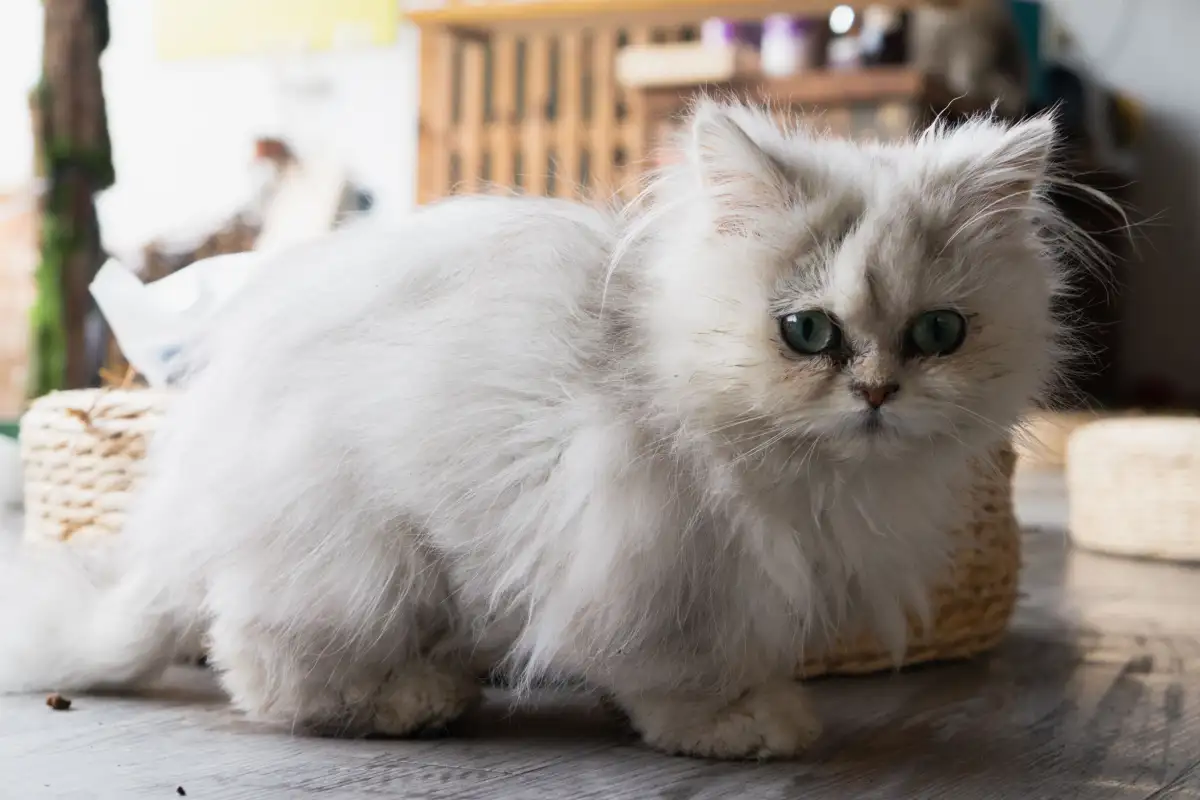
Now come stand in my upstairs hallway with me, 6:40 on a Tuesday morning, coffee going cold on the railing. The foster cat, a nine-month-old tuxedo who has been in the house eleven days, is on the bath mat, and she sneezes three times fast, wet and sharp, the sound that pulls your head up from your phone. Then she stops. She trots downstairs, sits on the kitchen floor while I make toast, and does not sneeze once. Half an hour later she is back on the same mat and it starts again. Same room. Same three sneezes.
That is the detail worth chasing, and it is why the first test costs nothing.
Let the Room Tell You Whether It Is the Room
Carry the cat somewhere else. Not a car ride, not a vet trip, just pick her up and put her down in a different part of the house for twenty or thirty minutes, ideally a room that shares no wall with where she was.
If the sneezing stops, you have a strong signal pointing at the environment rather than an infection. If it continues at the same rate, or if there is thick or colored nasal discharge, or she is off her food, droopy, or breathing differently, put the audit down and call your vet. That is not a step in this process; it is a different process.
I will be honest about the limits. This test is suggestive, not diagnostic. Cats carrying herpesvirus sneeze in episodes too, and stress of any kind can trip one off, including the stress of being carried from room to room. What I trust is repetition. If the sneezing tracks one room across four or five days, the house is where I look first.
Get a Baseline Before You Change Anything
Before you throw a single thing away, spend a week writing down what you hear.
Time of day. Room. Rough number of sneezes. What was happening in the previous ten minutes, scooping the box, spraying the counter, cooking bacon, opening a window, running the dryer.
Phone notes or a sticky on the fridge, either one. The point is not elegance; the point is having something to compare against, because human memory for sneezes is terrible. By Thursday you will be convinced she has always sneezed this much, or that she has never sneezed at all.
One thing to watch for in that week: the sneezes that happen at 5 a.m., when nothing has happened for hours. An inflamed nasal lining does not calm down the moment the irritant is gone. In my experience it takes a couple of days of cleaner air before a cat's nose settles, and that lag is exactly why the next rule exists.
One Variable, Three Days
Change one thing. Wait three days. Then judge.
Not one hour, not overnight. If you swap the litter on Monday and the sneezing is still there Monday night, you have not learned that litter is innocent. You have learned that a nose irritated for two weeks does not reset in twelve hours.
I keep a paper tally on the counter during these tests. Scoop at seven, tally at seven. It feels ridiculous for about a day, and then it stops feeling ridiculous, because the pattern shows up in the numbers before it shows up in your memory.
If you change two things at once and the sneezing improves, you have to put one of them back to find out which one was helping. That is a week of your life you did not need to spend.
Walking the House, Room by Room
Order matters here. I start with the room the sneezing actually happens in, then work outward, because airborne particles do not respect doorways and the source is often upwind of the symptom.
The litter area, first and always
Clay and silica litters throw off fine dust every time they are poured, scooped, and walked through. In a small bathroom or a closet, that dust has nowhere to go.
The part people skip: placement and ventilation matter as much as the litter itself. A box inside a closed closet with the door cracked an inch is a dust chamber. So is a box sitting under the air return, where the HVAC pulls dust up and redistributes it through the house. So is the only bathroom, with no window and an exhaust fan nobody turns on.
Test it in this order. Same litter, new location, open, out of foot traffic, near a window you can crack or in a room with real air movement. Give it the three days. If nothing changes, then change the litter type, and while you are at it stop pouring from waist height into a cloud. Dump and refill with the cat out of the room and a window open.
And do not scoop while she is standing in the box waiting. I know it is convenient. It is also the moment she inhales the most.
The spray bottles under the sink
Aerosol anything throws droplets fine enough to hang in a room for a long time. Glass cleaner, furniture polish, bathroom spray, hairspray, the deodorant you use standing in the same small room where she naps.
The test costs almost nothing: two weeks of damp cloth and unscented soap. Wipe instead of spray, keep the cat out of the room while you clean, and run the fan. If the sneezing drops during those two weeks and comes back when you go back to the spray, you have your answer and you did not have to buy anything.
Anything in the house that smells good on purpose
Scented candles, wax melts, plug-in air fresheners, reed diffusers, and essential oil diffusers all release volatile compounds into the same air your cat is breathing. A cat's nasal tissue is far more exposed to that air than yours is. She is smaller, she is lower to the ground where heavier particles settle, and she cannot leave the room when it gets strong.
Unplug all of it for a week. Not turned down, not moved to another room. Out.
One thing worth stating plainly: if a cat has been around a diffuser or a fresh application of a household chemical and is drooling, vomiting, unsteady, or breathing hard, that is a call to your vet, not another week of testing.
Smoke, in all its forms
Secondhand tobacco smoke is the obvious one. Wood smoke from a fireplace or stove is the one people forget, and cooking smoke is the one they never consider at all. Bacon, a screaming-hot cast iron pan, oil that hits the smoke point, toast left too long.
The test is a controlled comparison. Cook the same meal twice, once with the exhaust fan on high and a window cracked, once without. Smoke outside for a week instead of in the mudroom and see if anything moves. Smoke residue rides on hands and clothing, so the person who smokes in the garage and then picks up the cat is still delivering particles right to her face.
Air movement and filtration
A closed-up apartment in February is a sealed box. Whatever is suspended in that air stays suspended, and then settles into the bottom two feet of the room, which is where your cat lives.
HEPA filtration genuinely reduces the airborne particle load, and a low-dust litter paired with unscented cleaning products cuts down what is floating around in the first place. What filtration is not is permission. A purifier running next to a dusty box is a machine fighting a habit. Fix the habit, then let the machine handle the leftovers.
Also worth checking: when you last changed the HVAC filter, and whether any vent in the house blows directly across a litter box or a cat bed.
Soft surfaces and laundry
This is the room people never audit, and it is the reason some cats sneeze mostly at night. Scented detergent, fabric softener, dryer sheets, carpet shampoo, and any laundry scent booster all stay in fabric. Your cat sleeps with her nose pressed into that fabric for eight hours.
Wash her beds and blankets in unscented detergent with no softener and no dryer sheet, and give it two weeks. Same for anything else she sleeps on that normally goes in a load with everything else.
If You Only Have Time for Three Changes
Unscented everything. Cleaning products, laundry, nothing plugged into a wall outlet to make a room smell like a meadow. Cheapest and fastest, and it clears the largest number of suspects at once.
The litter box out of the closet and away from the air return.
Windows cracked for ten minutes twice a day, even in winter, with the cat in another room while they are open.
When the Audit Comes Up Empty
If two or three weeks of one-variable testing changes nothing, that is information too. It means the trigger is either something you cannot remove, a neighbor's smoke drifting through a shared wall, seasonal pollen tracked in on coats and shoes, or it is not environmental at all. At that point the next move is your vet, with your sneeze log in hand. A week of times and rooms is a genuinely useful thing to hand a veterinarian, and it is a much better conversation than trying to remember whether it was worse on Tuesday.
The Part That Took Me Years
There is usually no single culprit.
Indoor sneezing in cats is a load problem. Dusty litter, a plug-in in the hallway, the spray you use on the mirror, the pan you scorch twice a week, the windows that have not opened since October. Each one is small. Together they are what her nose is dealing with.
That is why the audit is worth more than the shopping trip. You are not hunting for one guilty object. You are lowering the total, one measurable step at a time, and letting a nose tell you whether it worked.