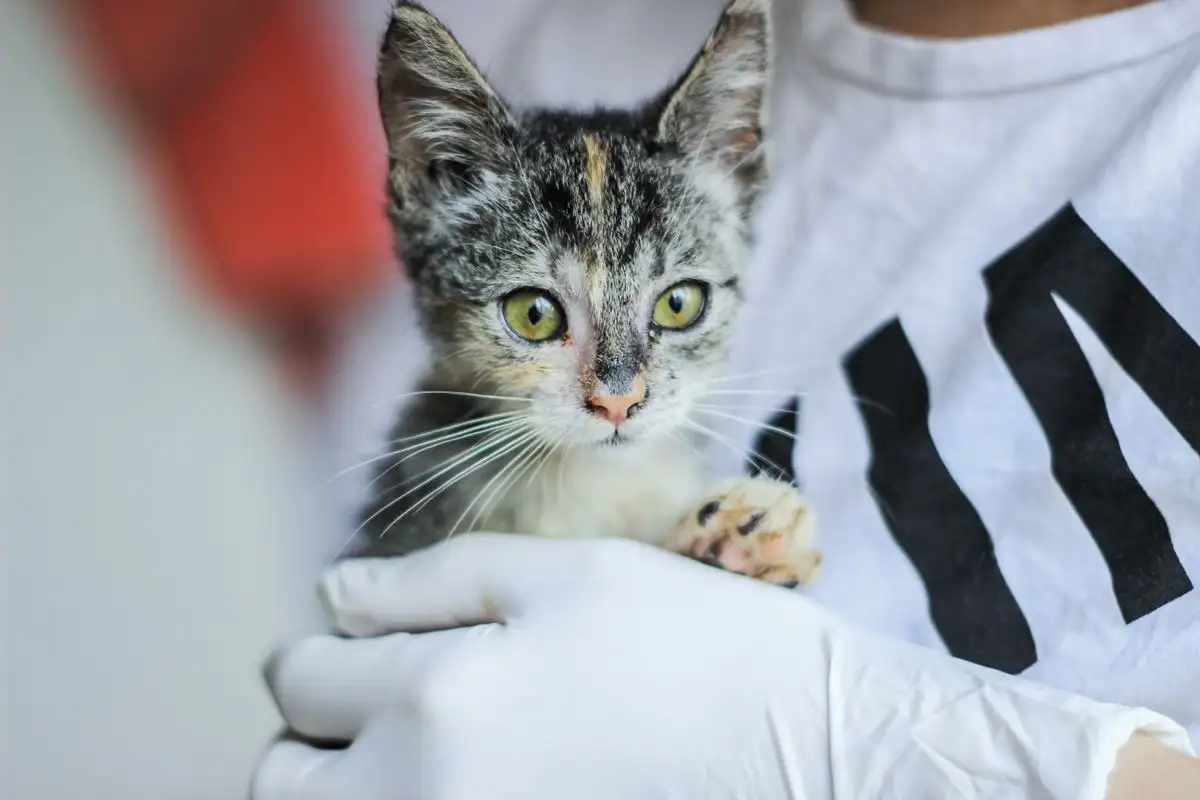
A sneeze tells you almost nothing. When a cat sneezes and its eyes are running, the sneeze count is the least informative number in the room. What predicts how the next ten days go is the eye discharge itself — clear or thick, one eye or both, squinted shut or open — along with whether the cat is still eating and whether it is still moving through the house like itself. Owners call about the sneezing. The eyes, the appetite, and the energy level are the three things a vet actually needs to hear about, and they are the three things most people never think to mention.
I do most of this evaluation sitting on the floor of a small bathroom with the door shut, because that is where I can watch a cat without it vanishing under a bed. The sneeze is loud. It is the thing that gets your attention at 6:40 in the morning while you are still holding the coffee mug. But once you are genuinely paying attention, the sneeze stops being interesting almost immediately. It is the same sound whether the cause is a virus, a blade of grass up the nose, or a tooth. It has no volume setting that means anything.
Here is what replaces it.
The eyes are the part you can actually read
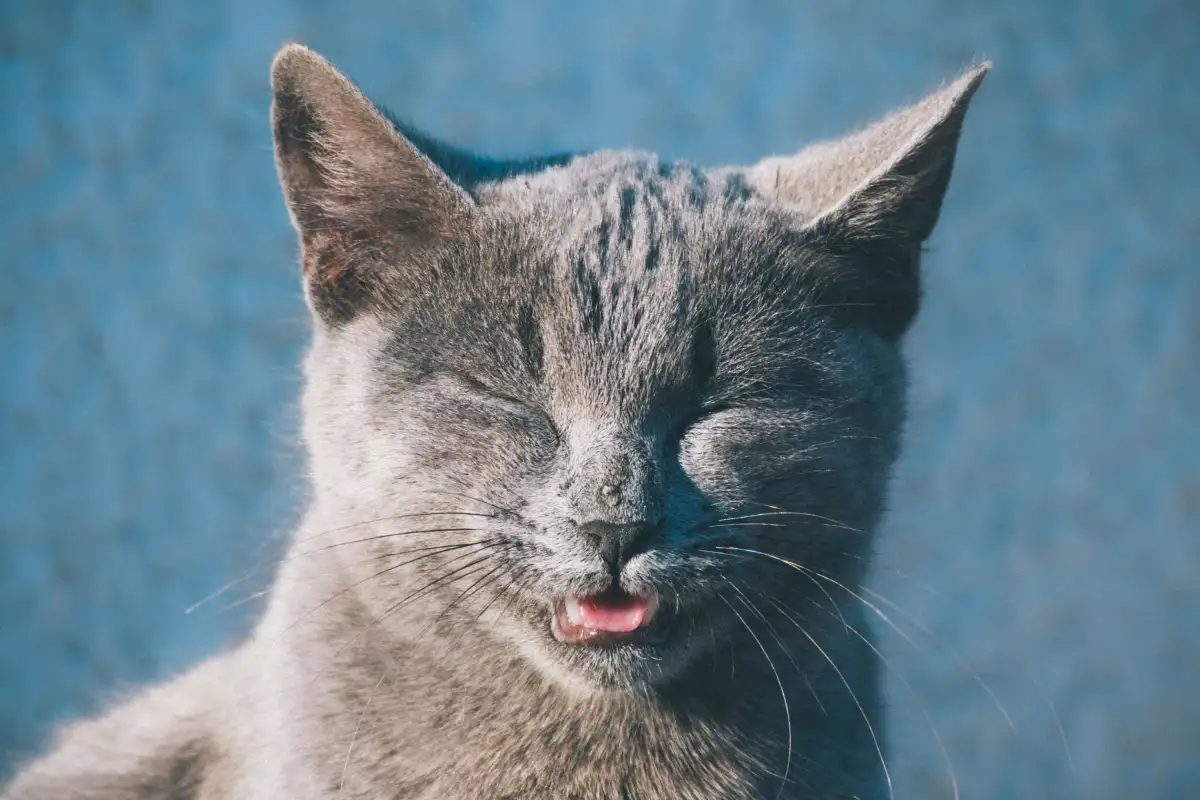
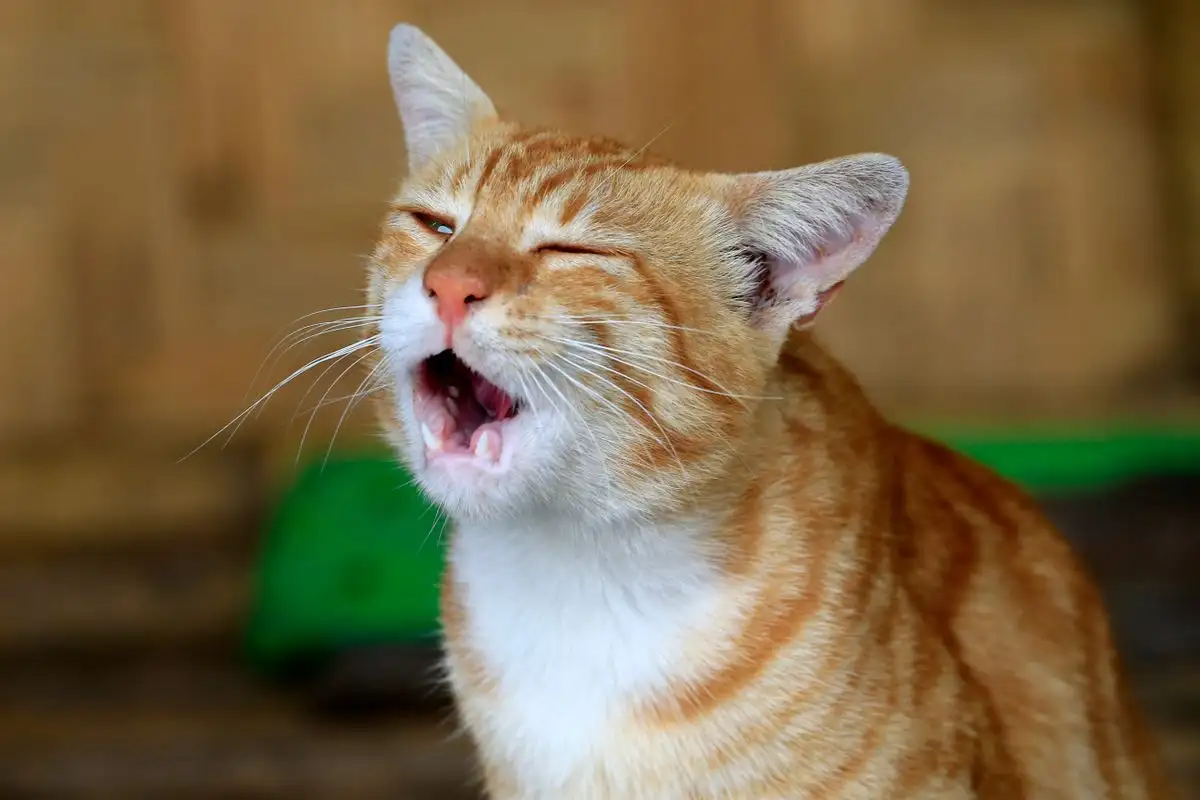
Watch the face, not the muzzle. A cat that sneezes with both eyes wide open and a thin clear tear at the inner corner is uncomfortable. A cat that keeps one eye half shut, or that screws both eyes closed when you flip the light on, is telling you something larger.
The cluster that travels together looks like this: redness along the conjunctiva, watery discharge, and crusting at the inner corner that dries to a tan or brownish crumb you can pick off with a fingernail. That combination shows up with the viral upper respiratory infections that account for most sneezing-plus-discharge cases in cats — feline herpesvirus and feline calicivirus are the two names behind the majority of them, and both come with eye signs, which is exactly why the eyes carry more information than the sneeze.
Then there is change over time, which is the part people miss because they only look once. Clear and watery on Monday, thicker and opaque by Thursday, yellow-green by the weekend — that shift is information. So is the third eyelid, the pale membrane that slides in from the inner corner. When a cat feels rotten, that membrane creeps partway across the eye and gives the whole face a heavy, half-there look. Owners usually describe this as "his eyes look weird" without being able to say why. Now you can say why.
One eye or two
Asymmetry matters. Herpesvirus tends to hit one eye harder than the other, and often the same eye every time it flares. Perfectly symmetrical, constant clear tearing in a cat that otherwise seems fine can also come from a narrowed tear duct, dust from clay litter, or a household irritant. Those look different up close and nearly identical from across the room, which is a theme you are going to see again in this article.
Two things move this from watch-and-wait to same-day: an eye held shut, and pawing at the face. A squinting eye can be hiding a scratch the cat gave itself, and scratches are not something you can see from the outside.
Appetite is the marker that changes the timeline
Cats are smell-driven eaters. When the nasal passages are swollen and full of discharge, scent does not reach the receptors, and the cat stops caring about food. A cat with a stuffed nose and a full bowl is not being stubborn. It genuinely cannot tell that there is anything worth eating in front of it.
So the question is not whether the cat is eating a little less. It is whether the cat is eating at all, and whether it is still taking the stuff it normally goes berserk for. A cat that turns down a plate of wet food with the juice still on it — the smelliest thing in the house — has crossed a line that a cat who is merely sneezing has not.
Watch how the cat eats, too. Some will take a bite, drop it, stare at it, walk away, and come back ten minutes later. Some will eat with the head tilted back. Some will drink more water than usual. Some will come running to the bowl because they are hungry, take one sniff, and then just sit there next to it.
One practical trap: you cannot judge appetite from a free-fed bowl shared by two cats, because the bowl empties either way. Separate them at mealtime for a day, or put down a small measured amount and look at it an hour later. That is the only honest way to know who is eating.
Not eating is the sign that changes the timeline, because a cat that stops eating entirely is a bigger problem than the sneezing that started it.
Energy is the third column, and people are worst at it
Cats sleep sixteen hours a day, so "sleeping a lot" is not a sign. What you are looking for is a change from that cat's own baseline.
Where does she sleep normally? The top of the cat tree in the afternoon sun, the back of the couch, the corner of your pillow. If she is now in the back of the closet, under the bed skirt, wedged behind the toilet tank, that is the sign. Cats that feel bad pick small dark places. Two more worth naming: hiding from the other cats in the house, and the crouched position with the head lowered instead of the relaxed sprawl. And the one that stops people cold when they first see it — a cat sleeping in the litter box. It does not mean one single thing, but when it shows up, it means something.
This is why baseline matters so much. I know how my cats come down the stairs when I call, whether they meet me at the door, and which one claims the back of the couch at eight in the evening. That knowledge is what turns a vague worry into a specific observation. Without it, every cat looks like a cat that is sleeping a lot.
Why the sneezing keeps coming back
Herpesvirus does not leave. A cat that recovers stays a carrier for life, and the virus parks itself in nerve tissue where the immune system cannot clear it out. Under stress it reactivates, the cat sheds virus again, and you get another round of sneezing and watery eyes.
That is why the episodes line up with events. A move. A new kitten. A few nights at the boarding facility. A cold snap. Construction next door. A foster cat that came in and then left. With one cat and one episode it is easy to call that coincidence. After a few years and a few flares, the pattern is impossible to miss.
It also means a recurring mild episode in a cat that is still eating, still playing, still sleeping in the sun is a completely different situation from a first-ever episode in a cat that has gone quiet and stopped eating. They produce the same sneeze. They do not deserve the same level of worry.
What vaccination does and does not do
The combination vaccine most people call "the distemper shot" covers herpesvirus and calicivirus. What it reliably does is make the disease milder when it happens — a shorter, less severe episode. What it does not do is prevent infection, and it does not prevent the carrier state. A fully vaccinated cat can still sneeze, still get a runny eye, and still carry herpesvirus for life.
That is not an argument against vaccinating. It is an argument against being confused when a vaccinated cat sneezes, and against assuming a sneeze in a vaccinated cat must be allergies. One more thing worth knowing: intranasal versions of the vaccine can cause a few days of sneezing and a runny nose right after they are given. That is the vaccine doing its job, not a new infection walking in the door.
The honest reason the at-home picture is not enough
Here is the part I wish more people understood before they spend a week guessing.
From the floor of your bathroom, all of these look nearly identical: a viral infection, a secondary bacterial problem riding on top of it, a foreign body up the nose like a blade of grass or a foxtail, a tooth root abscess that has drained into the nasal cavity, a polyp, allergies, dust from litter, a household irritant, and something much more serious. Same sneeze. Same watery eye. Same cat that is eating a little less than usual.
What separates them is not visible from where you are standing. It is a temperature reading. It is a look inside the mouth, where dental disease shows up more often than people expect. It is a stain placed on the eye to check for an ulcer — and this matters, because a squinting eye can be hiding a scratch the cat gave itself, and treating a scratched eye as if it were a watery one is a real problem. Sometimes it is a swab for a PCR panel. And sometimes the test does not tell you what you hoped: a panel can come back positive for an organism the cat is merely carrying and not currently suffering from, which is why history and exam come before testing, not after it.
And a plain fact that explains the whole structure of this: because viral and bacterial causes look so much alike from the outside, the medicine for one does nothing for the other. That is the entire reason an exam decides this, and a photo texted to a friend does not.
What to write down before you call
"He has been sneezing a lot" is not information, and a vet has ten minutes.
Start a note the day you first notice something and add to it daily:
- Which eye, and whether it was open or shut. Left, right, or both.
- What the discharge looked like on day one and what it looks like today. Thin and clear, thick and opaque, or dried and crusty.
- Whether the cat ate last night and today, and what it ate. Measured, not guessed.
- Whether the cat has picked a new hiding spot, and whether it came out for dinner anyway.
- Whether any other cat in the house is sneezing.
- When the last episode was and what was going on in the house at the time.
Photos beat memory. Same spot, same light, once a day, same angle. A picture from five days ago settles the argument about whether the eye is getting better or worse, and you will have that argument with yourself at two in the morning otherwise.
The baseline is the whole trick
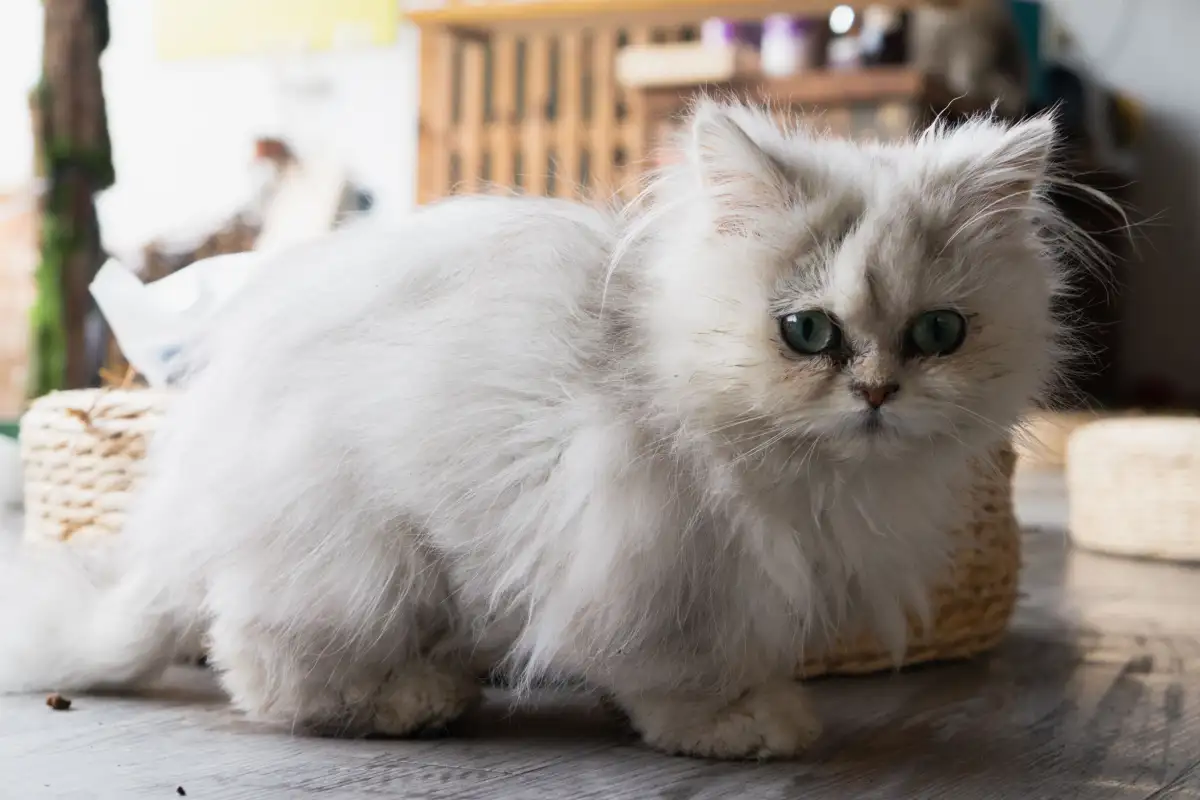
Kittens, seniors, and flat-faced cats all live at different starting points. A Persian with a little constant tearing and a brown crumb in the corner of each eye is having a normal Tuesday. A lean indoor tabby who has never had a spot of discharge in nine years is not. Same amount of moisture on the fur. Completely different meaning.
That is the thing to carry out of this. The sneeze is the alarm going off. It is designed to be loud and impossible to ignore. The eye discharge, the food bowl, and the back of the couch are what tell you whether it is a real alarm or a test of the system — and those three are quiet, which is precisely why owners miss them and then report the sneeze.